
I owe everyone a bit of a mea culpa.
Between five months of almost nonstop travel, dozens (maybe a hundred?) of flights, and trying to keep up with everything else, I somehow managed to miss last week’s Wednesday post. Several of my friends have asked me what Baikonur was actually like after I teased the trip a couple of weeks ago, so this week we’ll fix both problems. It’s also been far too long since I’ve written a proper trip report.
So...let’s head to Kazakhstan. Or is it Russia?
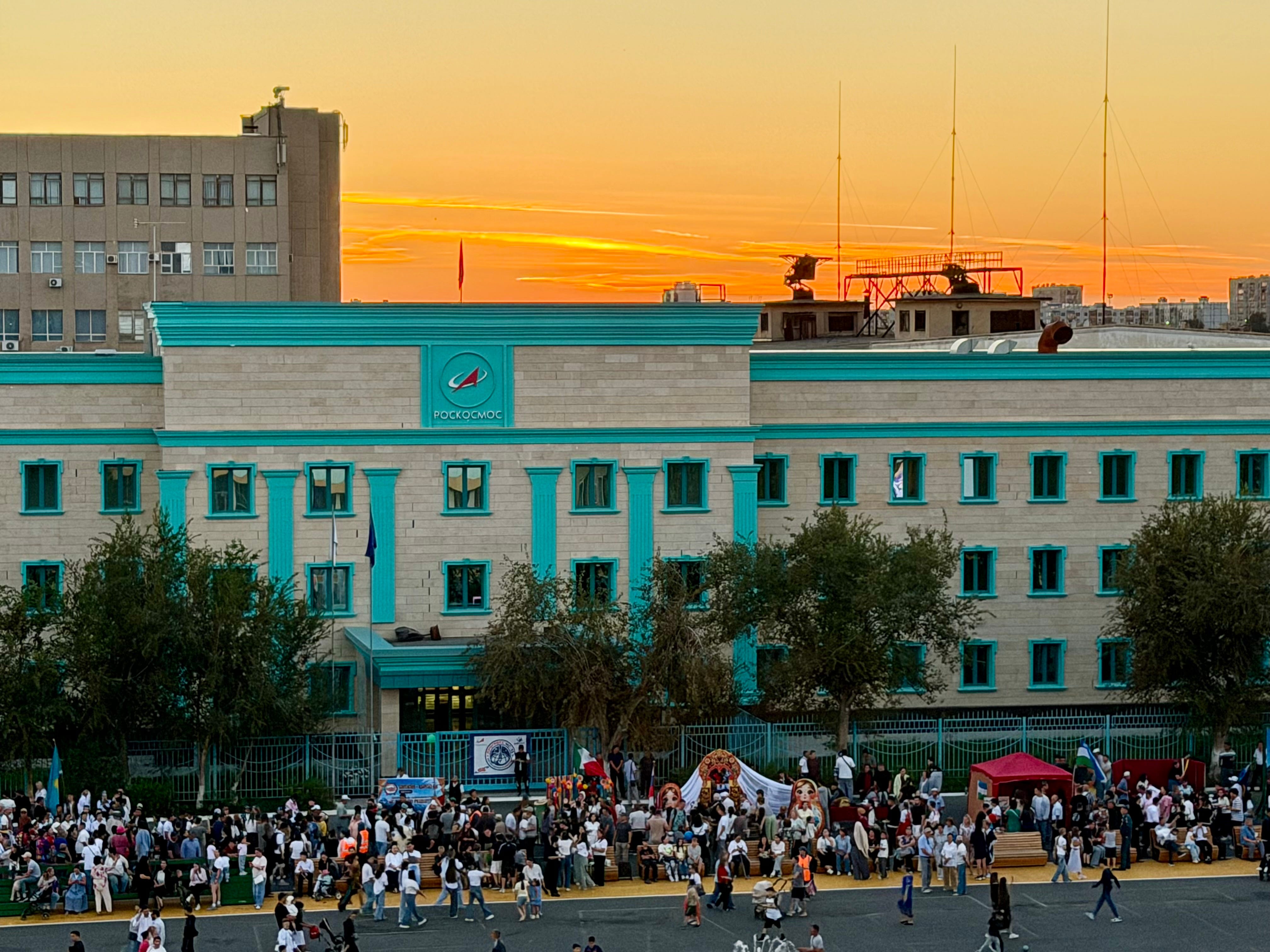
Every trip to Baikonur these days starts with a bit of a compromise. While there is an airport in Baikonur itself, it’s primarily reserved for government and official traffic, so tourists fly into Kyzylorda instead and then spend about three hours crossing the Kazakh steppe by bus.
Somewhere along that drive a couple folks in the group received the news none of us wanted to hear. The Soyuz launch had been postponed indefinitely…meaning it was extremely likely the main event we’d just arrived to see wouldn’t be happening. At least while we were there to see it.
Of course everyone was disappointed; we’d traveled halfway around the world hoping to watch a rocket launch…but there wasn’t much point dwelling on it. After a few minutes the conversation naturally shifted to what else there was to see. Looking back, I think that’s one of the advantages of traveling with experienced travelers. Everyone understood that one canceled event didn’t suddenly erase everything else we’d come for. We were already there, and were going to make the most of it.
By the time we reached Baikonur, most of the people in the group were already looking forward instead of backward.
After a surprisingly good late lunch (more on the food later), we had a rather chaotic check-in to our hotel and went our own ways in smaller groups. I went for the mandatory daily run, and right outside our hotel was a local cultural festival. Not an international festival where performers had flown in from around the world, but local residents enthusiastically celebrating different cultures. Imagine Russians singing La Bamba, children running around in traditional costumes, families everywhere, and people happily inviting curious tourists into the festivities.
Nobody had planned for it.
Which, of course, made it one of my favorite memories of the trip.
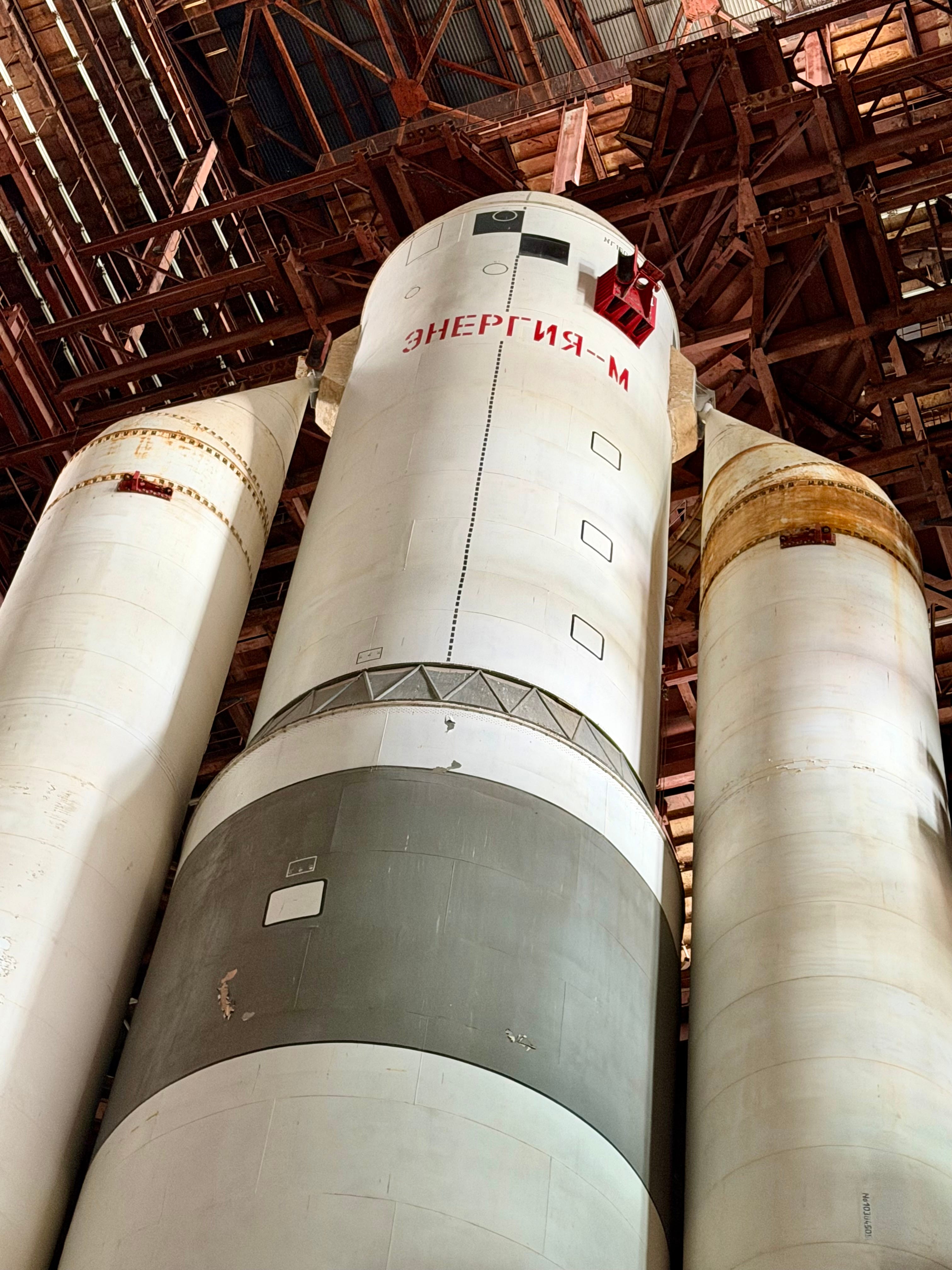
The next morning was dedicated to the cosmodrome itself, and for a lifelong space geek, it absolutely delivered.
The highlight for me was finally standing beneath Energia-M. I’d seen photos for years, but nothing prepares you for the sheer scale of that rocket or the enormous assembly building surrounding it. It’s hard to describe what it’s like…because, it’s just a giant hunk of metal at the end of the day, and you don’t marvel at it so much as stare upward trying to comprehend just how massive everything is.
What I loved most, though, was how unpolished and raw the experience felt. This wasn’t a perfectly curated museum with dramatic lighting and interactive displays. At one point our guide literally had to call “the guy with the key” so we could get inside another building. Tourism here still feels wonderfully improvised, and somehow that made it even better.
It feels less like visiting an exhibit and more like being allowed into somewhere you’re normally not supposed to see…and that is totally my jam.
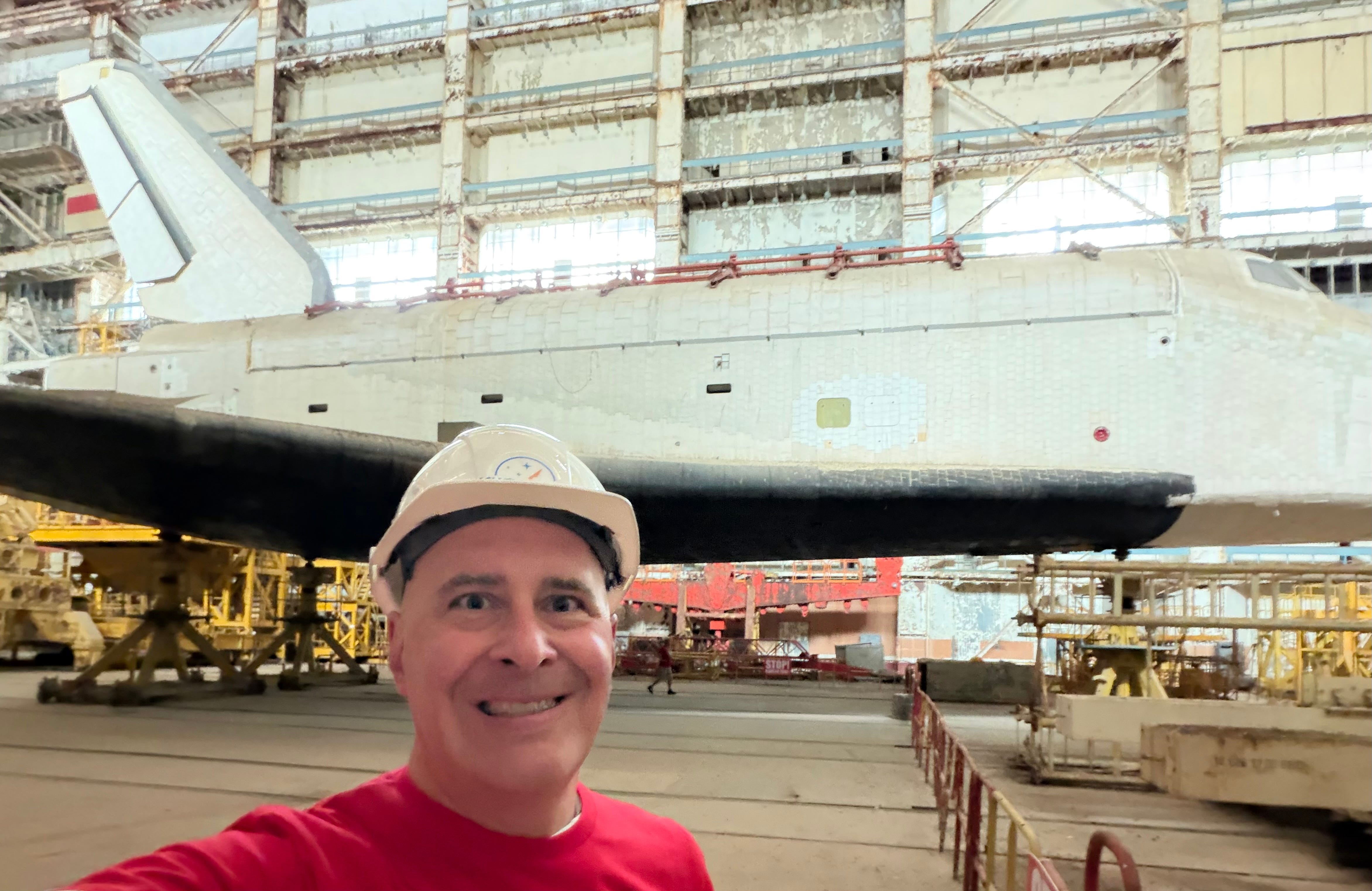
The same was true of the Buran shuttle.
Growing up during the last years of the Cold War, Buran was always this mysterious Soviet counterpart to NASA’s Space Shuttle. Seeing one in person was surreal enough. Seeing it sitting inside its original building, surrounded by aging infrastructure and decades of history, was something else entirely.
The tiles are weathered. Equipment still sits nearby. Nothing feels the least bit restored or sanitized. It honestly looks as though the engineers went home one Friday afternoon expecting to come back Monday, only for history to take a different turn. So long USSR, hello whatever comes next.
Places like that are incredibly rare.
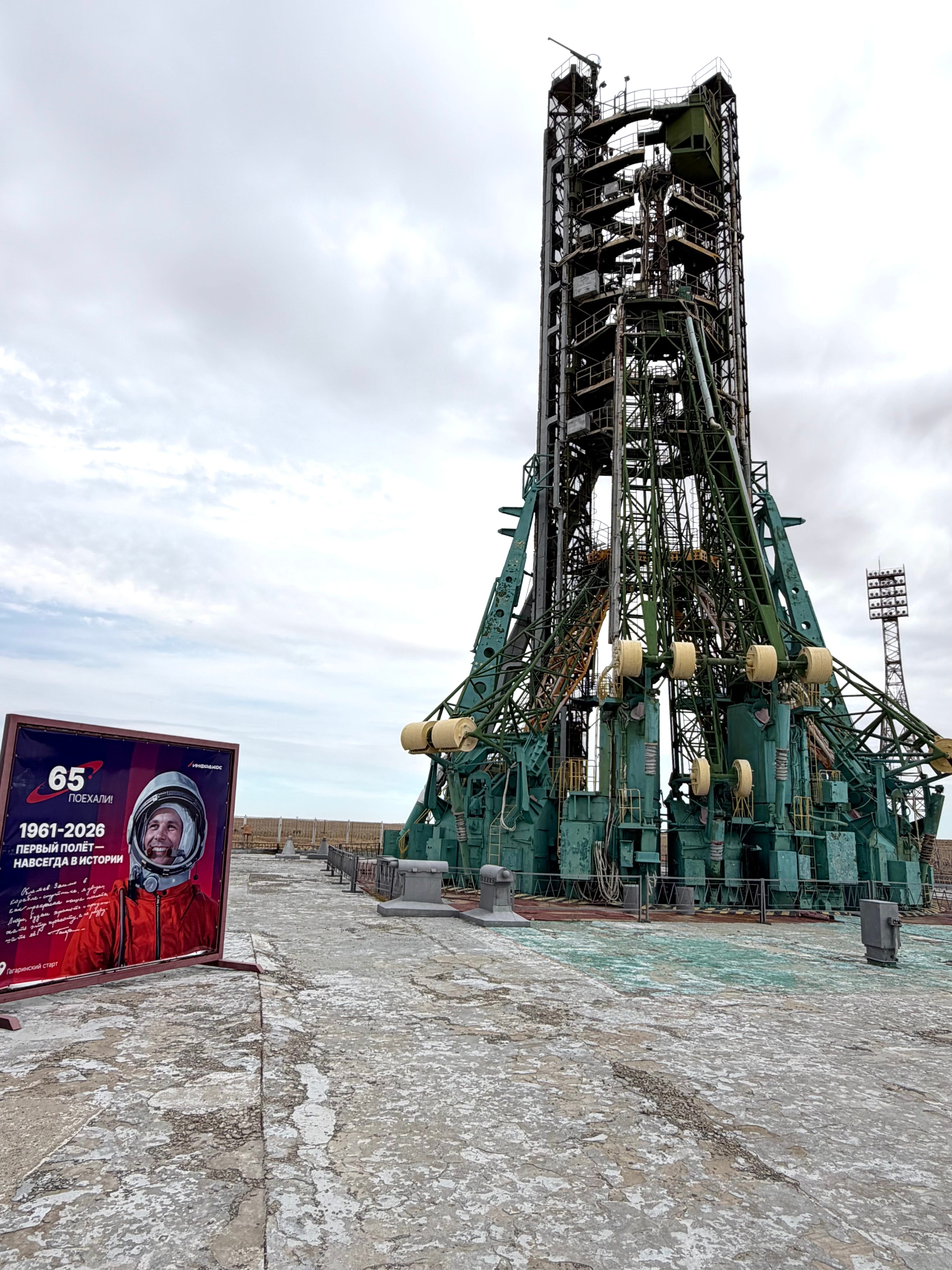
Standing at Gagarin’s Start was another one of those moments where history suddenly becomes real life, and you “learn” more about history than any textbook could ever teach you.
This is where Yuri Gagarin launched on April 12, 1961, becoming the first human ever to leave Earth. It’s one thing to know that fact. It’s another to stand on the same concrete, look across the same endless Kazakh steppe, and realize this quiet place was once the center of the world’s attention.
There aren’t many places where you can honestly say, “Everything changed right here.”
This is one of them.
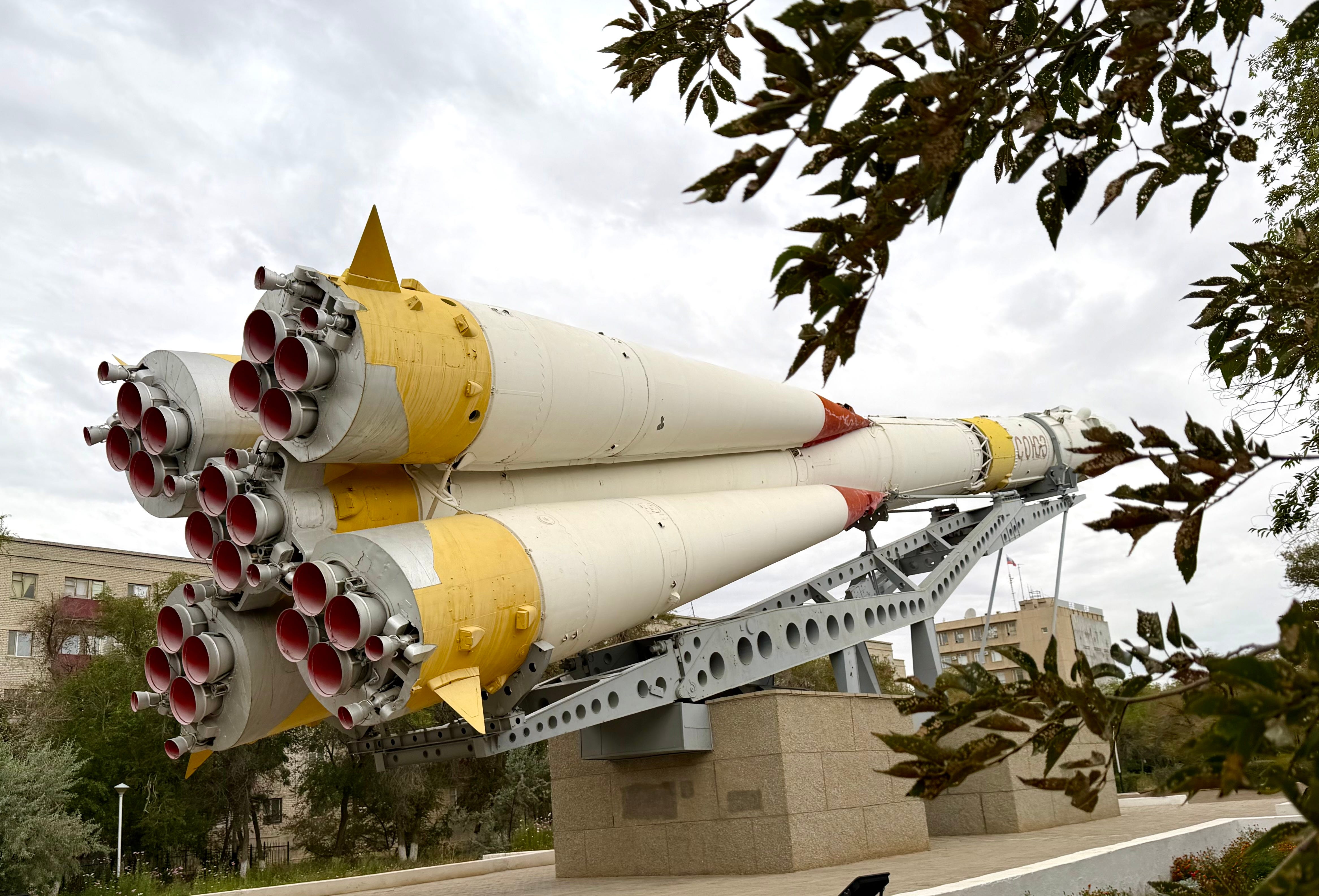
One surprise for me was how much I enjoyed Baikonur itself.
After the launch was canceled, a few people decided to cut their losses and leave one day early. I’m genuinely glad I didn’t. Believe me, I seriously considered it. More comfortable hotel back in Almaty, one less day on busses going from site to site. I’m glad I resisted the temptation. Spending another day exploring the city turned out to probably be one of my best decisions of the trip.
The museums were better than expected, the monuments genuinely interesting, and simply walking around gave me a much better sense of what it’s like to live in a city built almost entirely around one industry.
Then, there was the final evening. Hanging out with an incredible group of like-minded people, avgeeking with a couple of kindred spirits who were also in Baikonur with a different tour, and just all around amazing craic as the Irish would say.
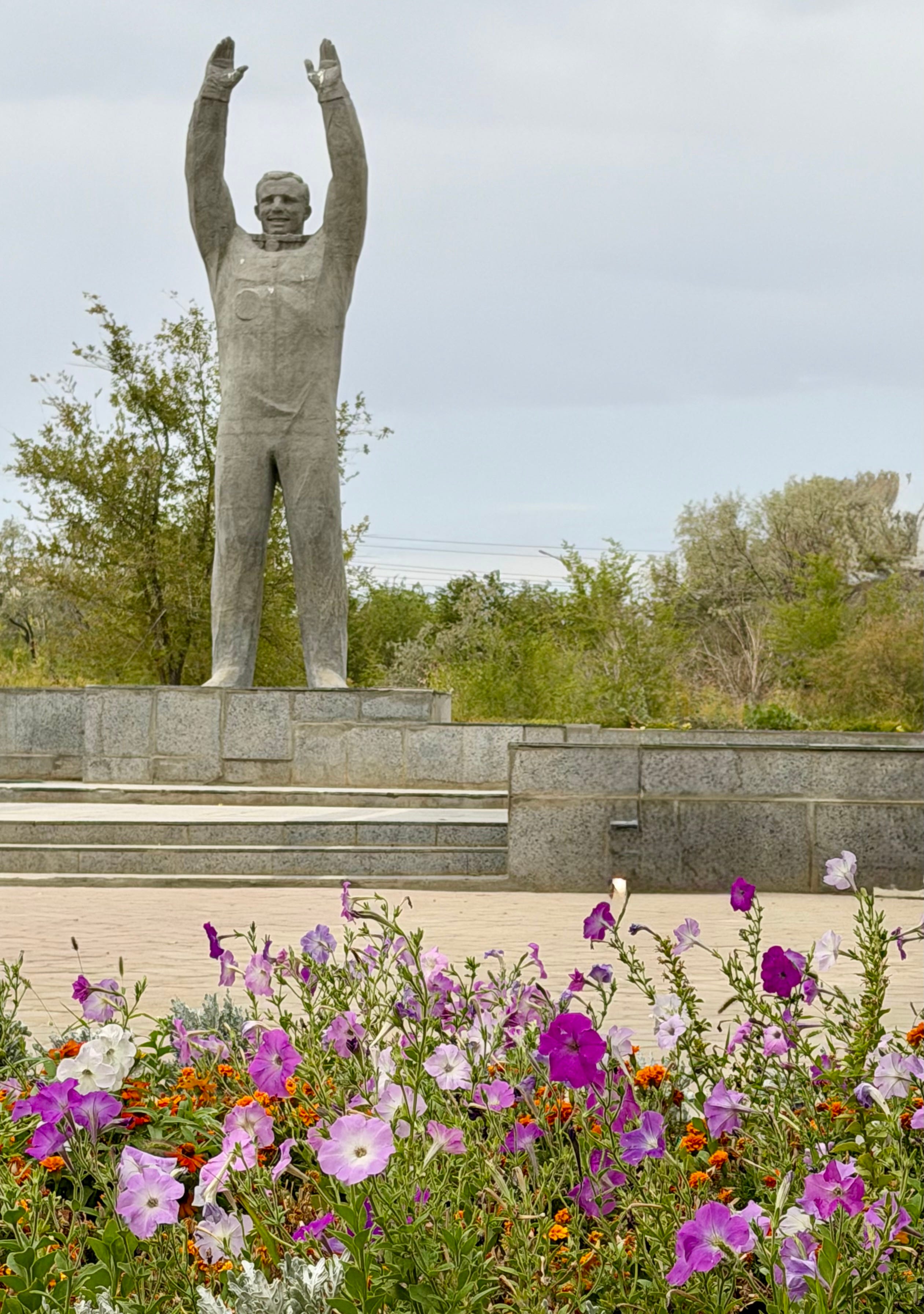
Everywhere you turn, Baikonur reminds you why it exists.
There are monuments to Gagarin, rockets displayed in parks, murals celebrating Soviet space achievements, and apartment blocks built to house the people who made it all happen. It’s impossible to forget where you are…and that’s what made this trip so amazing. It wasn’t an event, or a must-see site, it was basically an all-consuming experience.
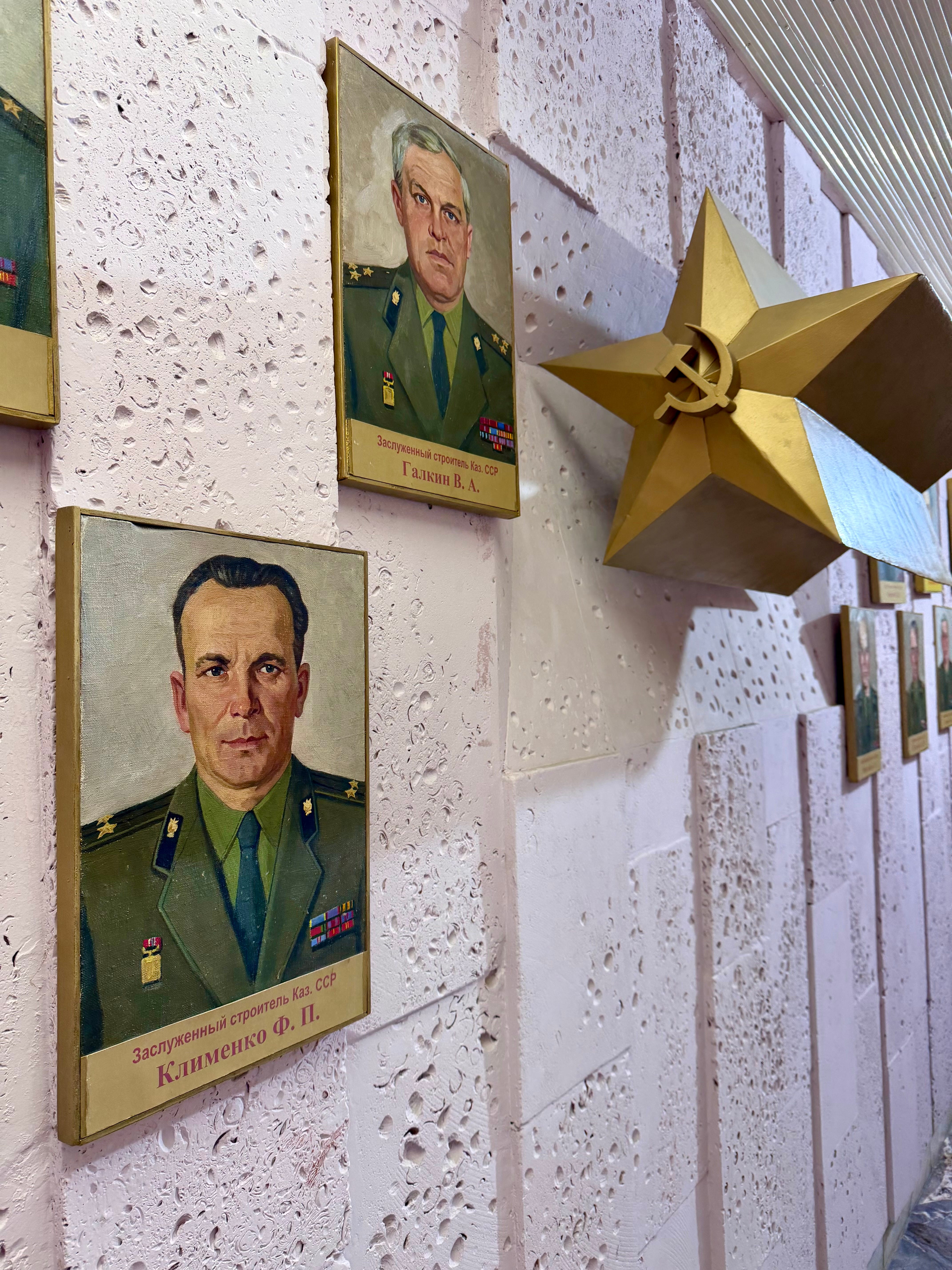
The museum inside the Palace of Culture deserves a special mention.
I’ll admit I wasn’t expecting much, but it ended up being full of fascinating Soviet-era artifacts, photographs, uniforms, and stories from the early days of the cosmodrome. Like so many things on this trip, it exceeded my expectations simply because I hadn’t expected much in the first place.
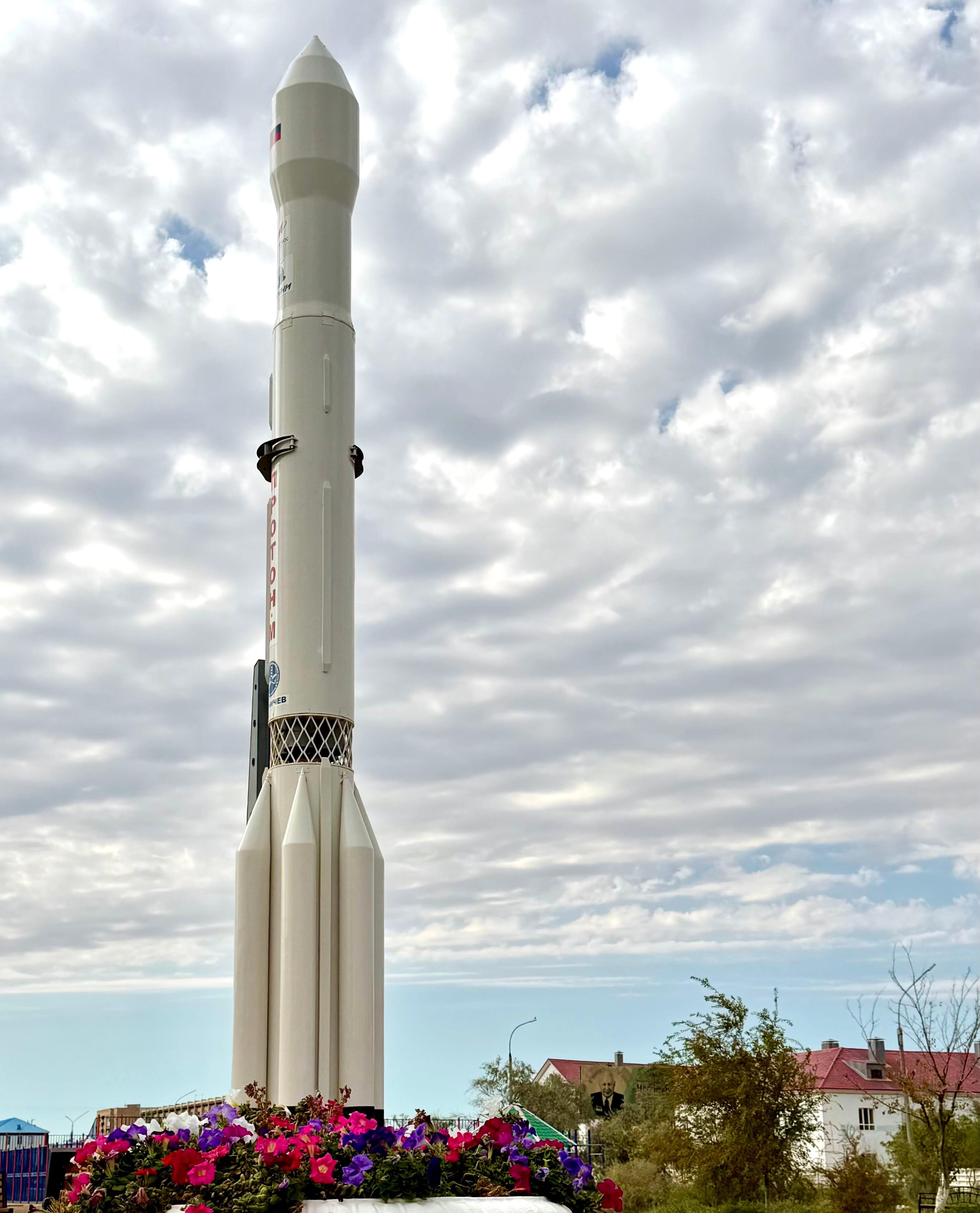
Then there was Rocket Park.
Because apparently one or two rockets around town just wasn’t enough.
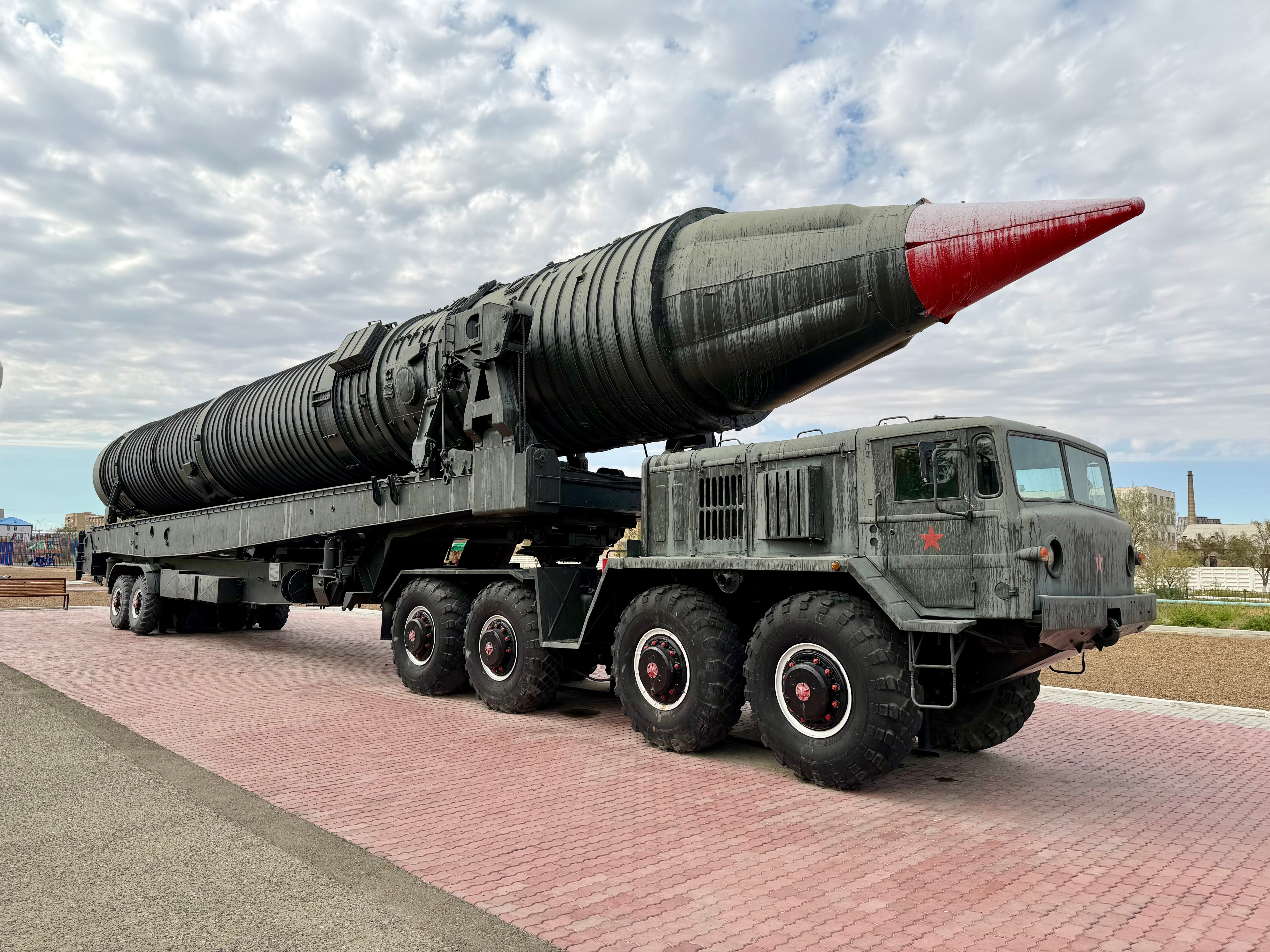
Perhaps the biggest surprise of all was how wrong we’d been about the practical side of visiting.
Before arriving we’d been told the restaurants would be crowded, the food mediocre, and that buying the group’s meal package was pretty much essential. As it turned out, the canceled launch also quietly canceled the meal package. Instead, we ate wherever we wanted and discovered several genuinely good restaurants around town.
Even Hotel Tsentralnaya improved dramatically once I learned the secret every experienced traveler eventually learns: skip the grim hotel breakfast, walk two blocks, and find the excellent local coffee shop instead. Sure, it’s not free and if you’re on a really tight budget that matters, but it’s more real instead of a curated for visitors experience.
Funny how often travel rewards curiosity.
Looking back, I’m actually grateful I stayed the extra day.
Yes, I’d still love to see a Soyuz launch someday. But Baikonur turned out to be far more than a place where rockets leave Earth. It’s a fascinating city, a living museum of the Space Race, and one of the few places I’ve visited that still feels genuinely undiscovered by mainstream tourism.
If you’re a fellow aviation or space geek, I’d absolutely recommend it. Tourism here is still a little rough around the edges. You’ll need permits, patience, and a willingness to embrace a bit of bureaucracy. But you’ll also get something that’s becoming increasingly rare in travel: an experience that still feels authentic.
And for those of us who grew up at the tail end of the Space Race, that’s worth every mile of the journey.