
Mostar is one of those places that feels instantly familiar and utterly surprising at the same time. You’ve probably seen the pictures: that iconic stone bridge spanning over turquoise blue waters…but until you’re standing there, watching the Neretva River crash around your feet, you don’t quite understand the magic of the place.
And if you visit off-season, like I just did? It’s…as the kids say these days…chef’s kiss: quieter streets, mostly open cafés, crisp autumn sun, and room to breathe in a city that has known both incredible beauty and unimaginable pain.
A City Named for Its Guardians
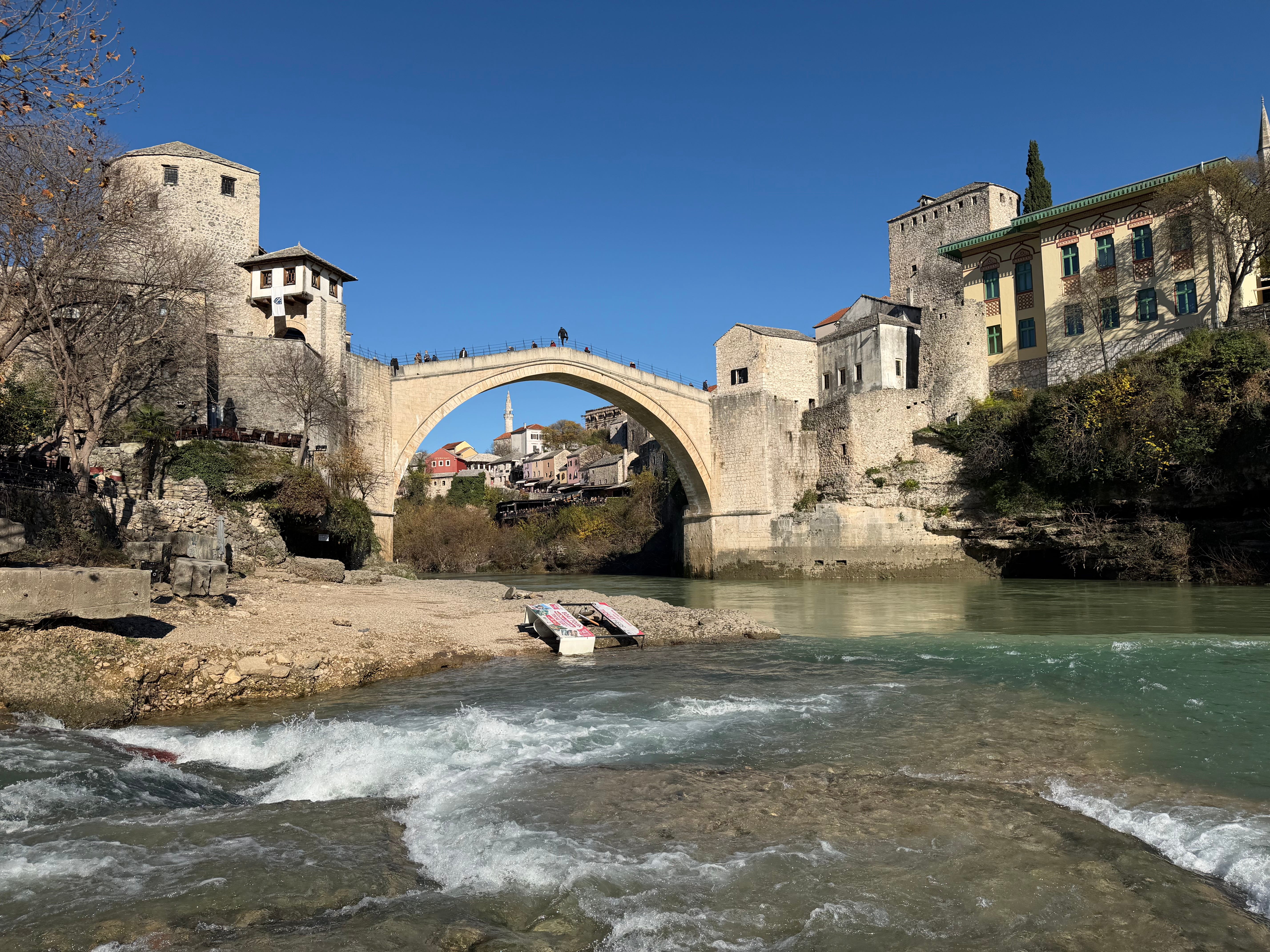
Mostar literally means “bridge-keeper”, named for the watchmen who guarded the medieval towers on either side of Stari Most. Built in 1566 under Suleiman the Magnificent, it was considered such an engineering marvel that even European architects came to study it.
For four centuries, the bridge connected not just two riverbanks, but two worlds: Christian and Muslim, Ottoman and European, Balkan and Mediterranean. Mostar thrived because it sat at a crossroads, a meeting point of merchants, cultures, languages, and cuisines.
A City Divided… Then Determined
Mostar’s story cannot be told without acknowledging the war that tore Bosnia and Herzegovina apart in the 1990s. The city was devastated by fighting between Bosniaks and Croats, and in 1993, Stari Most, a seemingly eternal arch, was shelled until it collapsed into the river below. Along with the Bamian Buddhas in Afghanistan I remember it as one of those hundreds of years old wonders lost to the ravages of war.
For Mostarians, the loss wasn’t just physical. It was emotional, symbolic, personal.
When the war ended, rebuilding the bridge became a moral obligation…a promise that the city would not be defined solely by its fractured and painful past.
In 2004, Stari Most was reopened, reconstructed stone by stone using the same original techniques. UNESCO later declared it a World Heritage Site, calling it “an exceptional symbol of reconciliation.”
Walking across it today, you feel that history under your feet.
Mostar Today: A Two-Beat City Learning to Share One Rhythm
Modern Bosnia & Herzegovina is famously complicated: two main entities, three main ethnic groups, and a power-sharing agreement that only a constitutional lawyer could love.
Mostar reflects that complexity. The east bank is predominantly Bosniak; the west, predominantly Croat. But daily life here is far more fluid than the headlines suggest. Kids walk to school. Shopkeepers open up. Old men argue politics over tiny cups of coffee. And the Neretva flows through it all, uncaring, unstoppable. This is why I come to these places, to learn what real life is like beyond the oft-dramatic media headlines that want us to be scared and divided.
Off-season, you can wander without bumping elbows with tour groups. Vendors will actually chat with you instead of just haggle, restaurants have spare tables by the river, and the city feels more lived-in than staged.
Eat by the Water. Trust Me.
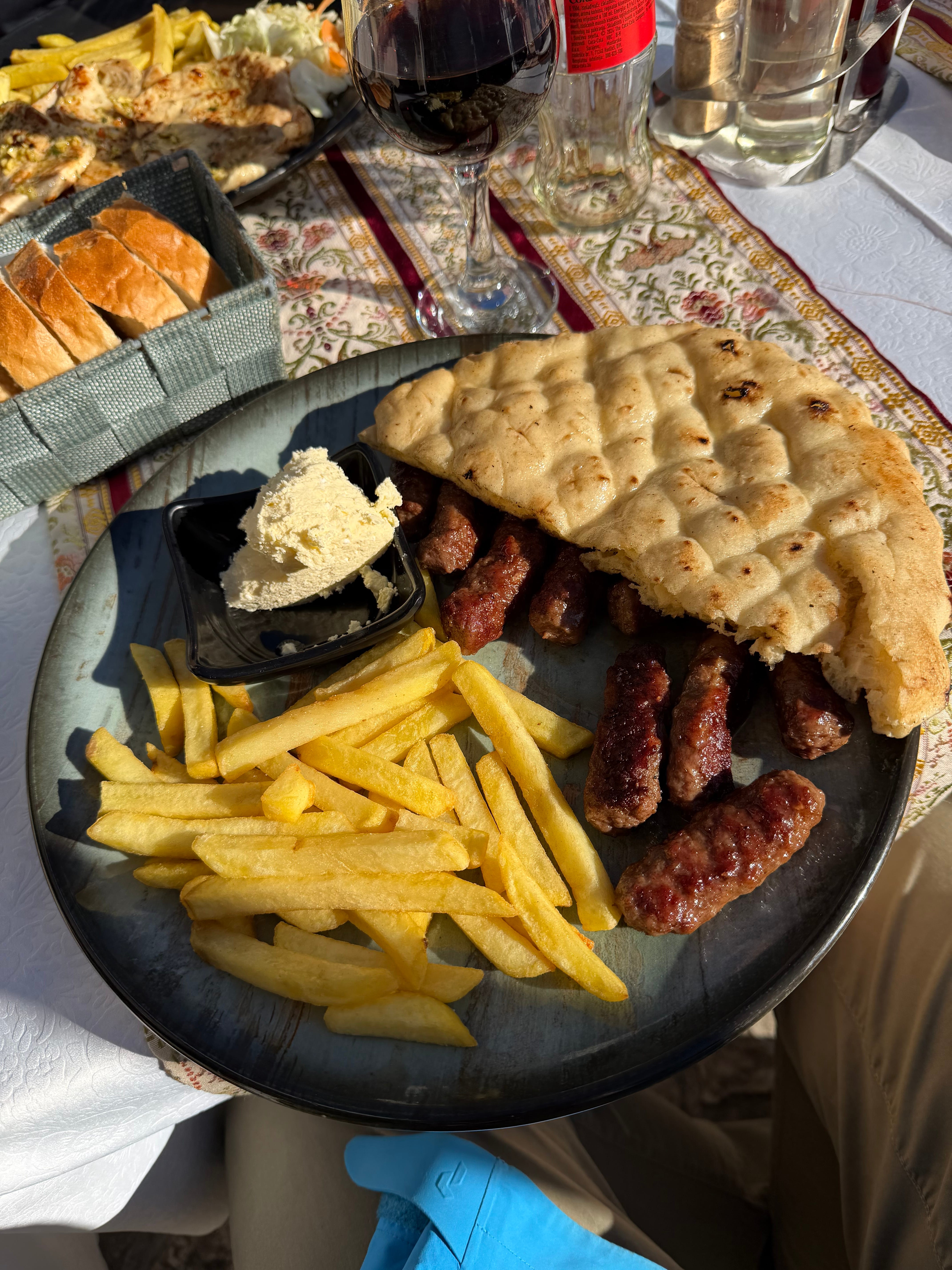
Mostar’s best meals come with a soundtrack: the roar of the river. Whether you order the mandatory ćevapi, grilled trout, or a plate of dolma, find a table near the water. The sunlight bounces off the Neretva just right, the air is cooler, and everything tastes better when you’re sitting where centuries of travelers have rested before you.
More Bridges, More Stories
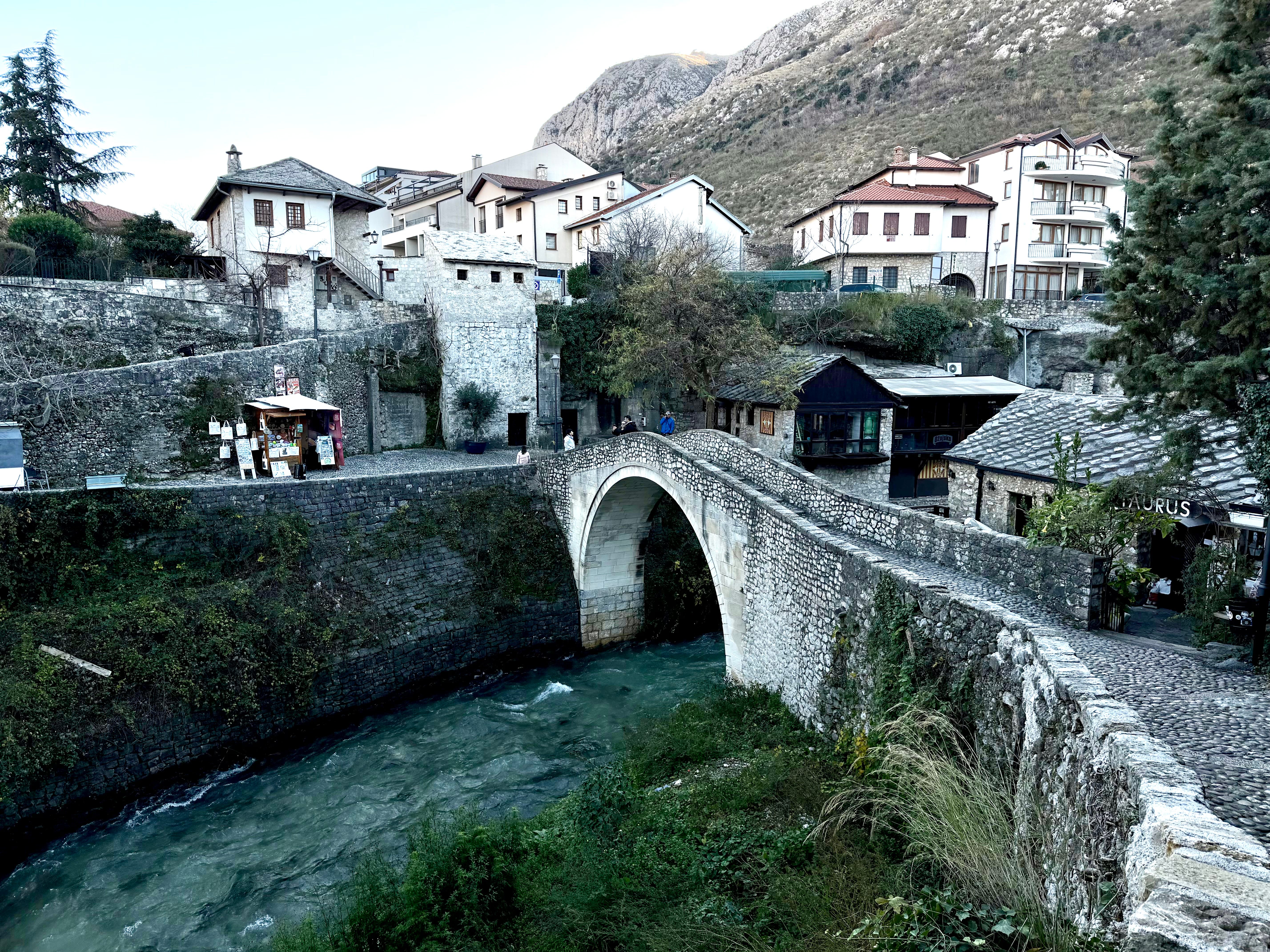
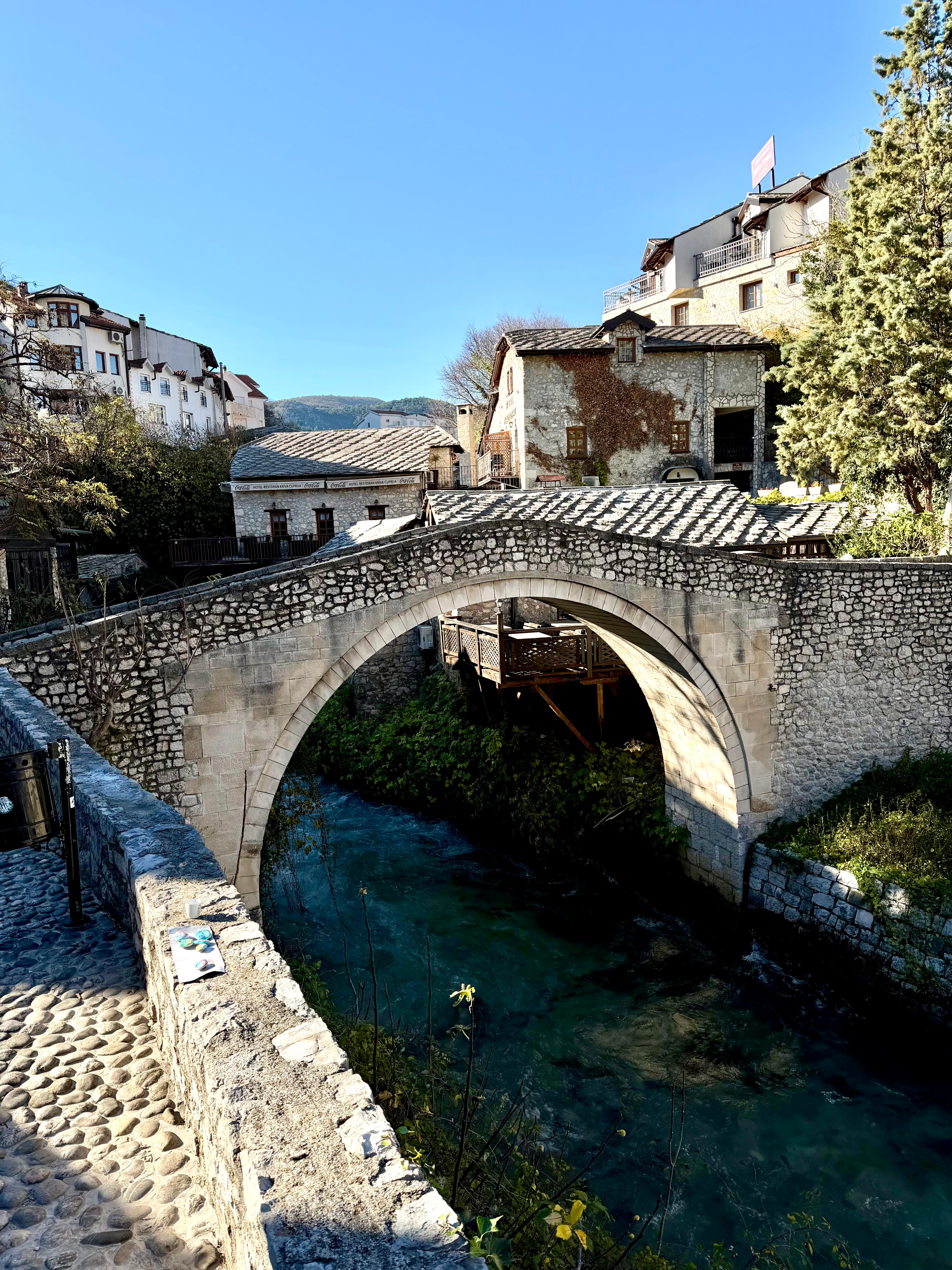
Kriva ćuprija looks like a scale model of Stari Most, and in a sense, it is. Built before its larger sibling, some say it was the prototype architects used to test their ideas. It’s tucked away on a quieter tributary, often missed by day-trippers, and absolutely worth the detour.
Golden Hours and Mountain Shadows
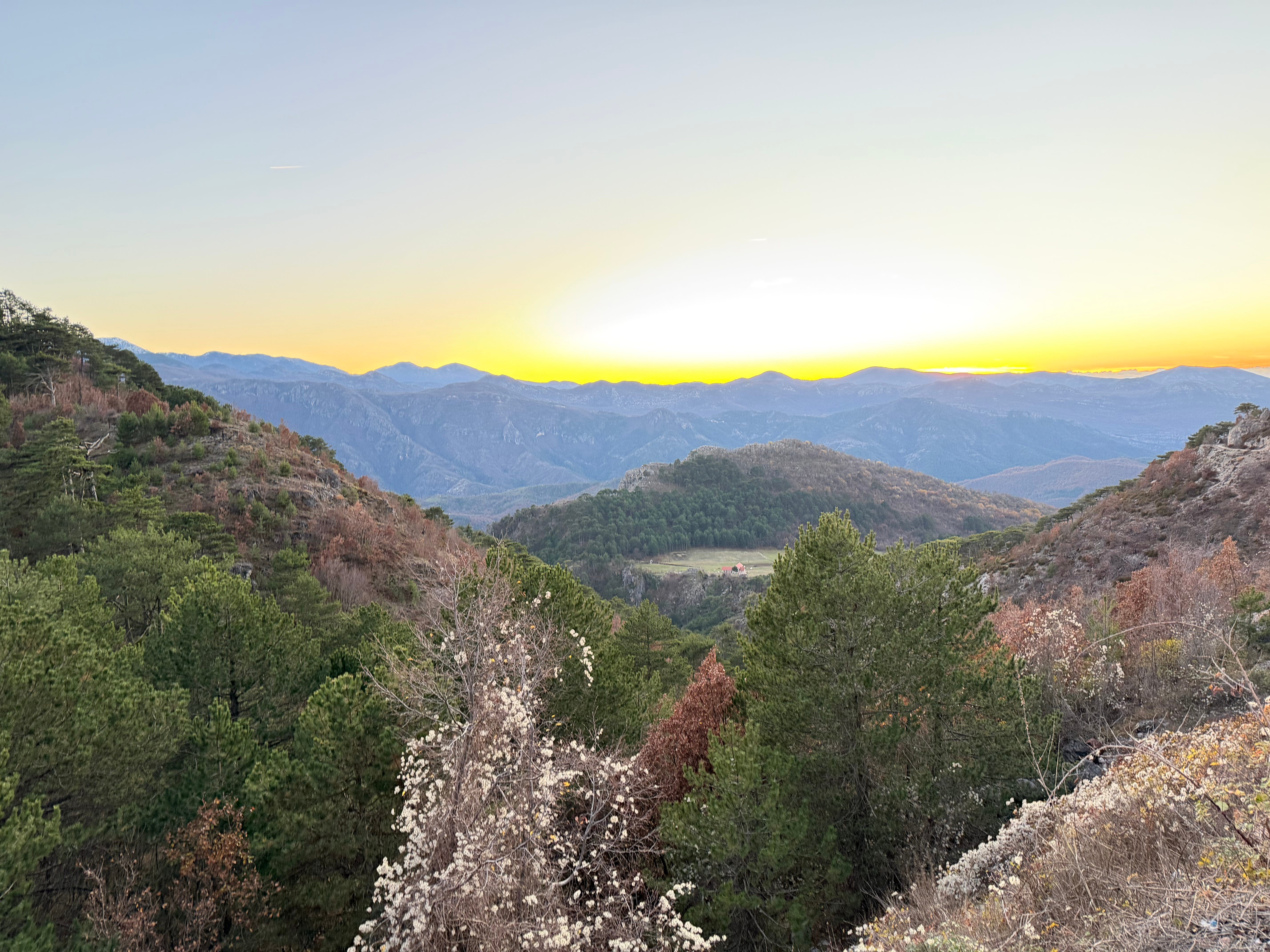
Climb just a bit outside town and you’ll understand why war photographers, poets, and painters all adored Mostar. The Dinaric Alps frame the valley like a theater set, and sunset spreads gold over everything.
Hot Tips for Visiting Mostar
1. Go Off-Season
Fewer crowds, kinder temperatures in a place that often lacks AC, open restaurants. Peak months can be overwhelming, so come for the place, not the crowds.
2. Eat by the Water
Seriously. Don’t settle for a table inland. The Neretva is half the experience. Get there early, however, because the closer to peak season you are the more likely the influencer hoards will have arrived before you.
3. Stay Overnight
Many visitors come as a day trip from Dubrovnik or Sarajevo, and miss the best hours. Evening and early morning are magical. They call it Golden Hour for a reason.
4. Visit the War Photo Exhibition
It’s small, powerful, and gives context you won’t forget.
5. Bring Good Shoes
Old Town isn’t cobblestone, it’s polished river stones. Beautiful… and slippery. Especially once the spray from the river coats them.
If this journey through Mostar resonated, a place where history, heartbreak, and resilience meet, consider subscribing. You’ll get each week’s story first, plus behind-the-scenes notes from the road.