
Over the past couple of weeks, I’ve been writing a lot about risk. Not eliminating it (because that’s not possible) but understanding it, managing it, and deciding which risks are actually worth taking. Because travel isn’t just sunsets, perfect meals, moments “for the ‘gram.” Sometimes it’s things going pear-shaped. Missed connections, lost passports (I’m still smarting from that one) …and occasionally, something much closer to where you thought you were safest: your hotel.
Hotels feel like somewhere you should feel safe and secure. You check in, drop your bags, exhale a little. But they also concentrate risk in ways most travelers don’t always think about. At the low end, maybe it’s something minor: an item that goes missing, a room that doesn’t feel quite secure. And at the far end there’s the rare, but very real risks: you have fires, natural disasters, or even targeted attacks. Hotels, especially international chains and high-traffic properties, can be visible, predictable gathering points.
As I said in the last couple of posts, and it’s worth repeating here: you can’t erase all risk. But you can understand which risks are worth taking and which ones are simply careless.
The good news is that hotel safety doesn’t require paranoia or a checklist that takes an hour to complete. It’s about small, deliberate habits that might take a minute or two, but meaningfully change your exposure. The kind of things that, once you start doing them, become second nature.
1. Location, Location, Location
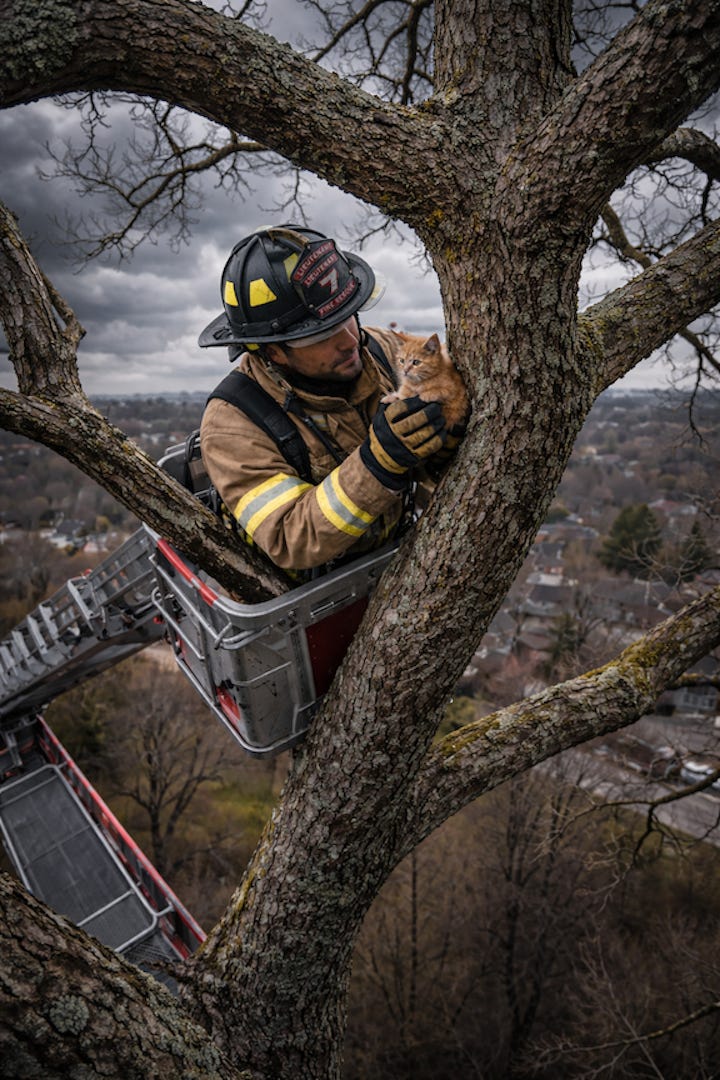
The moment you arrive in your room, before you unpack or even sit down, take a minute to understand your surroundings. Most people walk straight in, drop their bags, and never look up. That’s a missed opportunity.
Start with the basics: where are the nearest emergency exits? Not the one you used to get there, but the closest alternative. If there’s a fire or blockage in the hallway, your primary route may not be available, and in those moments, familiarity matters more than speed.
Floor selection also plays a significant role, even if it’s something you decide in advance. Ground floors are more accessible to opportunistic intruders, while very high floors can complicate evacuation or emergency response. A general rule of thumb is to stay somewhere between the third and sixth floors which is high enough to reduce casual access, but still within reach for most emergency services.
Even the orientation of your room is worth considering. Rooms facing busy streets or main entrances tend to be more visible and, by extension, more exposed. Quieter sides of the building, while less exciting, often provide a bit more privacy and distance from potential threats.
None of this guarantees anything. But it subtly shifts the odds, and over time, that’s what matters.
2. Stay Safe Inside the Room
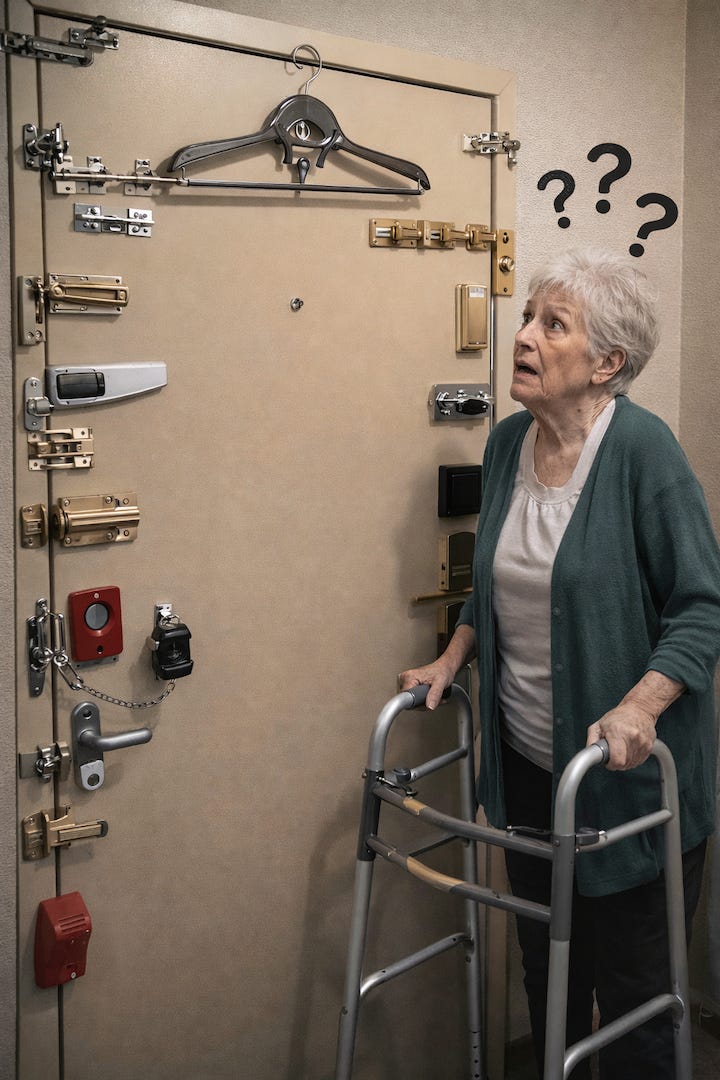
Once you’re inside your room, the next step is straightforward: use the security features that are already there. Deadbolts, chains, locking bars, these are not there to look pretty, and like seatbelts they don’t help if you don’t use them. They are simple, effective layers of protection, and it’s worth using all of them consistently.
The idea here isn’t to create an impenetrable space. It’s to introduce friction. Most unwanted situations are opportunistic rather than highly planned, and even small barriers can be enough to deter someone from trying.
There are also a few low-effort habits that can add an extra layer of security. Many travelers are familiar with the “hanger trick,” where a hanger is looped through the latch mechanism to make the door harder to open from the outside. It’s not foolproof, but it adds resistance and noise, and resistance is often enough.
The point is not perfection. It’s making your room a less appealing option than the one next door should someone be on a mission.
3. Don’t Broadcast Your Room Number

One of the most overlooked aspects of hotel safety is information…specifically, how casually it’s shared.
At check-in, a well-trained front desk should never say your room number out loud. If they do, it’s a small but telling signal that attention to detail may be lacking. You don’t know who is within earshot, and neither do they.
The same principle applies to your own behavior. It’s easy to mention your room number in passing: at the bar, in the spa, or while coordinating plans. But those small disclosures can add up, especially in environments where people are constantly moving in and out.
When you’re outside the hotel, a bit of discretion goes even further. There’s rarely a need to tell someone exactly where you’re staying, particularly if you’ve just met them. If an address is required for a practical reason, it’s far safer to write it down than to say it out loud.
You don’t need to assume the worst about everyone. But you also don’t need to make yourself easy to track.
4. Know Your Room (and What Might Already Be in It)

The first few minutes in your room set the tone for your stay, and they’re also the right time to do a quick, practical check.
Before fully entering, it’s a good habit to prop the door open with your luggage and take a brief look around. Check the bathroom, glance inside the closet, and pull back the curtains. You’re highly unlikely to find anything or anyone, but you’re confirming that everything is as it should be.
After that, turn your attention to the bed. Bed bugs are an equal-opportunity problem; they show up in budget properties and 5 star luxury hotels alike. A quick inspection of the sheets and mattress seams for small dark spots, reddish stains, or visible insects can save you from a much bigger issue later.
Luggage placement also matters more than most people realize. Setting your bag directly on the floor (especially on carpet) creates an easy path for pests to find their way in. Using a luggage rack or keeping your bag elevated is a small adjustment that significantly reduces that risk.
These steps take less than a minute. But if you skip them, you’re leaving things entirely to chance and potentially opening yourself up to months of pain down the road.
5. ICE: In Case of Emergency
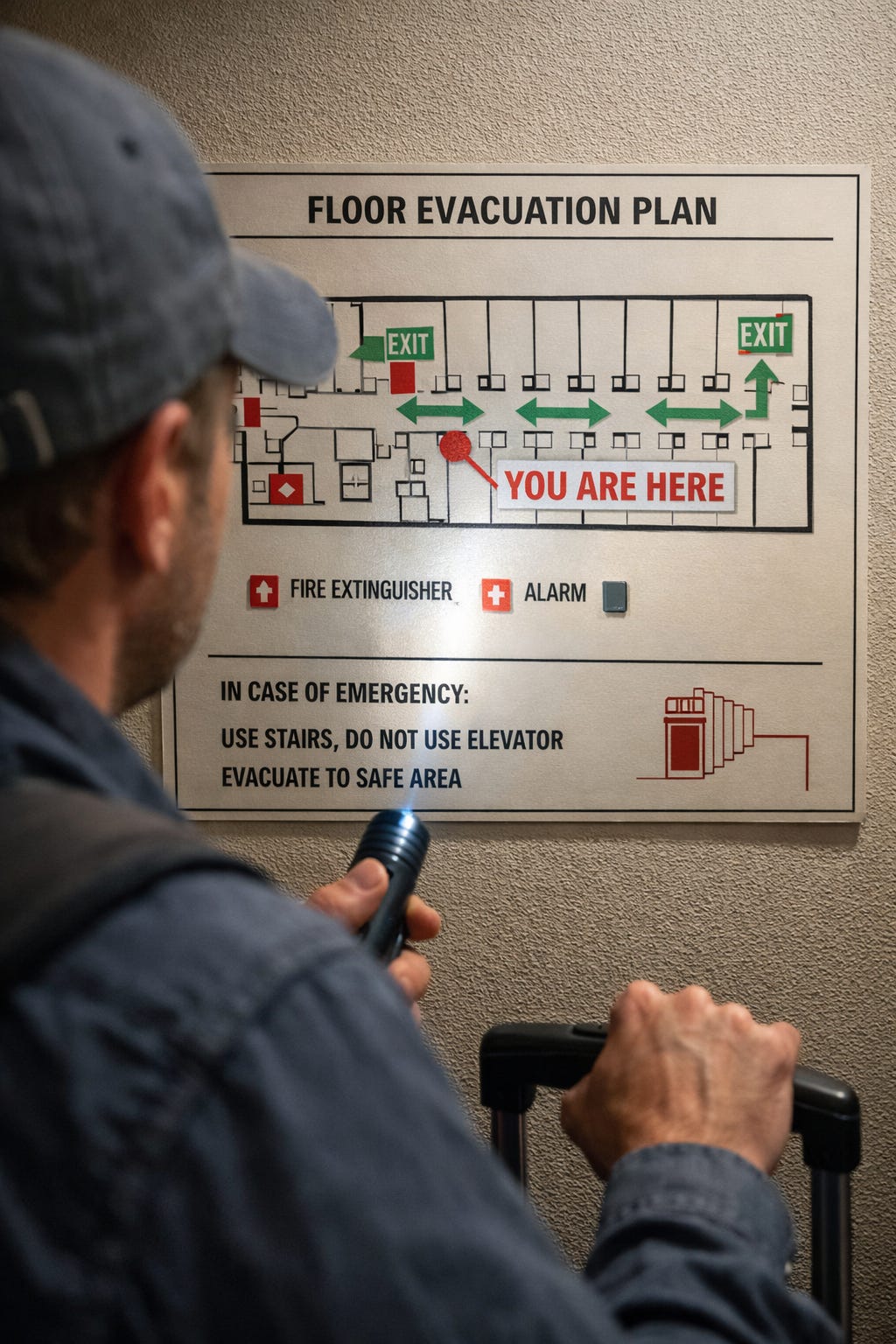
Finally, there’s the question of what happens if something actually goes wrong. In those moments, clarity and speed matter, and that starts with knowing your options in advance.
Take a moment when you arrive to check a few basics. What is the local emergency number? It’s different in every country, and assuming it is going to be 911 or another common option can waste valuable time. Does the room phone work? It’s easy to ignore, but it provides a reliable backup if your mobile phone is out of battery, has no signal, or isn’t connected to a local network.
It’s also worth noting the location of fire alarms, extinguishers, and any emergency call points on your floor. These details are often posted, but rarely noticed until they’re needed. Most hotels will have a diagram of the emergency escape route on the back of the door…take a quick glance before you need it.
Your smartphone is an incredible tool…until it isn’t. Having a simple, low-tech backup plan is part of traveling responsibly.
The Bottom Line
Taken together, this might seem like a lot of small and paranoid precautions. In reality, it’s a couple of minutes max of awareness at the start of your stay.
You’re not trying to predict every possible scenario. You’re simply reducing your exposure to the most common and most avoidable risks. That distinction matters.
Because the goal, as always, isn’t to eliminate risk entirely. It’s to make sure that the risks you do take are the ones that lead to meaningful experiences, not preventable problems.
Over to You
What are your go-to hotel safety habits? Anything you’ve learned the hard way that others should know?
Drop them below, because the best travel advice is almost always written in hindsight.
This is not something I usually focus on, but I got some useful info and tips! Thanks.
This is easier to travel with.
https://a.co/d/07pjBOSW