
So often, I find that most of the best travel experiences come from carefully-made plans that go completely wrong.
Let’s back up. A few weeks ago I found myself with an unexpected hole in my itinerary after having to leave Yemen earlier than planned. Suddenly, I had almost a week to fill, and rather than head home, I did what any perfectly reasonable traveler would do: started looking for cheap flights to somewhere interesting.
Armenia won.
From there, getting into neighboring Georgia was easy enough with an inexpensive flight, and I had another reason to visit Batumi, a city on the Black Sea coast that was a new region of Georgia for me. But while looking at the map, I noticed that Kutaisi, another Georgian city and a region I also hadn’t yet explored, was within easy reach.
Originally, I figured I’d just get an Uber/Bolt, see a few things, and head back. Nothing complicated. But then I decided to check GetYourGuide to see whether anything interesting was available.
And that’s how I ended up spending most of a day wandering through the abandoned vacation resorts of the Soviet Union.
A bargain trip into a time warp
The tour I found was a four-to-five-hour excursion exploring the abandoned Soviet sanatoriums around Tskaltubo, a spa town just outside Kutaisi. The price was somewhere in the low $20s, which seemed almost absurdly reasonable for several hours of transportation and a guide.
There was one small complication: the tour departed from Kutaisi, and I was staying in Batumi.
No problem. I arranged a driver in advance to take me to Kutaisi and back, at roughly $25–30 each way. It would mean getting up super early, but for a journey of that length, it was a bargain, and considerably easier than trying to coordinate public transportation with a tour departure time.
I even had a little time to wander around Kutaisi itself, which turned out to be a pleasant bonus. The city sits along the Rioni River, with bridges, older neighborhoods, and a landscape that feels quite different from coastal Batumi. It’s one of Georgia’s oldest cities, and somewhere I’d happily return to explore properly.
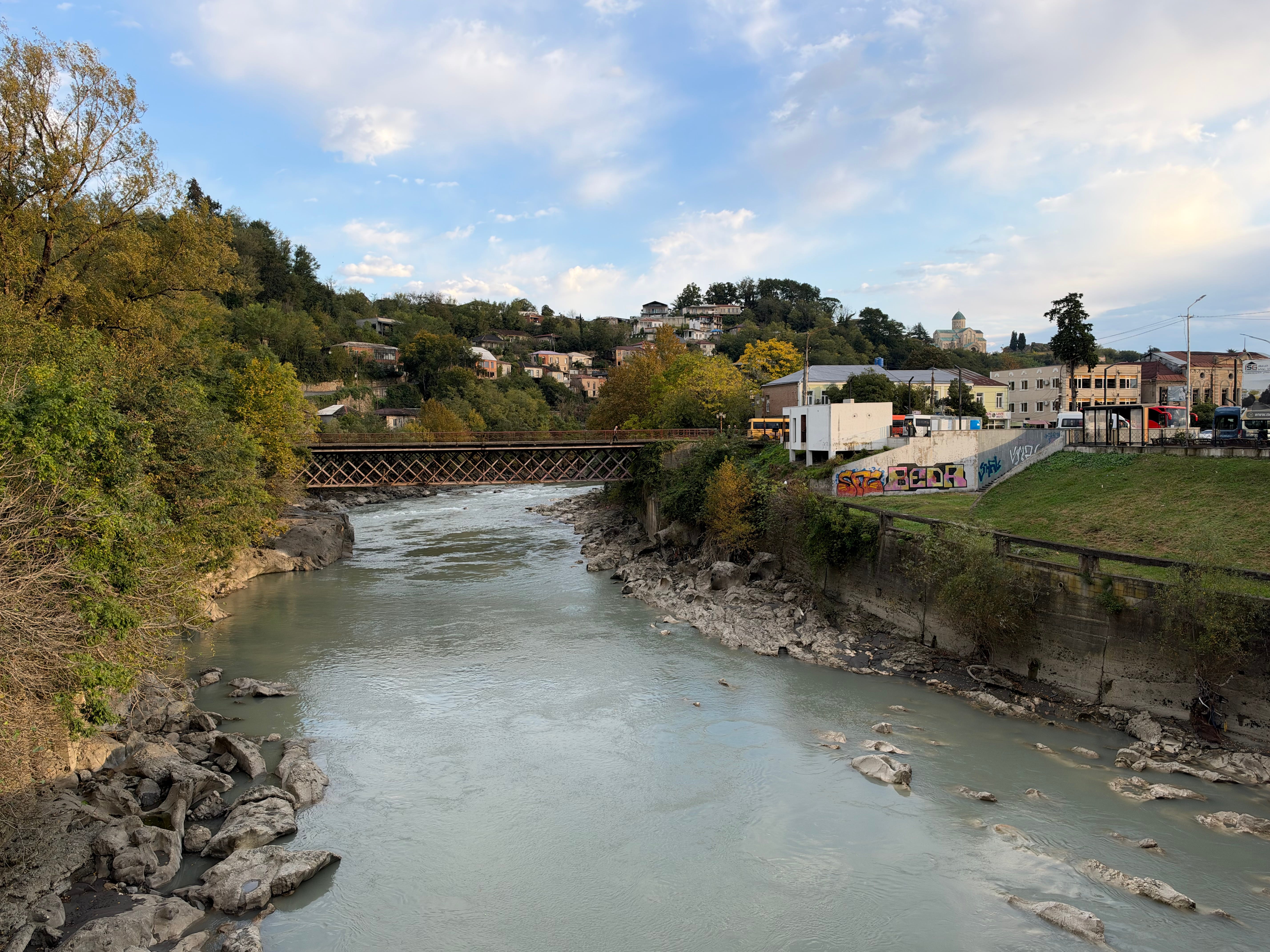
But the real attraction was waiting a short drive away, in a town that once welcomed thousands of visitors seeking rest, relaxation, and a healthy dose of Soviet-approved medical treatment.
When the government sent you on vacation
To understand Tskaltubo, you need to understand something about the Soviet Union: vacations weren’t necessarily just about having fun and seeing the “sites.”
They were also about making you a healthier, more productive member of the working class.
The Soviet sanatorium system was a combination of healthcare, social welfare, and state-sponsored tourism. Workers could receive subsidized or sometimes free stays at facilities where rest and medical treatment were part of a prescribed regimen. Trade unions and government institutions played major roles in distributing these opportunities, although access and quality varied considerably depending on your position and connections.
And these weren’t necessarily modest little clinics.
Some were enormous, architecturally extravagant resorts with marble staircases, elaborate dining rooms, theaters, landscaped gardens, and facilities for all sorts of treatments. Guests might receive mineral-water baths, massages, physiotherapy, mud treatments, and other therapies that ranged from genuinely beneficial to rather questionable by western medical standards.
The idea was that a vacation should restore your health and prepare you to return to work. You weren’t simply lying around drinking cocktails by the pool. (Although I’m told vodka was prevalent) You were participating in an organized program of recuperation…how very…big brother.
Tskaltubo was famous for its naturally warm, mineral-rich waters, especially its radon-containing springs, which were promoted for treating a variety of ailments. The town developed into one of the Soviet Union’s major spa destinations, with particularly grand facilities constructed during the Stalin era and subsequent decades.
Georgia’s climate, scenery, and reputation for hospitality made it an appealing destination for Soviet vacationers. Tskaltubo became a place where workers, officials, and privileged guests could spend weeks recovering from the demands of communist life.
And the architecture reflected the importance the state placed on these institutions.
A grand past, slowly falling apart
Arriving in Tskaltubo today is a rather strange experience.
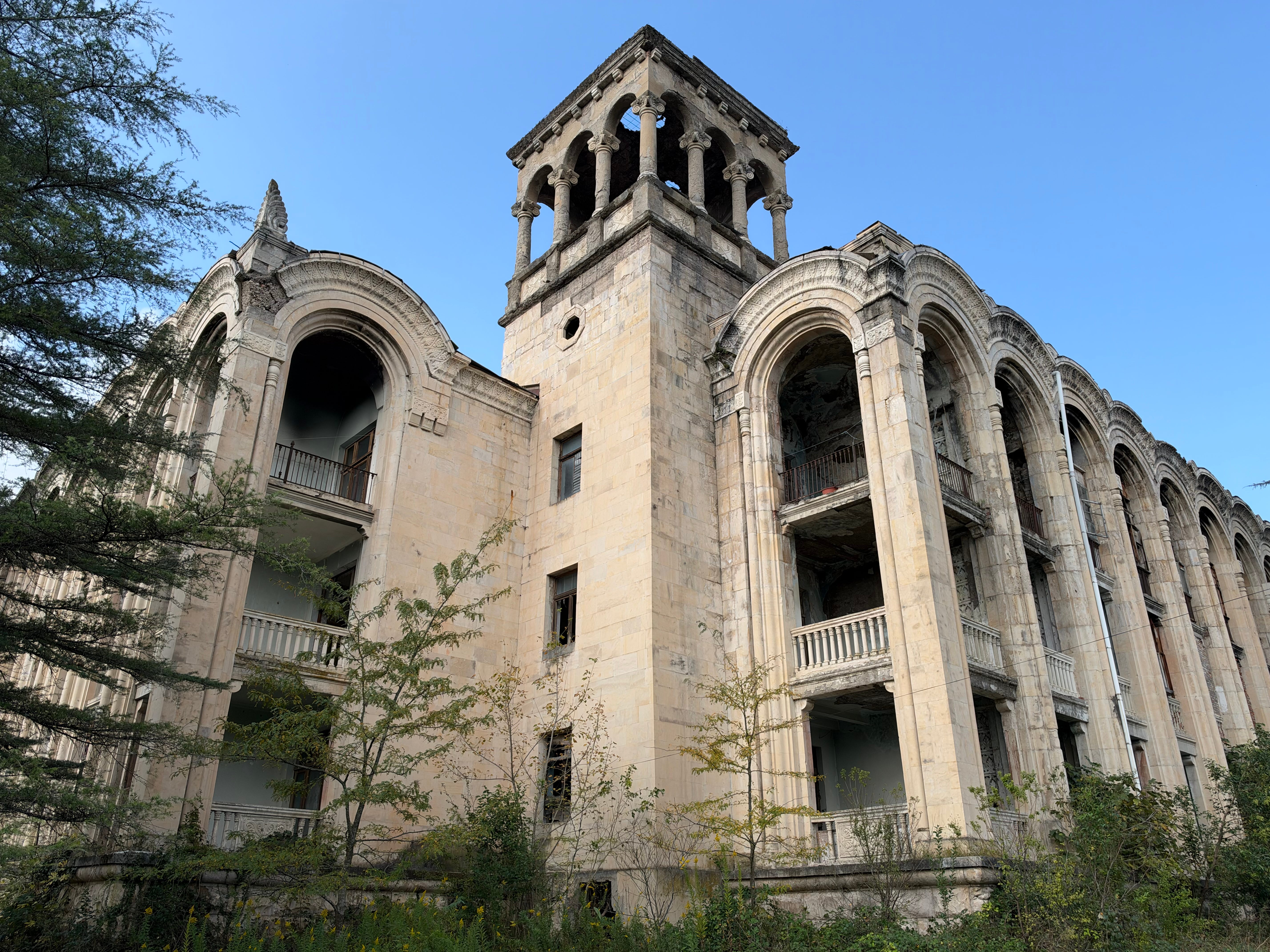
These enormous buildings were once symbols of Soviet prosperity. Now, many stand empty, with vegetation creeping through windows, plaster falling from ceilings, and elaborate architectural details slowly deteriorating.
Some look like abandoned palaces. Others resemble grand hotels that were simply forgotten. It’s a striking difference in how post-Soviet countries have approached abandoned infrastructure and how Europe/North America does. In the “west” space is money, and old infrastructure is destroyed and moved aside so something new can be build. In post-Soviet places (especially not in big cities) things are often just left to crumble.
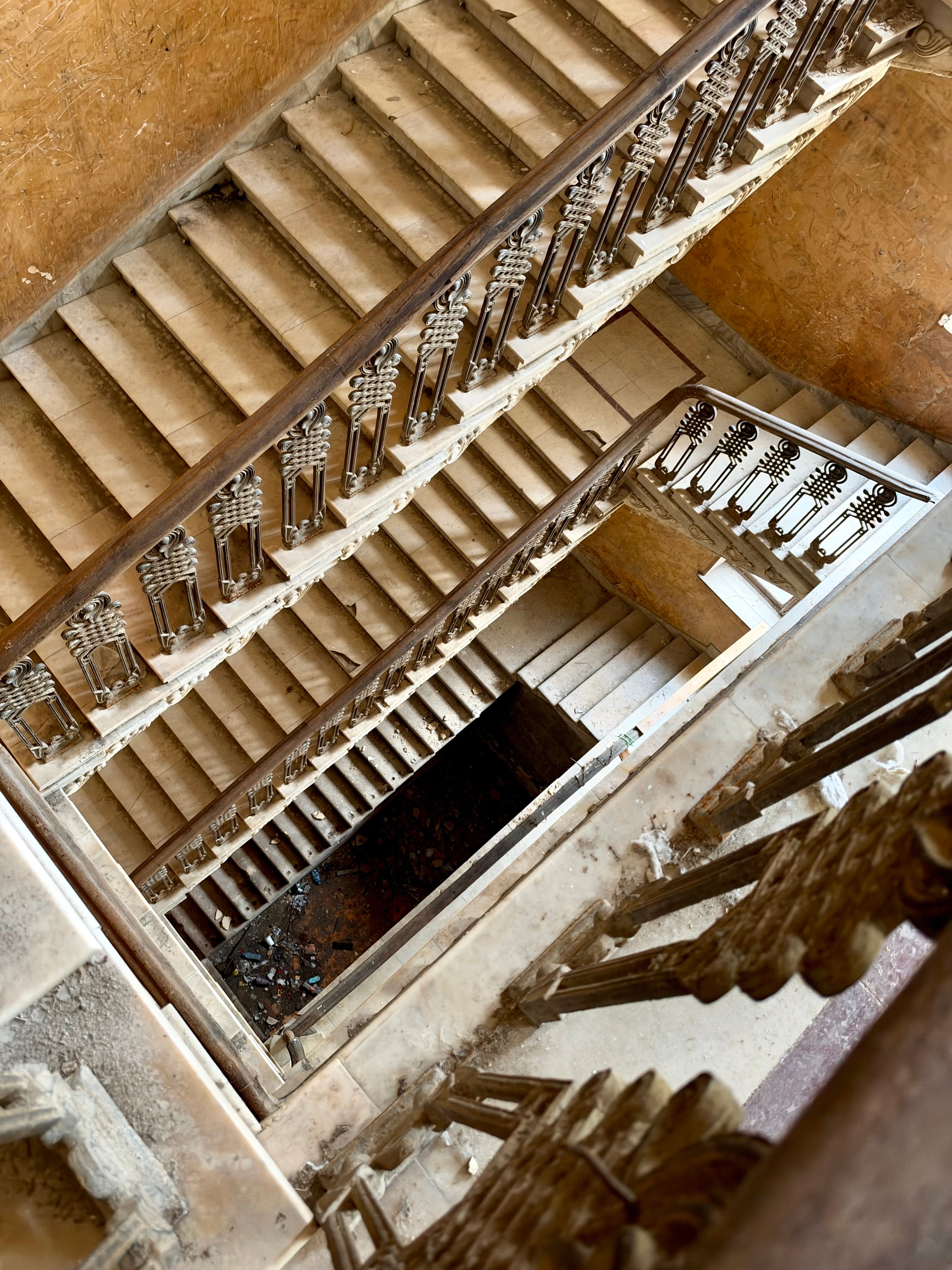
One of the buildings we explored had a magnificent staircase, with ornate metal railings and sweeping flights of steps that would have looked perfectly at home in an expensive European hotel.
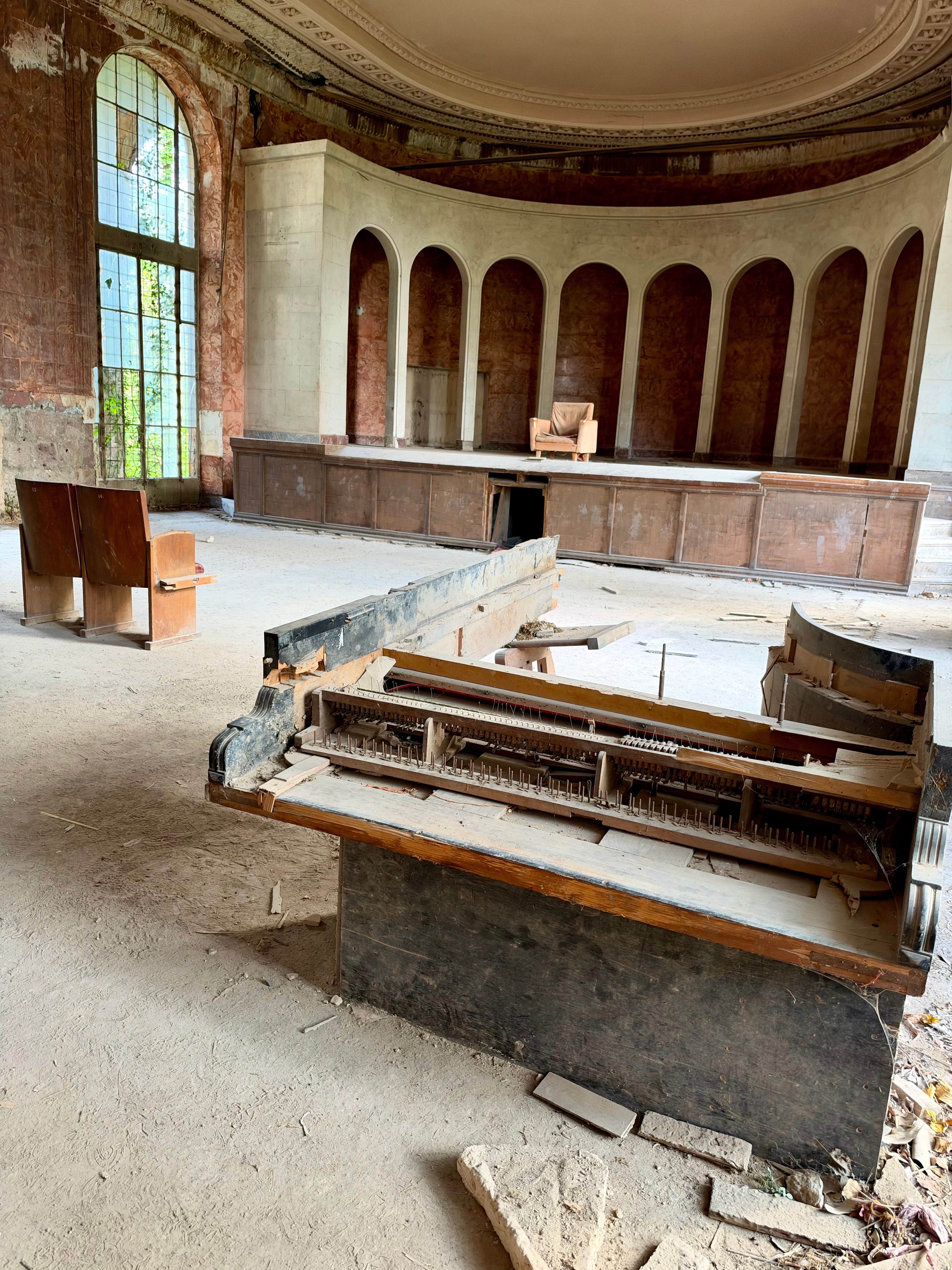
Another had an enormous hall with a stage, elegant arches, and the remains of a piano. It’s not difficult to imagine the room filled with guests enjoying a concert or some other evening entertainment.
Today, the piano is little more than a wooden skeleton, its internal workings exposed and covered in dust. The stage, meanwhile, still has a solitary chair sitting in the middle of it.
It’s an extraordinary scene, and one of my favorite photographs from the day.
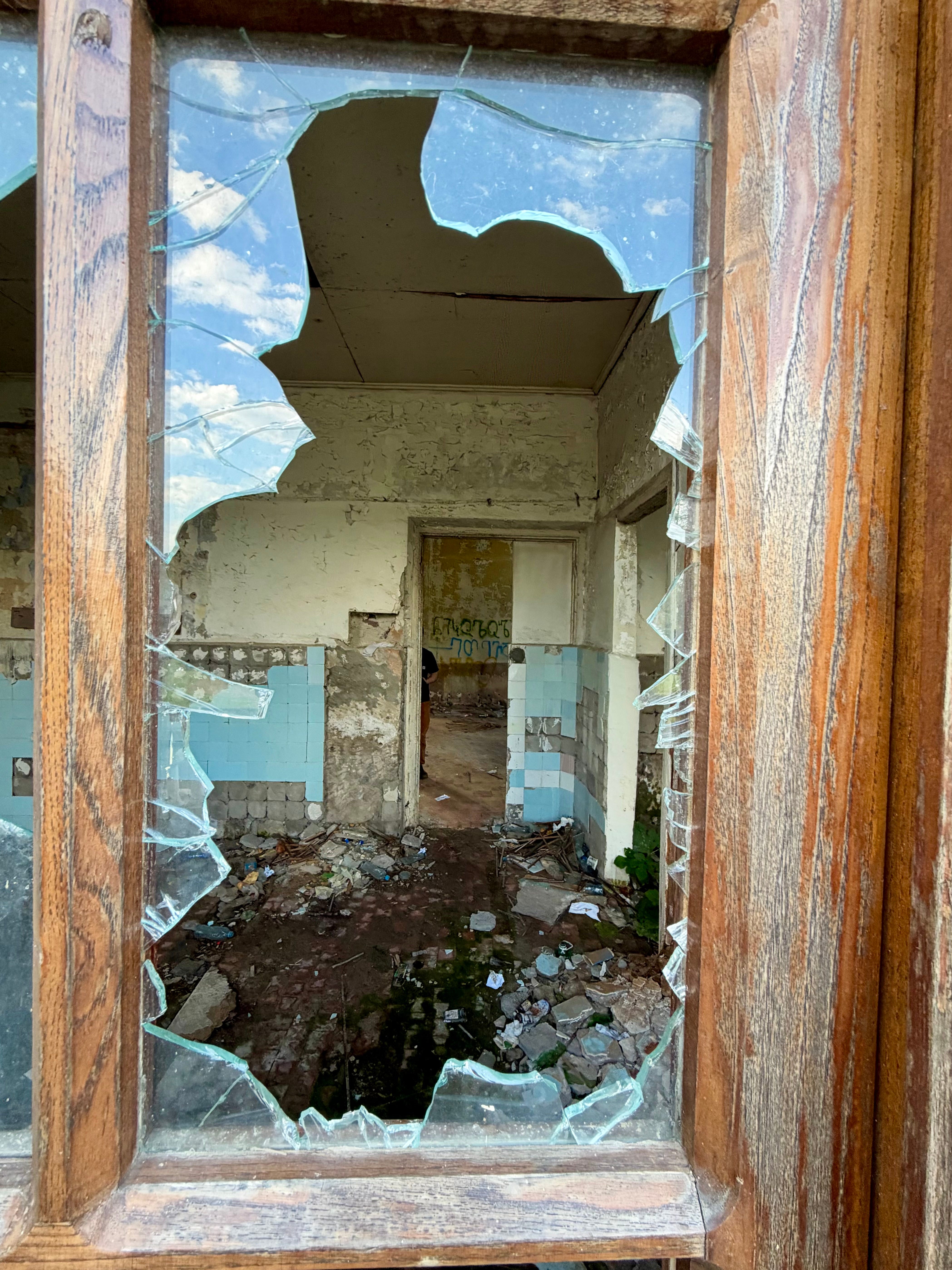
Elsewhere, broken windows revealed rooms filled with rubble, peeling paint, and the remains of everyday life.
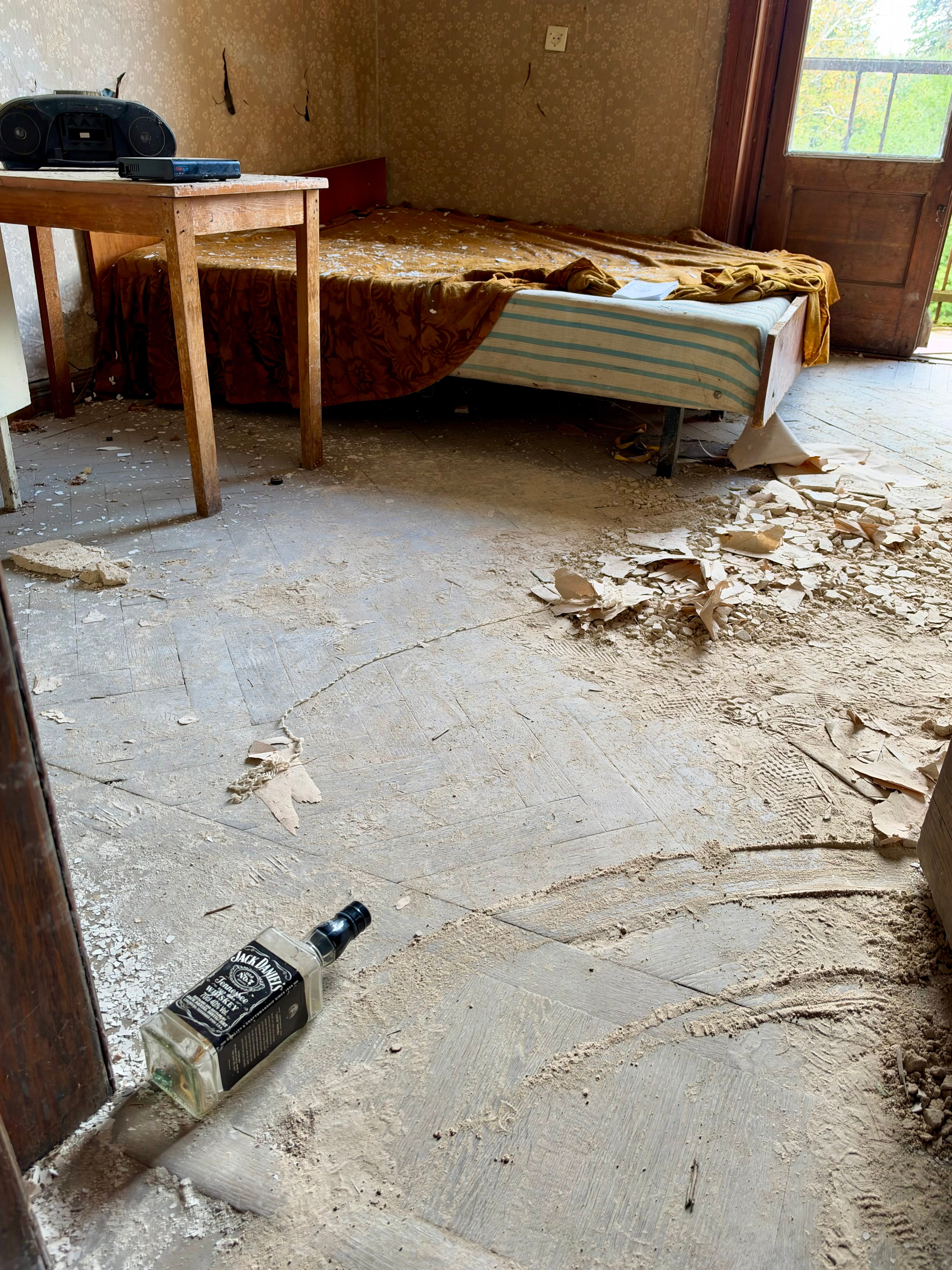
One room was particularly striking because it still contained a bed, a table, and an old radio-cassette player. A Jack Daniel’s bottle lay on the dusty floor, an oddly familiar piece of modern consumer culture amid the ruins of a Soviet-era institution.
I have no idea who last occupied that room, or when. But it was a reminder that these buildings didn’t simply stop existing when the Soviet Union collapsed. Their stories continued, often in unexpected and sometimes tragic ways. Many of the rooms have been given to refugees from the conflict in Abkhazia, and some still have people living in them.
What happened after the Soviet Union collapsed?
The decline of Tskaltubo wasn’t simply a case of tourists losing interest in old-fashioned spa treatments. When the Soviet Union dissolved in 1991, the economic and institutional system that supported these enormous resorts largely disappeared. State subsidies vanished, established tourism networks collapsed, and many facilities became financially unsustainable.
But there was another, much more human chapter to the story.
As mentioned above, during the conflicts in Abkhazia in the early 1990s, large numbers of ethnic Georgians were displaced from their homes. Many ended up living in former sanatoriums and hotels in Tskaltubo, sometimes for decades.
Buildings originally designed to provide temporary rest and medical treatment became long-term homes for families who had lost almost everything. It’s an important part of the story, and one that makes these places considerably more complicated than simply picturesque ruins.
Some former residents have since been rehoused, and redevelopment has begun at various properties. Other sanatoriums remain abandoned, while a few have been restored or returned to use.
The town is slowly trying to reinvent itself, but its Soviet past remains impossible to ignore.
A surprisingly good way to spend $20
One of the things I appreciated most about this excursion was how little effort it required on my part.
I’m usually the person researching transportation options, figuring out opening hours, planning routes, and trying to squeeze as much as possible into a day. And I enjoy doing that. But sometimes it’s rather nice to hand over $20-something, climb into a van, and let somebody else worry about the logistics.
Our guide knew the sites, provided fantastic historical context, and got us between locations efficiently. Over four or five hours, we covered far more than I would have managed independently, particularly given the distances between some of the buildings.
The only slightly disappointing aspect was the group itself. There were about a dozen of us, and it was one of the less sociable tours I’ve ever joined. Nobody seemed particularly interested in chatting or getting to know one another.
Not a big deal, really. I’ve had wonderful group tours, but this simply wasn’t one of them. And for the price, I wasn’t exactly expecting a private guide, a luxury vehicle, and a champagne reception. 😂 (The same tour WAS actually available as a private tour for north of $250, so…)
I was paying for transportation, access to interesting places, and someone who could explain what I was looking at. On those counts, the tour delivered extremely well.
The unexpected adventures are often the best
Had my original itinerary gone according to plan, I wouldn’t have been in Georgia that week at all.
I certainly wouldn’t have found myself wandering through the ruins of Soviet vacation resorts, photographing broken pianos, ornate staircases, and buildings that once played an important role in the lives of thousands of people.
And that’s one of the things I love most about traveling without every minute planned months in advance. Sometimes a disrupted itinerary creates opportunities you never would have considered otherwise.
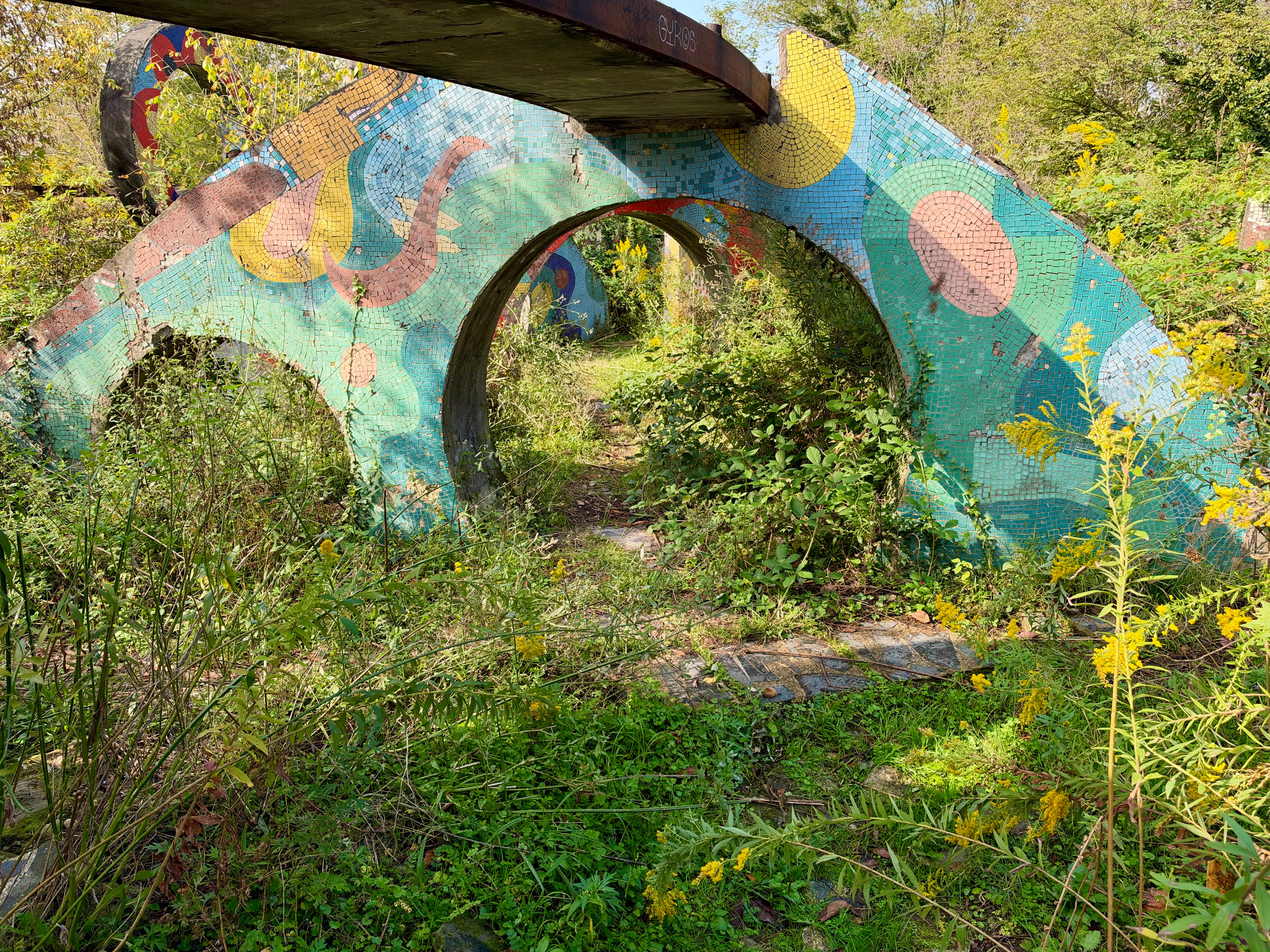
Tskaltubo isn’t a normal tourist attraction. There’s no visitor center, no carefully restored historical experience, and certainly no gift shop waiting at the exit. Much of what makes it fascinating is precisely that the buildings have been left to tell their own complicated stories.
They’re beautiful in places, haunting in others, and a fascinating reminder of how quickly the institutions and assumptions of one era can disappear.
If you find yourself in western Georgia, I’d absolutely recommend making time for Tskaltubo. Whether you’re interested in Soviet history, architecture, photography, or simply unusual places, it’s well worth a few hours.
And if you’re like me and normally insist on arranging everything yourself, don’t overlook the occasional inexpensive group tour. Sometimes letting somebody else handle the logistics is worth every penny…even if your fellow travelers aren’t particularly chatty. 😂