
There are certain destinations seasoned travelers love to dismiss.
Hurghada.
Sharm el Sheikh.
Cancun.
Large parts of the Caribbean.
Papeete.
They’re labeled too packaged, too resort-heavy, too manufactured for inexperienced and lazy travelers. Places where the experience is curated, buffered, fake. And yes, that version absolutely exists. You can fly thousands of miles, check into a gated compound, rotate between buffet lines and infinity pools, and leave having seen little more than a swim-up bar and the inside of an airport transfer van.
And there is nothing inherently wrong with that. Rest has value. Escapism has value. Sometimes umbrella drinks and sunburned afternoons are exactly what that era of your life calls for.
But here’s the part that rarely gets discussed: these places are not inherently shallow. They are simply amplifiers of your intent.
They are what you make them.
Sharm el Sheikh: Beyond the Resort Perimeter
Most visitors to Sharm el Sheikh never leave the orbit of their hotel. The Red Sea is spectacular, the dive boats line the horizon, and the logistics are frictionless. It’s easy to stay put.
That’s not me, however. All regions of the world are worth visiting, so I needed a way to “do Sharm” on my own terms.
I hired a local guide and told her I wanted to understand her city. What followed was four hours that fundamentally altered my perception of a place I might otherwise have written off as “just another resort town.”
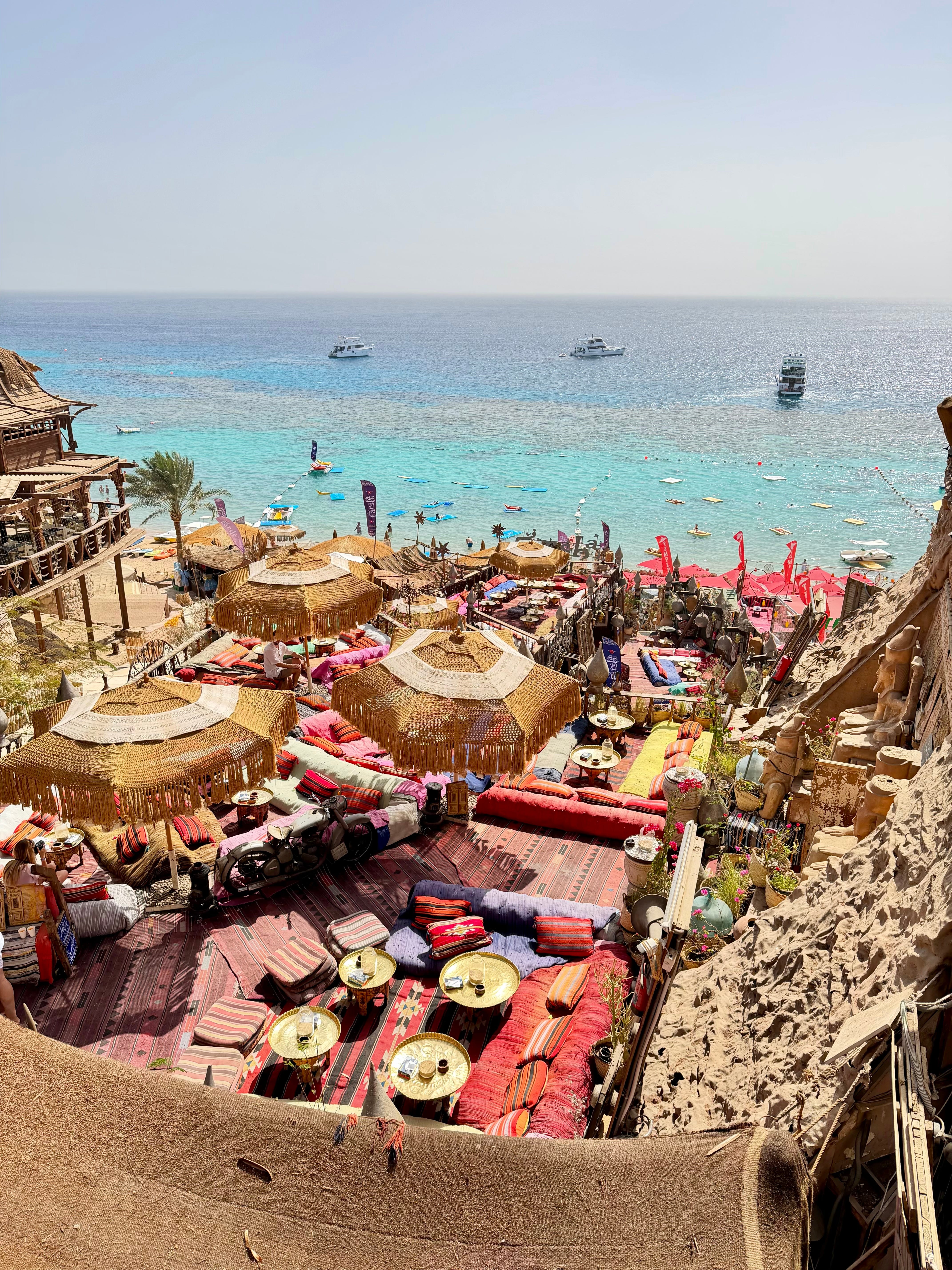
We started in neighborhoods where young Egyptians sat in hillside cafés overlooking the water, drinking tea and talking long into the afternoon. Sure, this place becomes filled with tourists and DJs in the evening, but during the day? Lots of locals just relaxing and enjoying the seaside.
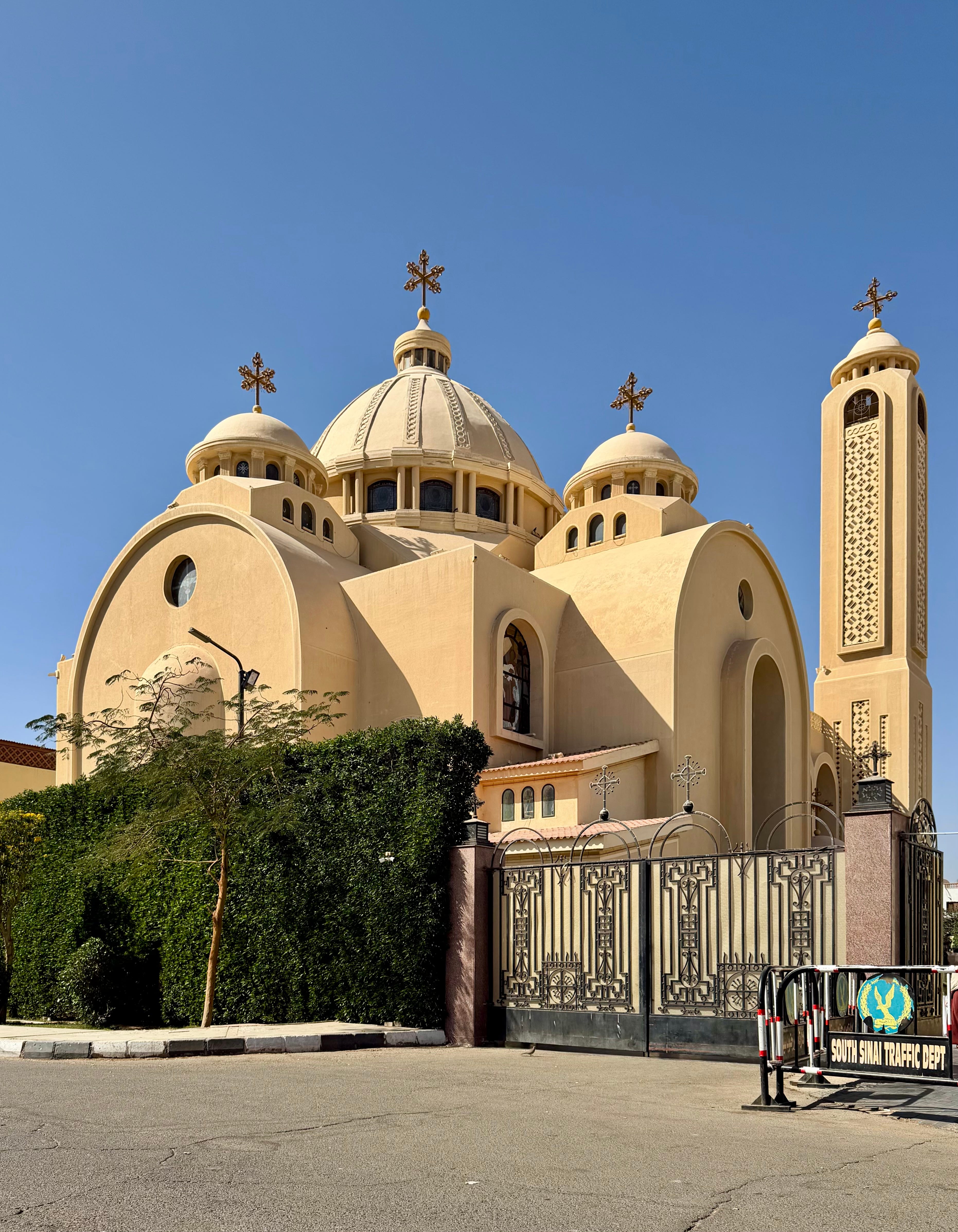
We visited the largest church in Sharm: quiet, grounded, woven into the rhythms of local life rather than tourist itineraries.
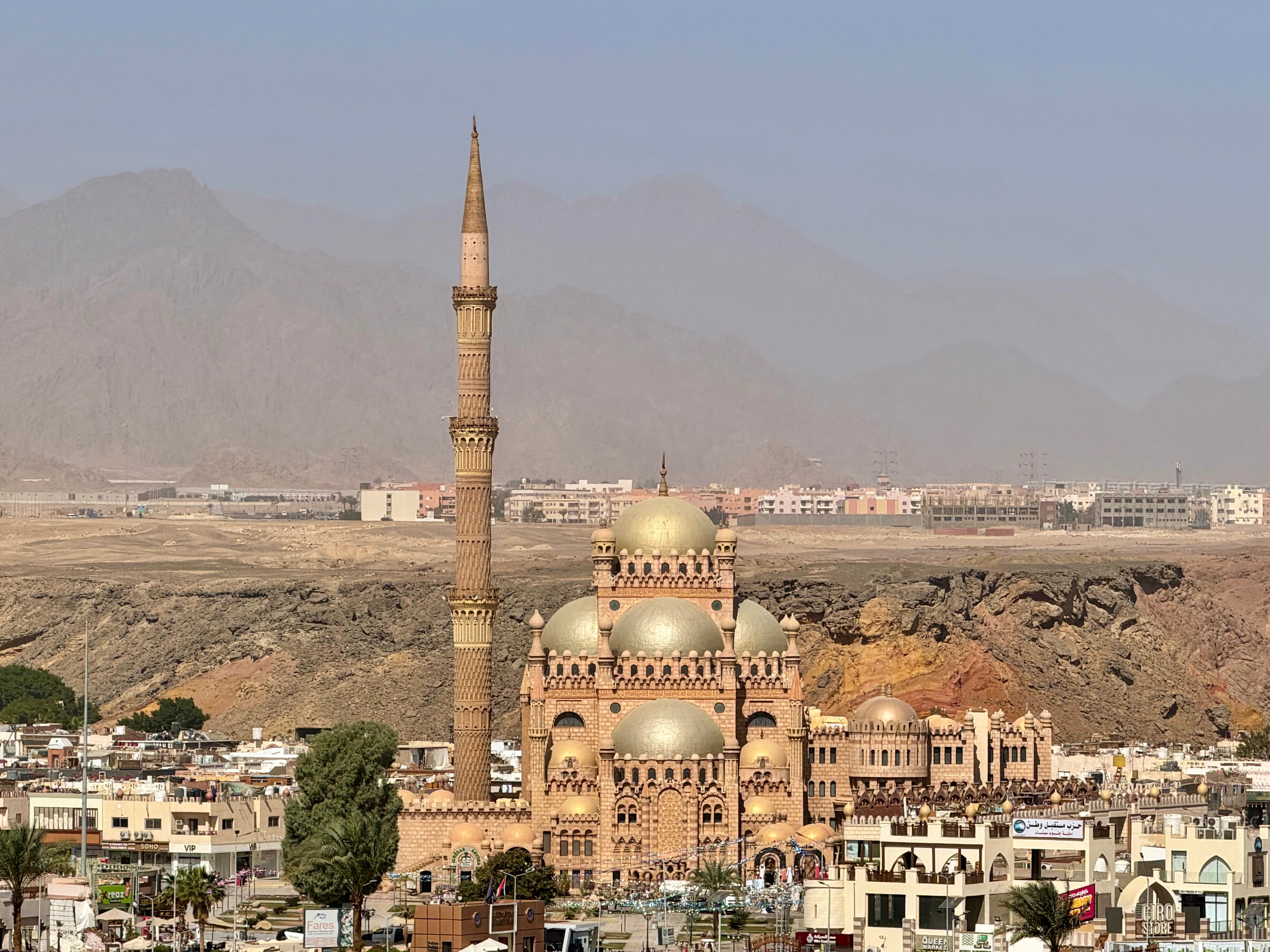
I also marveled at the domes of a mosque rising into that stark blue Sinai sky, a reminder that Sharm is not simply a vacation product. It is a city layered with religious, social, and economic complexity.
Yes, Sharm was built with tourism in mind. But that is only one layer of its identity. The deeper story is there for anyone willing to step beyond the perimeter wall.
Hurghada: When the Script Gets Scrapped
Hurghada carries a similar reputation. All-inclusive central. European sunseekers. Predictable experiences. Nothing to intrude upon your chill time.
I hired a guide there as well, expecting a structured program. I’d been promised a list of sites we’d see. Within ten minutes he looked at me and said, “You don’t want the normal program, do you? Can I show you what I think you’ll like?”
He was right.
We scrapped the script.
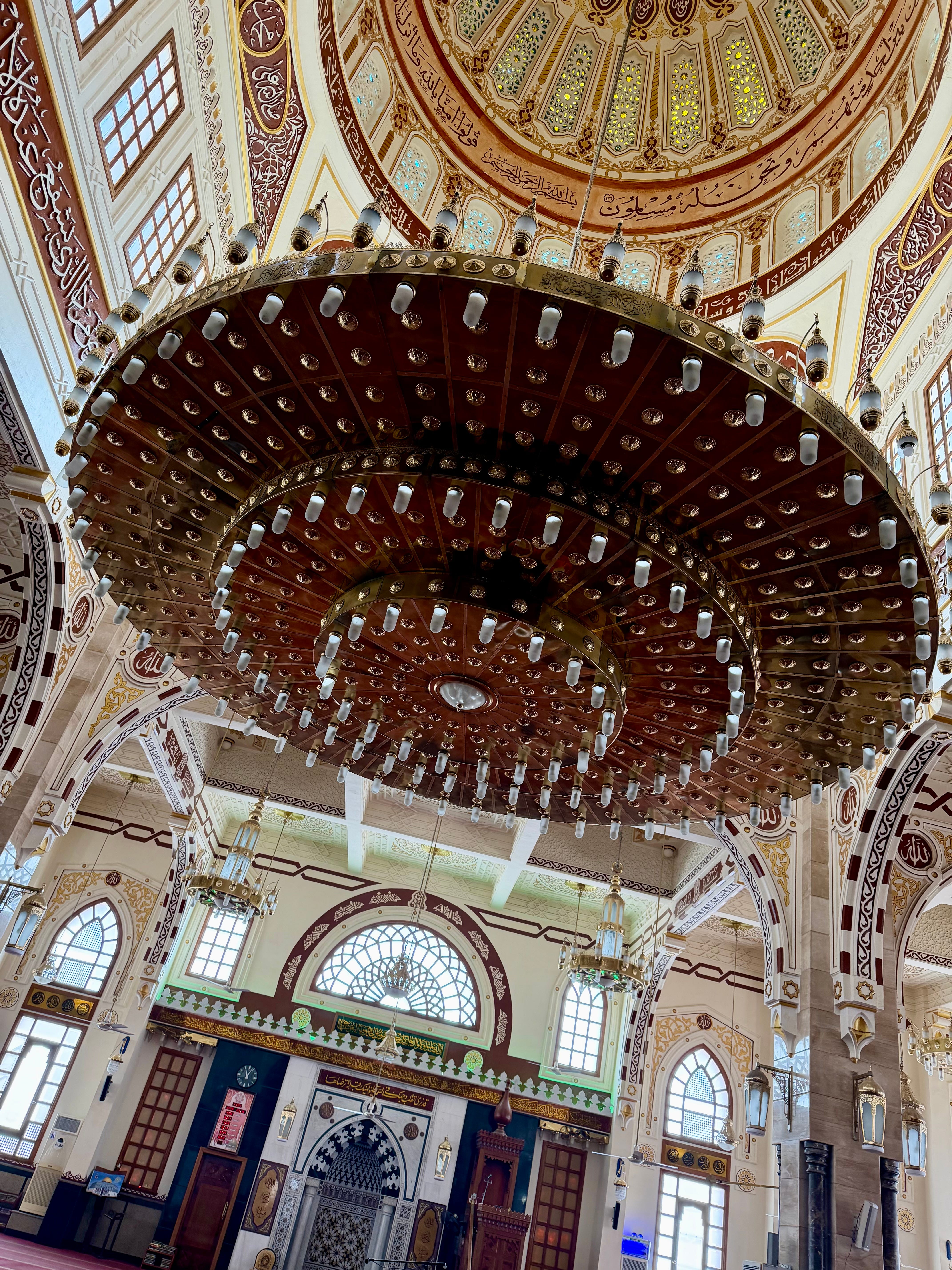
Instead of polished stops designed for visitors, he took me to the mosque locals actually attend.
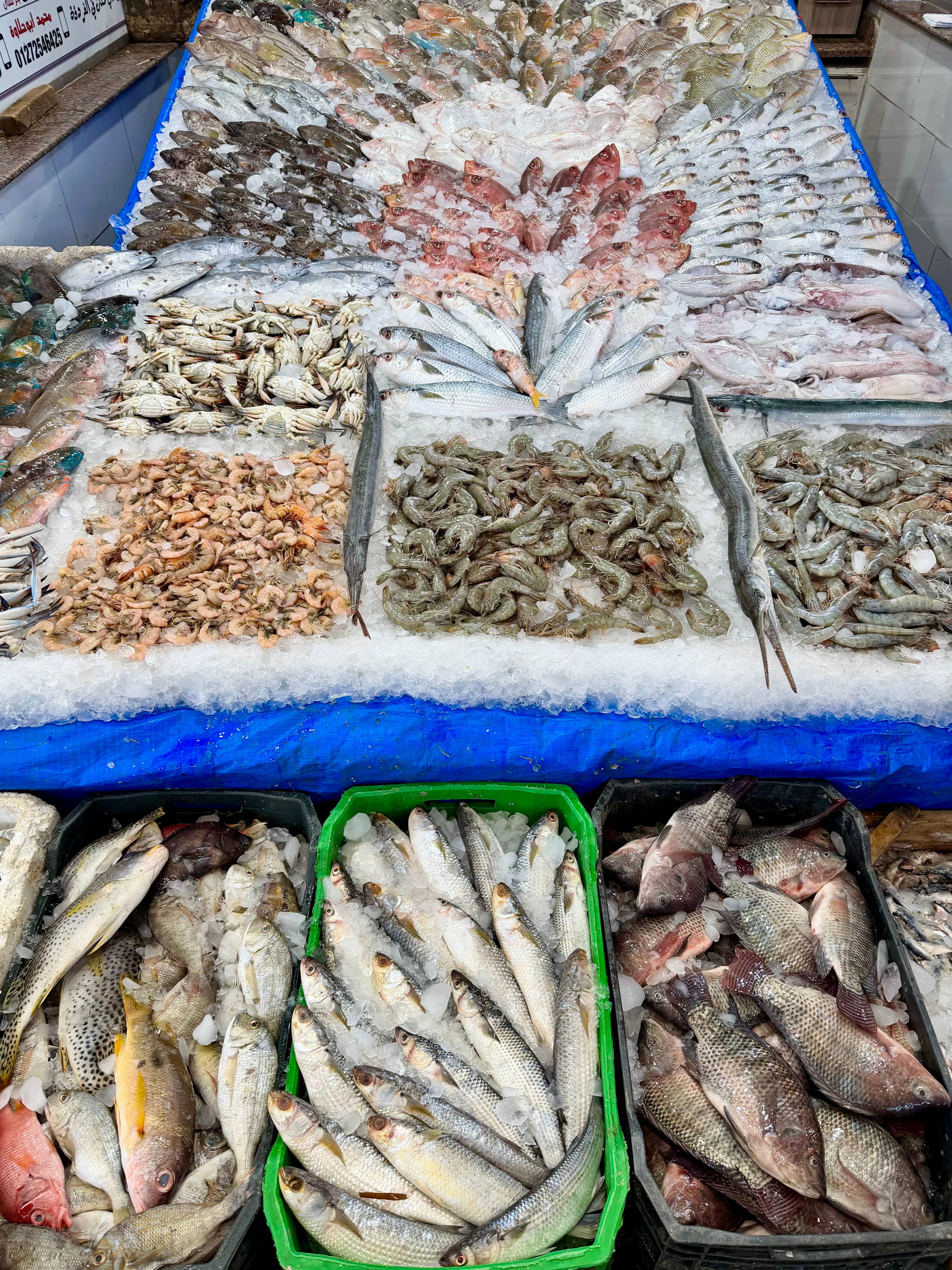
He brought me to the fish market where families negotiated dinner in real time, surrounded by ice and salt and the smell of the sea. He even found a giant crab which was apparently uncommon, and asked me if I minded him taking the time to buy his dinner. Are you kidding? Watching how locals interact and haggle? I’m SO in!
We stopped at a church tucked quietly behind greenery and traffic barriers — not as an attraction, but as part of the city’s living fabric.
By the end of the afternoon, I didn’t feel like I had toured Hurghada. I felt like I had been introduced to it. There is a profound difference between being shown a place and being welcomed into it.
That difference requires intention, and often just a simple question: “What do you think I should see?”
Papeete: Paradise and Payroll
Tahiti exists in most peoples’ imaginations as turquoise lagoons. Overwater bungalows. Honeymoon-central in its most pure form.
And it is beautiful. Don’t get me wrong.
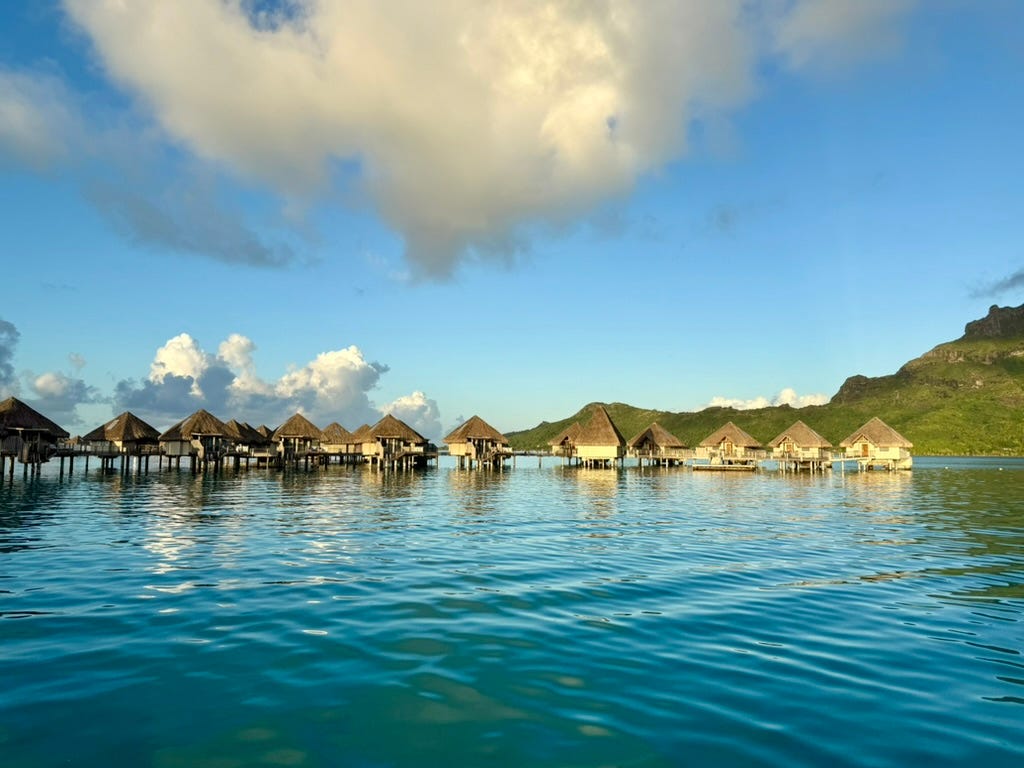
But no paradise sustains itself on scenery alone.
Behind every resort are workers who commute. Groceries that need stocking. Children going to school. Policies debated in government chambers.
So in Papeete, I wandered. No guide this time. Just curiosity.
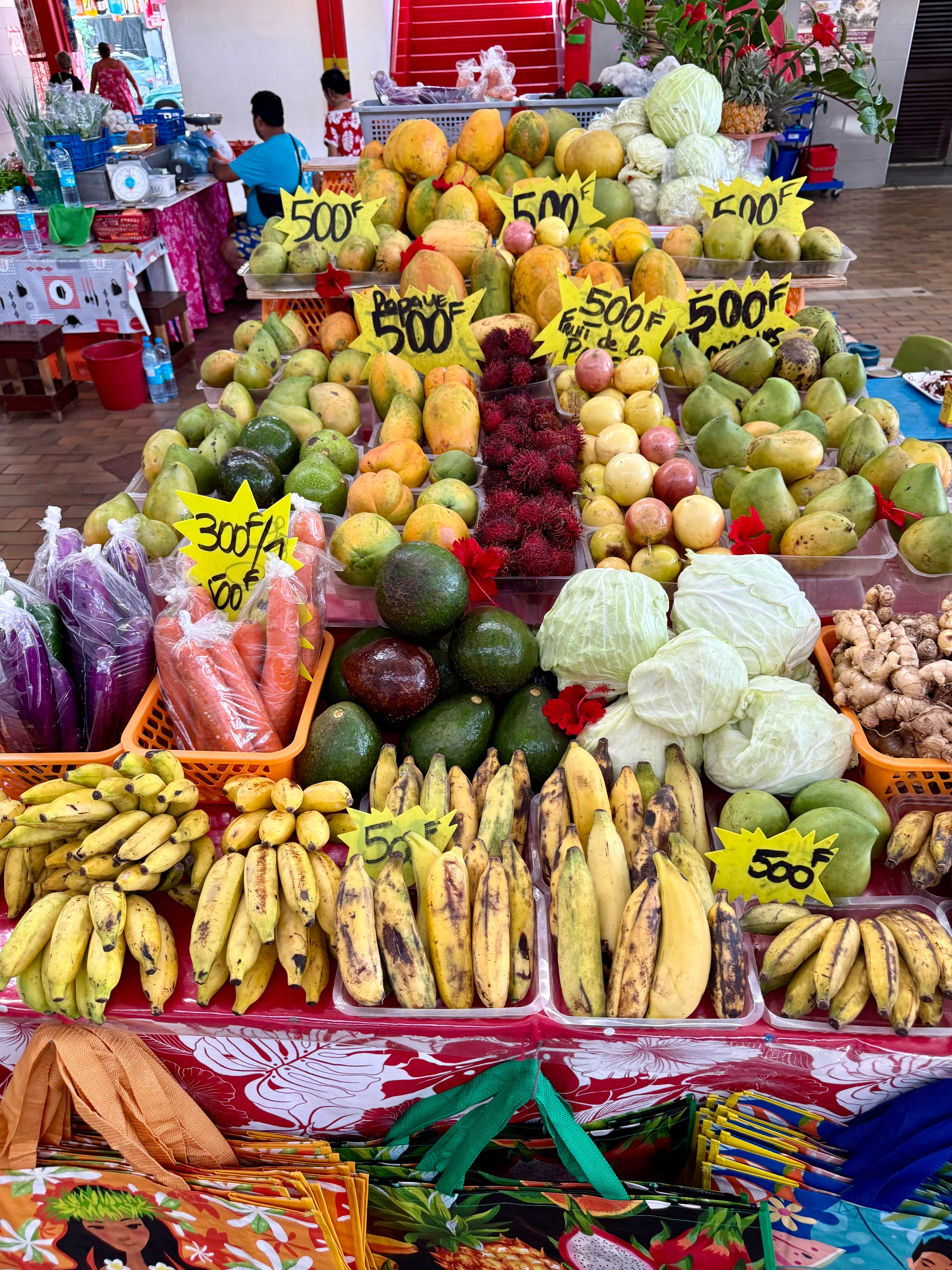
I walked through the local market where fruit was stacked high, labeled in Pacific francs, purchased by people who weren’t on vacation.
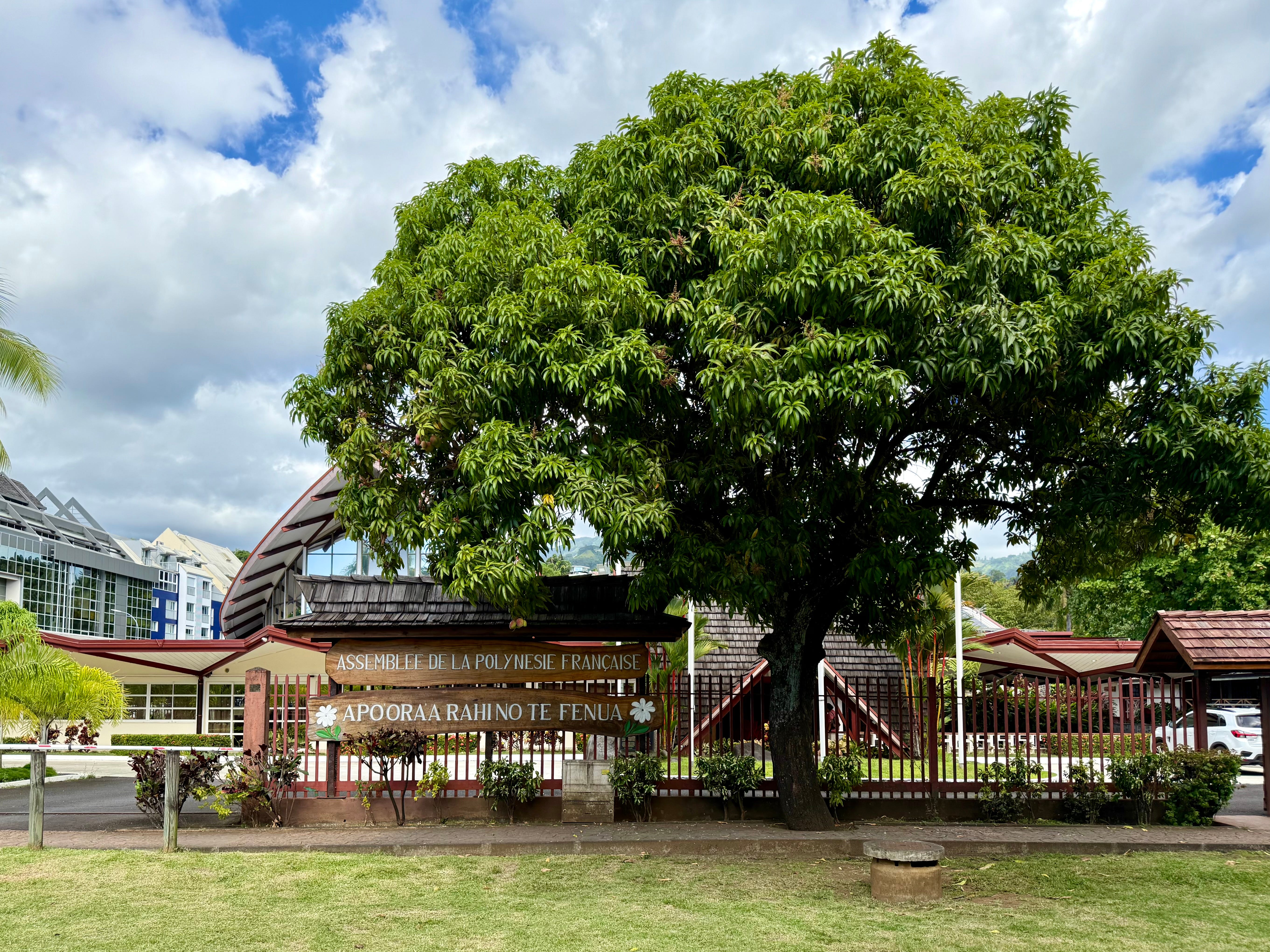
I passed the Assembly building, where decisions shaping French Polynesia’s future are made.
paused at the fish market, watching today’s catch laid out for locals who will cook it for family dinner — not for Instagram. And yes, I still stood by the water and absorbed the surreal calm that makes the Pacific feel almost engineered.
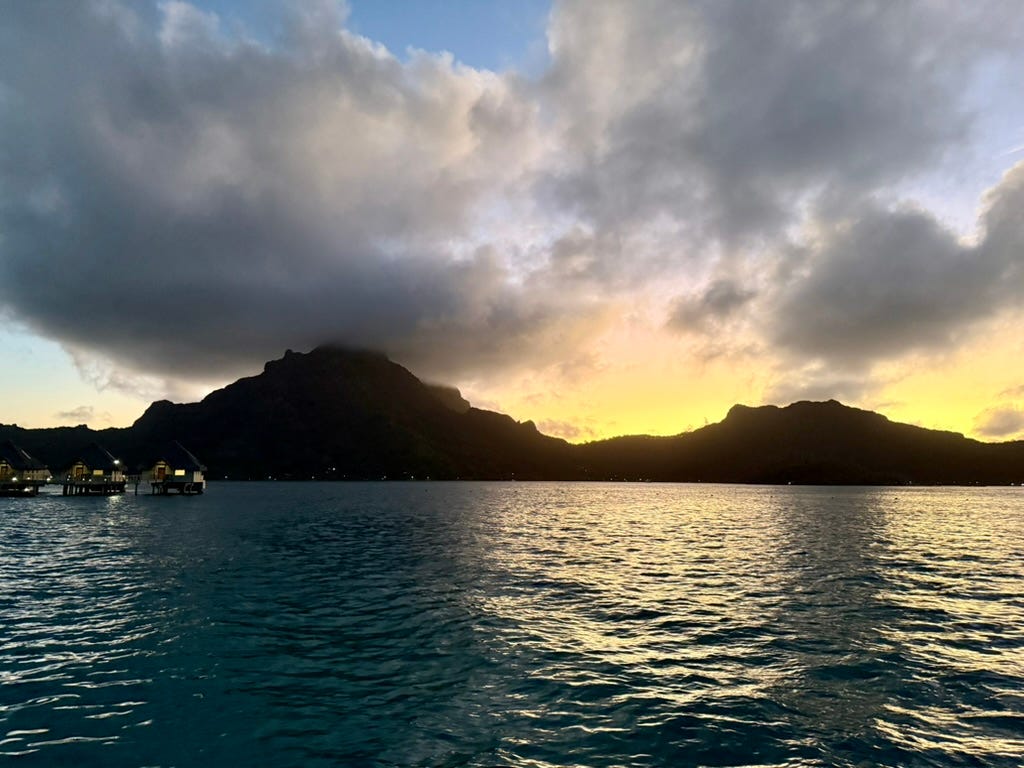
The difference was not the destination. It was the decision to look past the postcard.
The Choice
You can travel 8,000 miles and learn almost nothing. Relax, recharge, but not reflect.
Or you can walk 800 meters outside your hotel gate and recalibrate how you see the world.
Tourist infrastructure is not inherently shallow. It simply makes it easier not to engage. It offers comfort, efficiency, predictability. If that is what you seek, you will find it effortlessly.
But if you want connection…you have to do some work. We’ve all heard over and over that nothing worth having is easy.
You have to hire the guide.
You have to ask the questions.
You have to wander without a guarantee.
You have to accept mild inconvenience as the price of insight.
The return on that effort is exponential.
In Hurghada, I left with a local friend, not just a memory.
In Sharm, I saw the day to day tedium and normal life rarely mentioned in travel forums. In Papeete, I was reminded that even the most idyllic places are sustained by ordinary people living ordinary lives.
And that, to me, is the magic.
Not in rejecting resorts. Not in pretending leisure is beneath me. But in refusing to let the curated version be the only version.
These places are what you make them.
Consumption and relaxation are easy, connection takes intention.
The destination doesn’t decide which one you experience…you do.