
Slovakia is one of Europe’s youngest countries, and you can still feel that youth right along it’s cobblestone streets and hundreds of years of history.
Until 1993, Slovakia was a bit less than half of the land of Czechoslovakia. The split (known as the Velvet Divorce) followed the Velvet Revolution of 1989, which peacefully ended Communist rule. No war. No tanks. Just a collective decision that two nations with a lot of shared history might do better separately. Not everyone wanted the split, many resent that their politicians never gave them a referendum, but most people accepted it with a very Slovak shrug and got back to work.
And that quiet confidence shows.
My first visit years ago barely counted: a quick day trip to Bratislava from Vienna while racing to finish every country in the world. Box ticked. Experience… minimal.
This time, I stayed. And wow…Slovakia absolutely slaps when you stop sprinting.
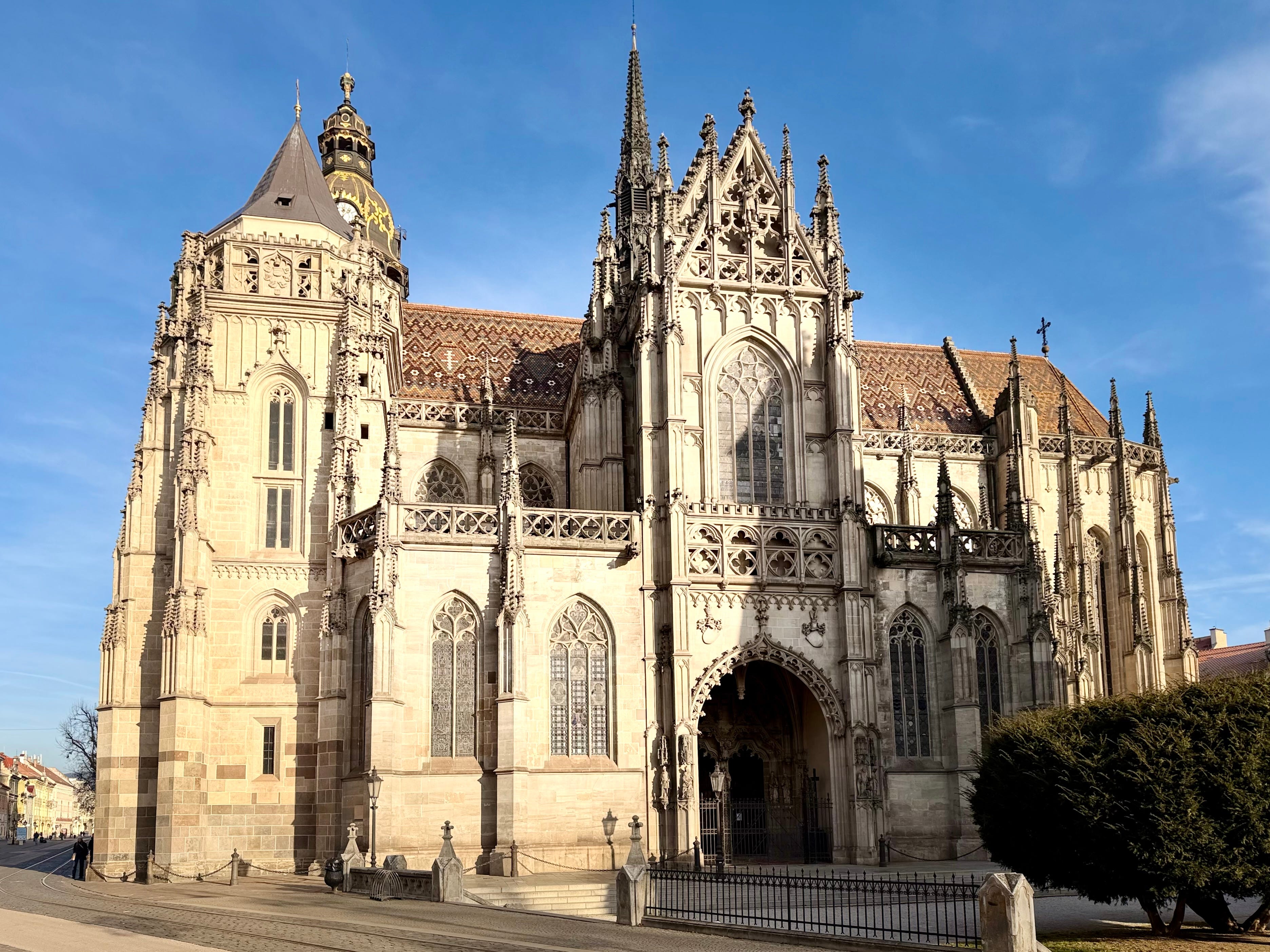
Slovakia’s cities wear their history lightly. Gothic spires, baroque details, and medieval layouts are just… there. Not fenced off, not overly polished. You’re meant to walk past them on your way to dinner, not orbit them with a guidebook.
It’s the opposite of a museum country.
Žilina (ZHEE-lee-na)
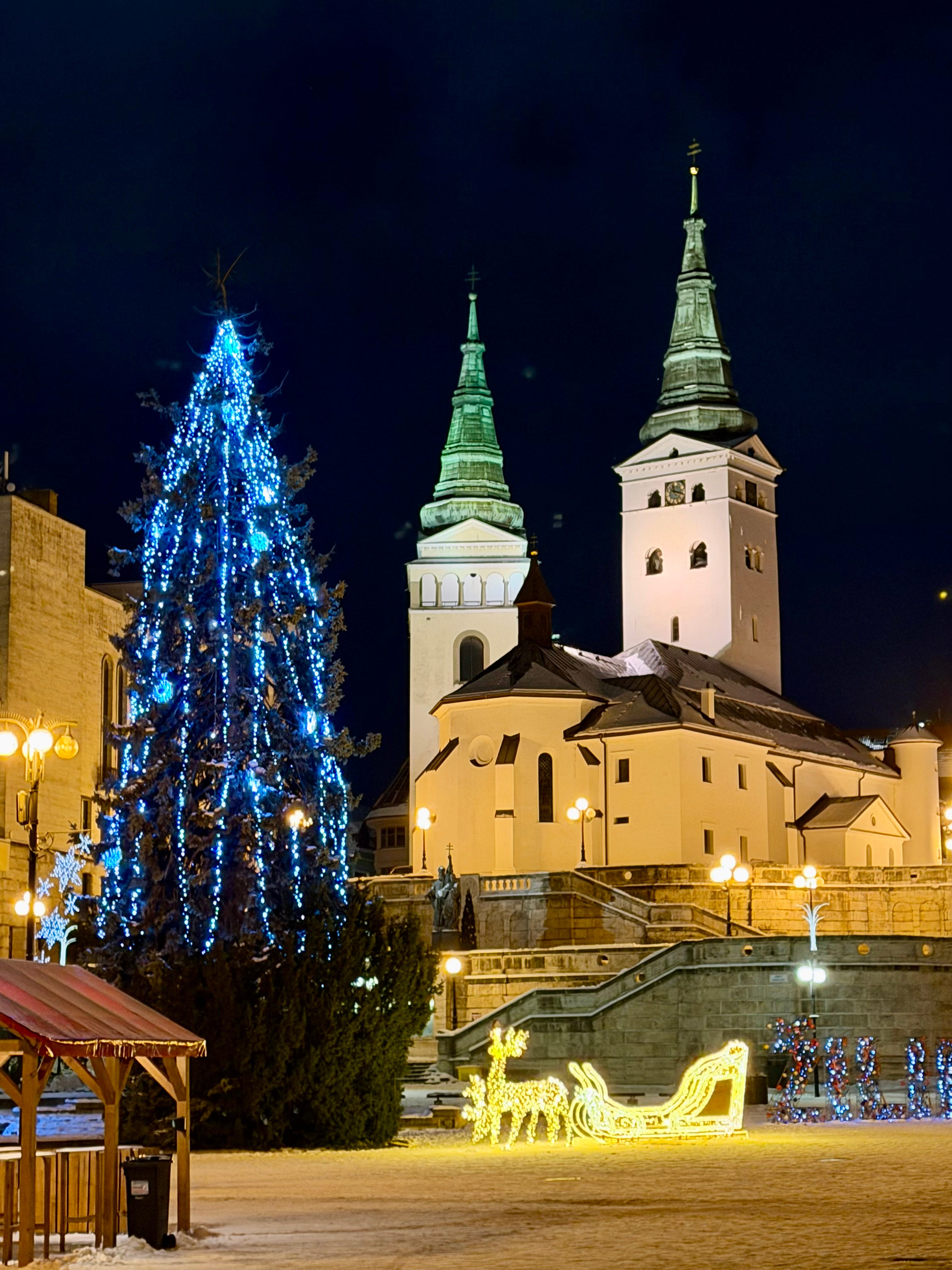
Žilina sits in the northwest, near the Czech and Polish borders, and feels like a city that never tried to impress anyone…and accidentally became charming because of it.
It grew as a trade hub, later an industrial center, and today it’s quietly youthful thanks to a nearby university. The historic center is compact, walkable, and lived-in. No performance. No filter. Just people grabbing coffee, heading home, existing.
It’s the kind of place influencers haven’t yeeted themselves into yet…and I hope it stays that way. As an added bonus, hockey seemed to be everywhere in Žilina which gave it lots of extra cool in my books.
Košice (KOH-shee-tseh)
Košice, in the east, surprised me the most.
Once an important medieval trading city, later shaped by Austro-Hungarian and industrial influences, it now feels creative without trying too hard. The main street stretches long and elegant (which made it great for running), churches glowing at night, locals out walking even in the cold like it’s no big deal.
This is Slovakia with confidence. Less “discover me,” more “we’re fine and cool over here.”
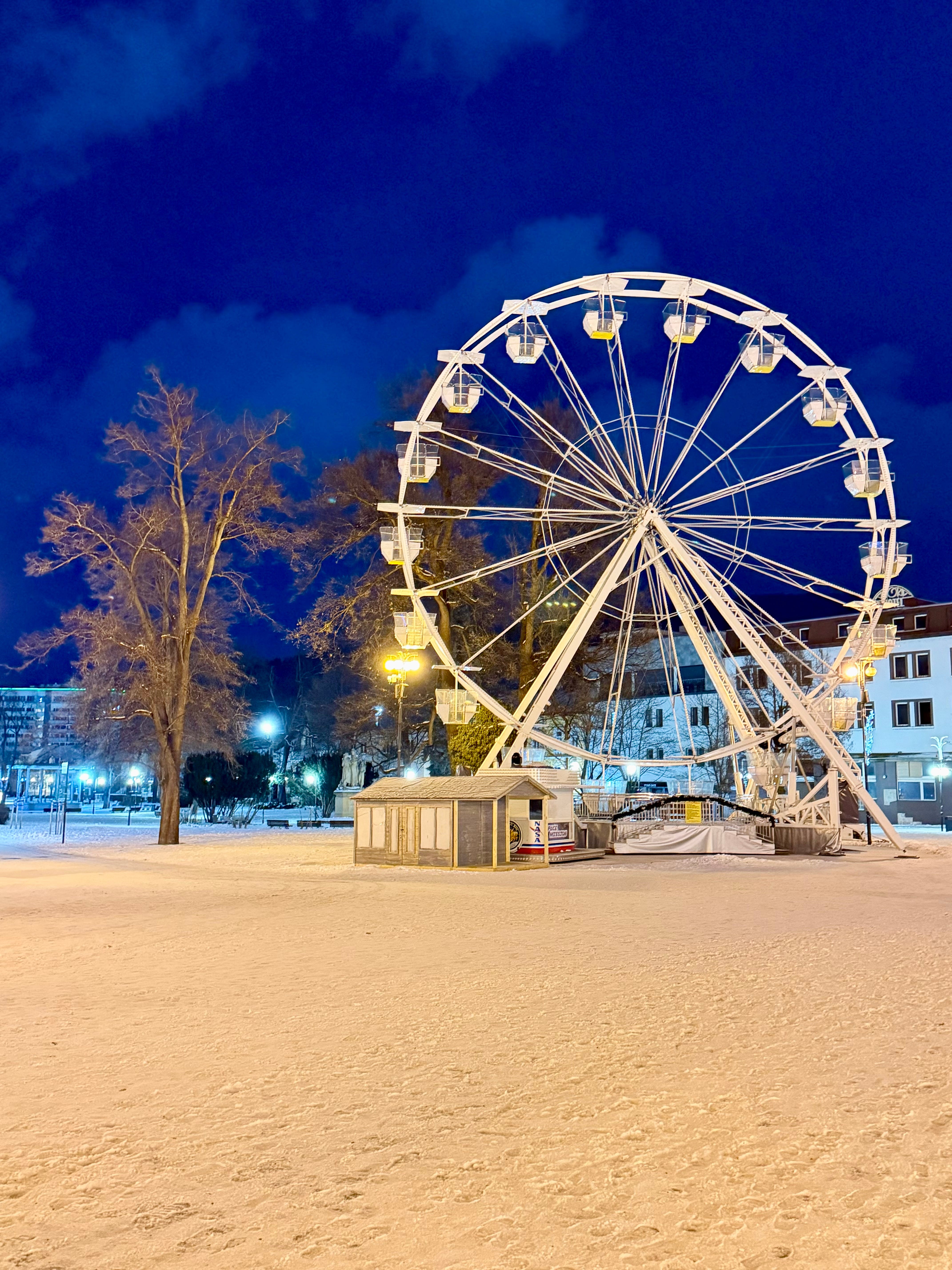
Winter matters here.
Snow softens everything. Lights don’t feel decorative, they feel necessary. Cities slow down in a way that feels earned, not forced. You’re not chasing highlights; you’re watching life happen between them.
This is why going deeper into Slovakia worked. It wasn’t louder than Bratislava. It was realer. Meeting and chatting with curious locals over a glühwein was easy. It was a reminder of why I love traveling. Forget the guidebooks and must-see sights and get to know the people and place.
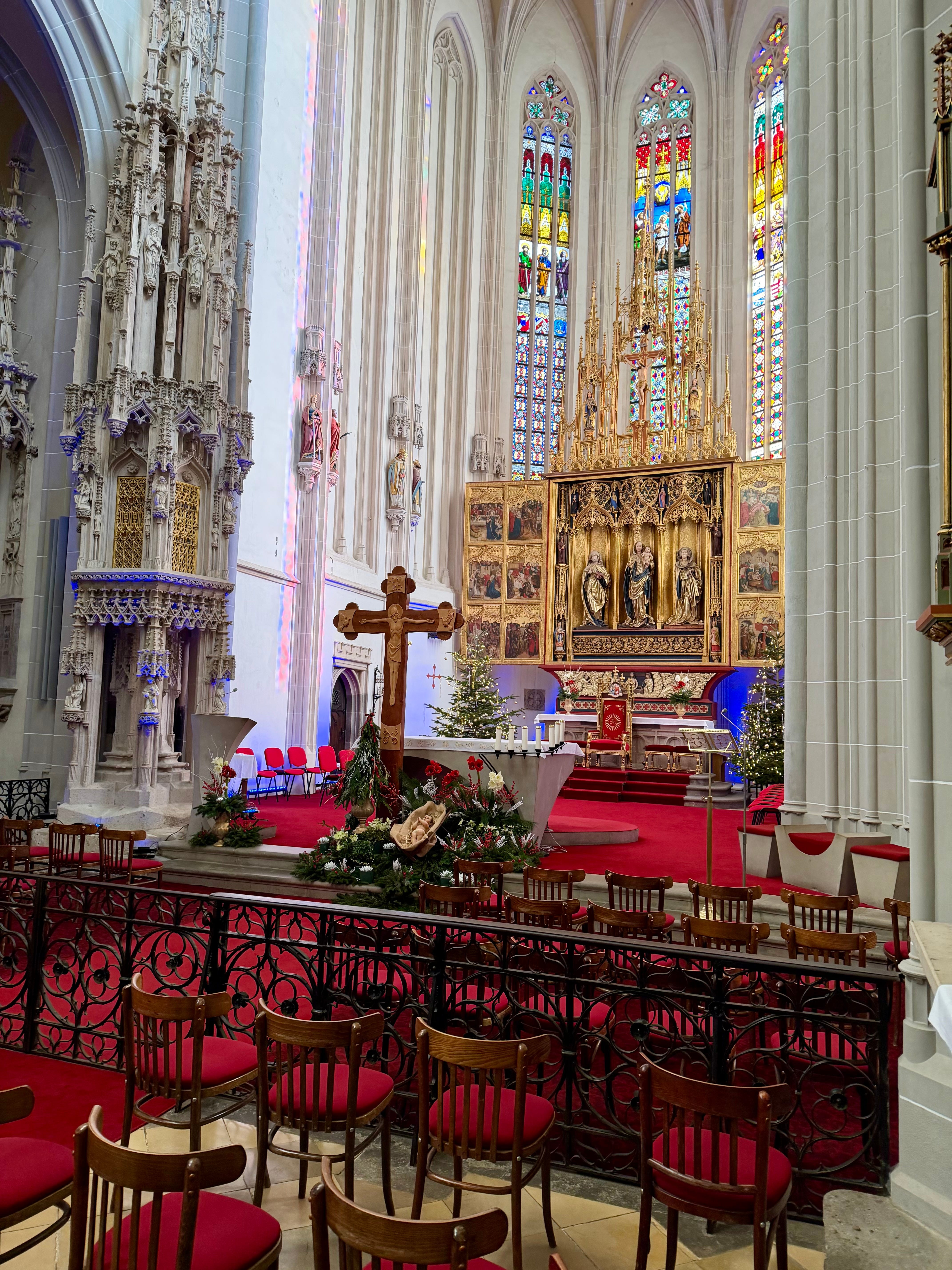
Step inside a church here and you don’t feel rushed.
No one’s hustling you along. No timed entry. Just quiet, candles, and the sense that these spaces are still part of daily life, not just a backdrop for photos. It’s hard not to slow down and appreciate…not because it’s on some must-see list, but because it feels real.
That’s the theme of Slovakia, really: nothing begging for attention, everything worth noticing.
A Few Things I Learned (the Cold Way)
Pronunciation matters: Žilina (ZHEE-lee-na), Košice (KOH-shee-tseh). Locals appreciate the effort, even if you butcher it slightly. So many people happy to practice with me until I got it right.
Stay longer than you planned: Slovakia rewards patience and digging deeper.
Eat local: Hearty food exists for a reason. Winter is not a suggestion.
Don’t go in January… unless you’re like me and secretly love freezing, snow-covered streets, and cities that feel like they belong only to the people who live there.
I’ve now been twice in winter. I will absolutely do it again. ❄️
Because Slovakia doesn’t need to sell itself.
You just need to give it time.