
I love independent travel…that’s hardly a secret.
Given the choice, I’d rather wander a city by myself or in a very small group than follow someone holding a flag. I’d rather spend an afternoon talking to the owner of a neighborhood café than listen to a microphone describing the history of the building across the street. I like making my own mistakes. Taking the wrong street. Changing my plans because something or someone unexpected caught my attention.
Group tours have never been my favorite way to travel. That doesn’t mean they’re bad. Sometimes they’re the only realistic option. The Amazon is a good example.
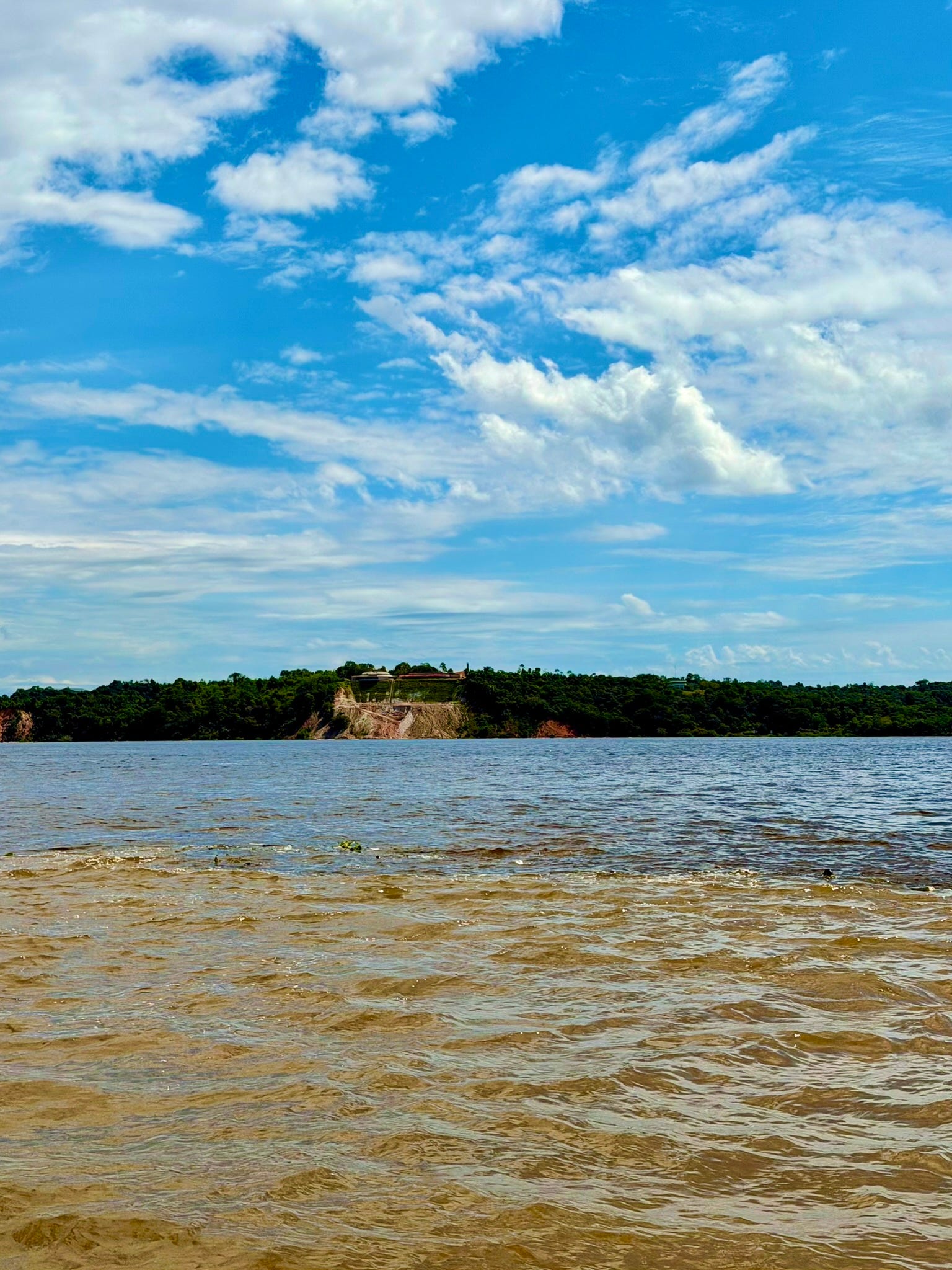
Manaus isn’t somewhere you simply rent a bicycle and explore.
If you want to see pink river dolphins, visit an Indigenous community, go searching for caiman after dark, or spend time on the river, chances are you’re joining a tour. Unless you have unlimited time (or a budget for a private guide) you’ll probably find yourself climbing aboard the same boat as twenty or more strangers.
That’s exactly what I did…and, as usual, I came away with mixed feelings.
Language was part of it.
I’d spent the previous five weeks making a real effort to improve my Portuguese, and I really did make great progress. It helped. I could order meals, joke with waiters, ask questions, and have simple conversations. But a boat full of Brazilians chatting naturally with one another reminded me how much further I still have to go. I could follow pieces of conversations, but not really join them. That’s frustrating, especially because talking to people is one of my favorite parts of travel.
That’s on me. I could have tried harder. But honestly, for five weeks, I did the best I could. Brazil is great this way, btw, English is so uncommon that you’re forced to practice Portuguese, so it’s a great place to learn.
The bigger challenge for me, though, wasn’t the language. It was authenticity.
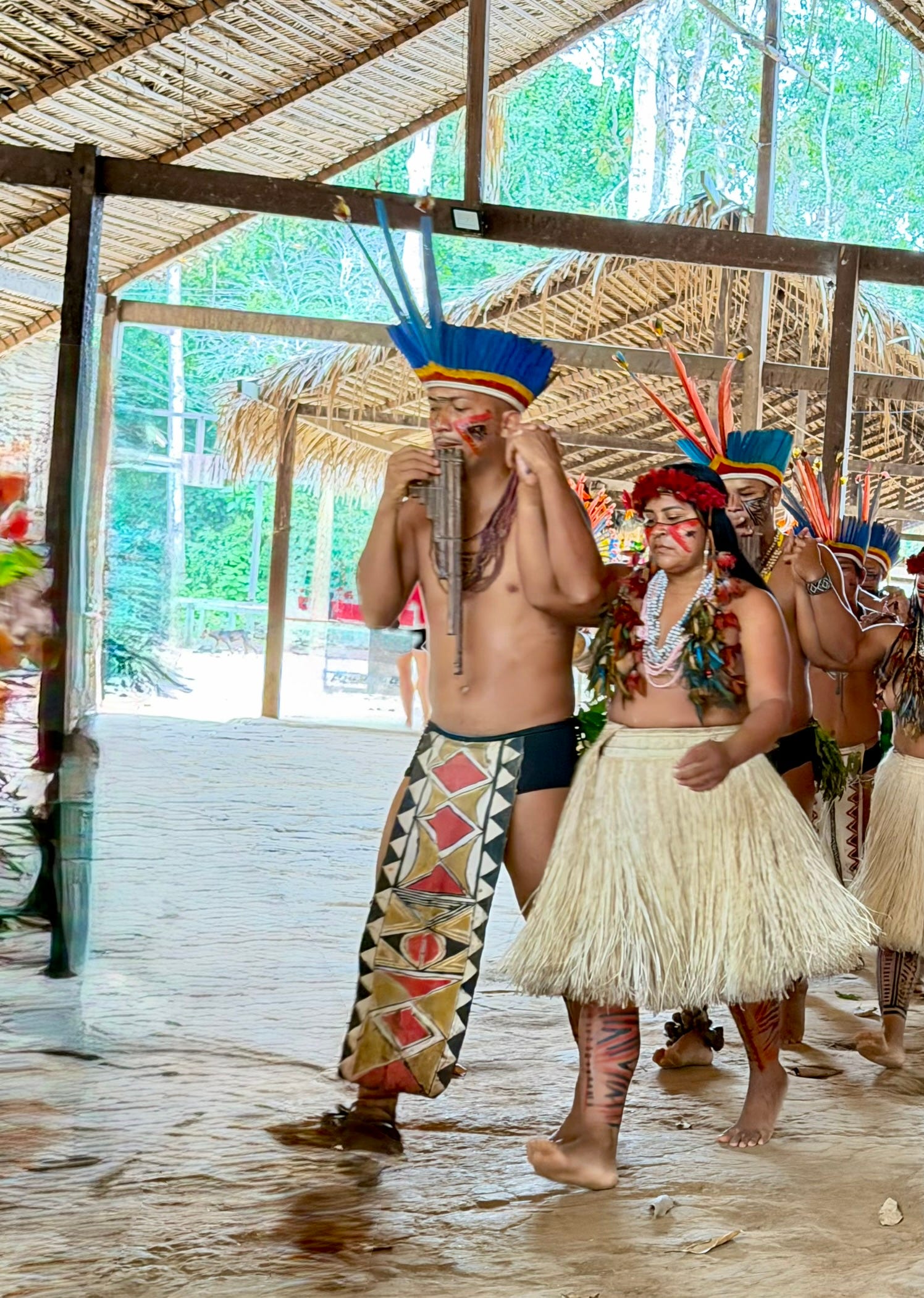
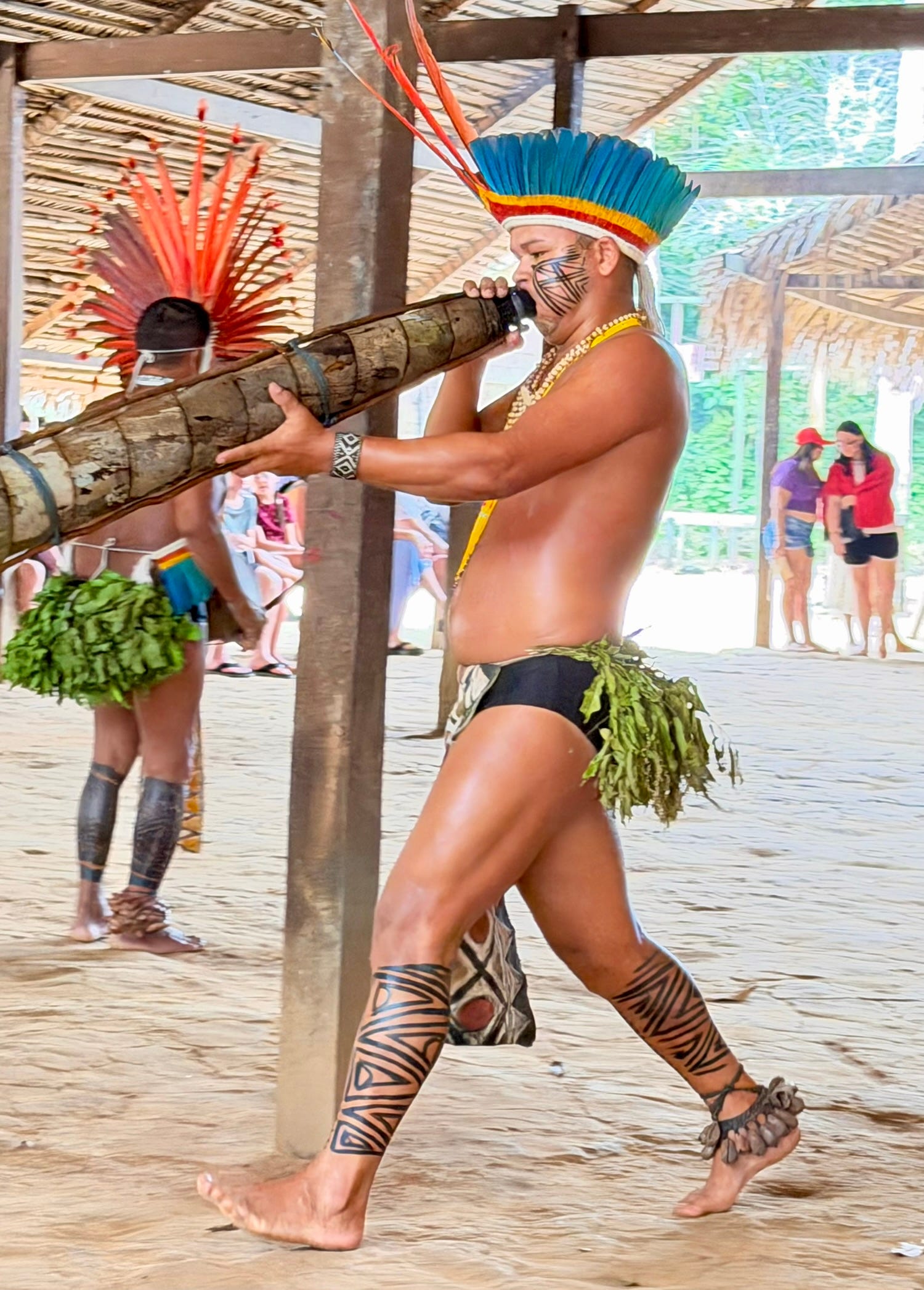
One stop brought us to an Indigenous community where we watched dances, demonstrations, music, and ceremonies before browsing a souvenir market. The people we met were welcoming, and there’s no question tourism provides income that matters. I don’t want to dismiss that.
But I also couldn’t shake the feeling that I was watching people perform their culture for an audience of tourists. That’s uncomfortable for me. Not because I think culture should be hidden, but because I kept wondering where the line is between sharing traditions and staging them.
Then again, what’s the alternative?
Without tourism, I almost certainly wouldn’t have met anyone from an Amazonian Indigenous community at all. At least not in this kind of setting.
The same questions followed me onto the water.
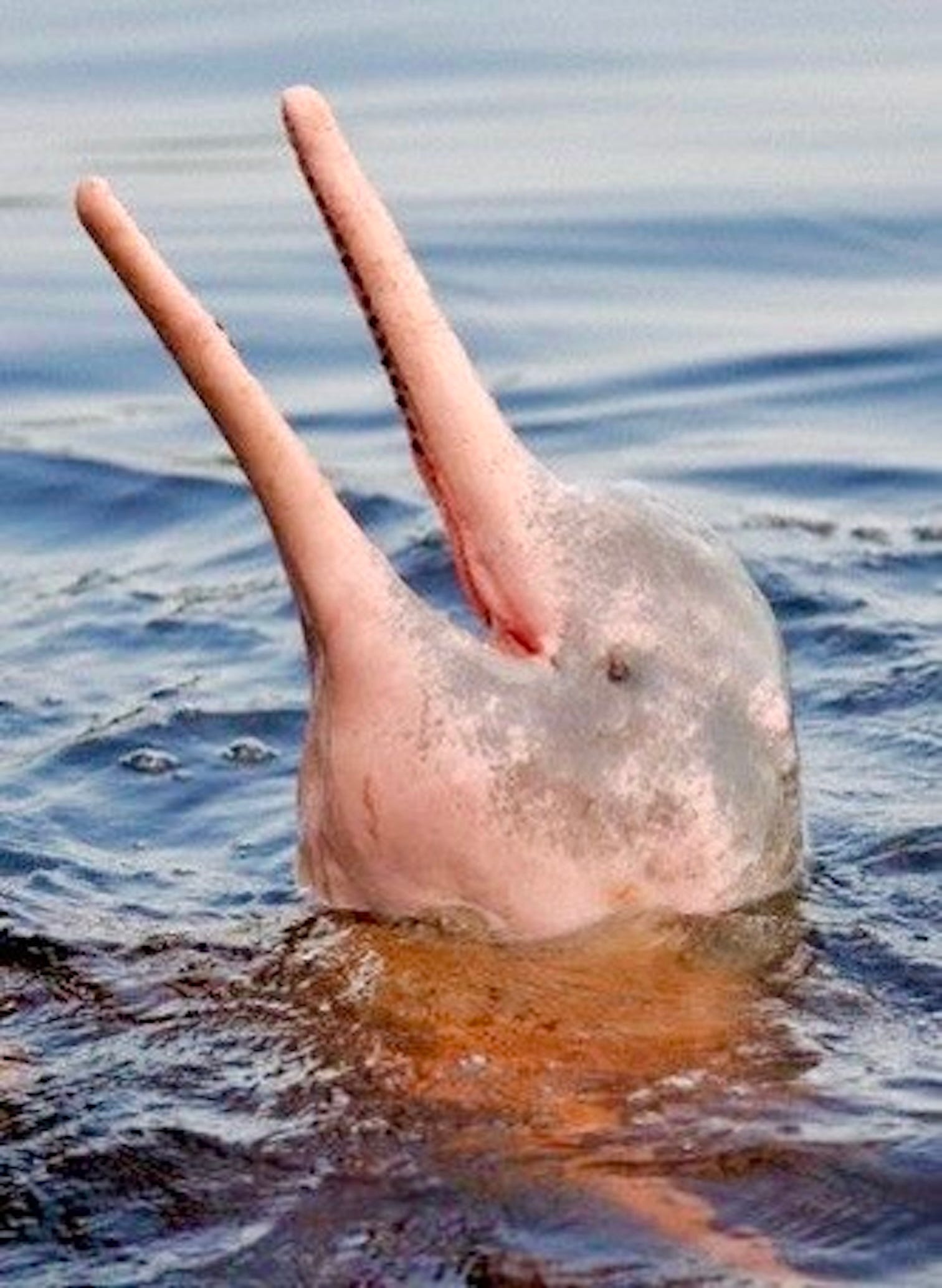
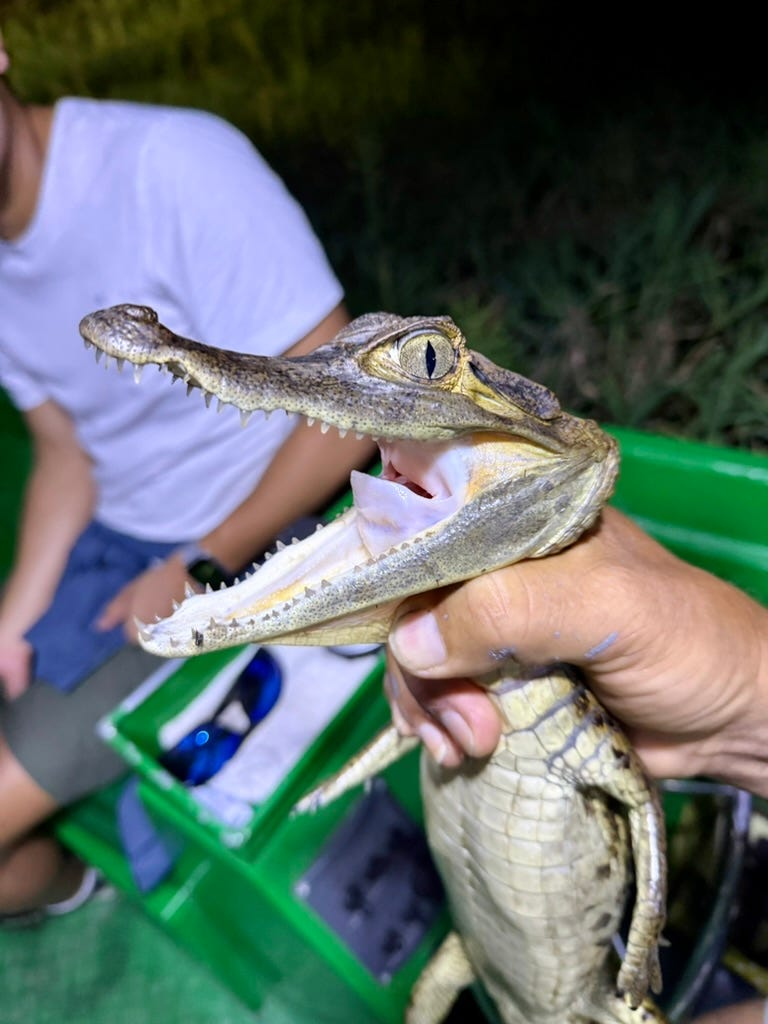
Pink river dolphins appeared because fish were dangled just out of reach. Caiman had their mouths taped shut while visitors held them for photographs before they were released. Giant arapaima (the largest scaled freshwater fish in the world) gathered around platforms where tourists could feed them using bait tied to strings instead of hooks.
None of it struck me as overtly cruel. The fish still got the meal. The caiman were released. The dolphins seemed eager to return because they associated boats with food.
But none of it felt entirely wild, either.
That’s the uncomfortable middle ground travel often occupies. We all say we want authentic experiences.
What we usually mean is that we want authentic experiences that fit into one afternoon, cost less than a nice dinner, are easy to photograph, and don’t require weeks of building trust with local communities.
Real authenticity doesn’t work that way. It takes time. It takes language.
It takes relationships.
And sometimes, it takes money that most of us simply don’t have.
My favorite tour of the week, oddly enough, was also the smallest.
It was just me and one other traveler. A Colombian undergrad going to University in France but studying in China, on a night caiman excursion. Ironically, the tour itself wasn’t very good. But having only one other person meant we actually talked. We exchanged travel stories. Compared notes. Laughed at how different our experiences had been.
Sometimes the people make the tour. Sometimes the itinerary barely matters.
Did these tours make me fall in love with Manaus? Honestly...not really.
But am I glad I went?
Absolutely.
Because travel isn’t about waiting for perfect circumstances that may never come. If your options are the ideal experience or no experience at all, then yes, wait for the ideal. Most of the time, though, that’s not the choice. Most of the time the choice is between something imperfect...and nothing.
I’ll choose something almost every time.
As long as people are treated with dignity, animals aren’t harmed, and I’m willing to leave with more questions than answers, I think that’s a trade-off worth making. Now, make no mistake, I don’t want to come across as one of those holier-than-thou backpackers who preaches about their respect for indiginous people, is often a vegan for animal rights reasons, and pretends to have the ethical secret of the universe. Nope, plenty to learn here.
Travel isn’t always about certainty. Sometimes it’s about becoming just a little less certain than you were before.
This is one of your best pieces. The question of what's authentic is legitimate, as are the points you make about how staging a cultural practice for paying tourists can benefit the local economy.
In Hawai'i, it's the difference between watching a staged hula show at a resort hotel, and flying to the Big Island once a year (or watching local TV) to see the halaus in competition at the Merrie Monarch.