
This week’s 196 Stories is a day late. Again. 😂 I could blame my rather ridiculous travel schedule, which has taken me through more countries in the past few weeks than most sensible people would attempt in a lifetime. But the truth is that I’ve spent a lot of time the last few days thinking about one of the speakers I heard at the Extraordinary Travel Festival (ETF) in Bangkok last weekend.
In 25 years working at the World Bank I listened to a LOT of speakers. Heads of state, development experts, politicians, academics, and ordinary people with amazing stories. Add more than three decades of traveling around the world, and I’ve been fortunate enough to hear some pretty remarkable people tell their stories. Storytelling is one of the oldest human “arts” and I’ve been fortunate to hear many amazing ones.
But this past weekend at ETF I heard someone who was easily among the five most moving speakers I’ve ever encountered. Her name is Eunhee Park, and she’s a North Korean who risked her life and escaped her country at the age of 21.
Eunhee grew up in Wonsan, a coastal city in North Korea, before making an extraordinarily dangerous journey through China, Laos, and Thailand, eventually finding freedom and building a new life in South Korea. She’s since spent time helping other North Korean defectors and sharing her experiences with audiences around the world.
Now, consider the setting. Here we were, several hundred people gathered in Bangkok for a festival devoted to extraordinary travel. Many in the room had visited more than 100 countries, and a couple dozen of us had managed to visit every country in the world.
We’re the sort of people who spend our spare time figuring out how to get to obscure corners of the planet, arguing about whether a particular territory counts as a separate country, and getting excited about flight routes that most normal people wouldn’t dream of taking. 😂 (Ok, so maybe that’s a bit more me than others, but you get the point.)
And here was Eunhee, describing what it was like to grow up somewhere that ordinary people can’t even freely travel to the next town, let alone imagine exploring the world. The contrast was extraordinary, and the audience was literally hanging on her every word.
What particularly struck me was her explanation of why she now shares her story publicly. After escaping North Korea and rebuilding her life, she worked with other defectors who were trying to adjust to an entirely different world. Over time, she came to believe that having survived her experience gave her a responsibility to tell others about it, particularly on behalf of those who hadn’t escaped.
Obviously, I’m not about to compare my rather privileged life of traveling around the world with what Eunhee endured to gain her freedom. But when she talked about that sense of responsibility, I immediately understood what she meant. Because, in an entirely different context, it was precisely the feeling that led me to start writing 196 Stories.
What I didn’t see in North Korea
I’ve actually visited North Korea in 2005 the first time, although my experience was about as far removed from Eunhee’s as you can imagine. I arrived as a tourist, saw what I was permitted to see, and left when my itinerary said it was time to leave.
I remember the enormous bronze statues, the carefully maintained monuments, the military presence, and the extraordinary Pyongyang Metro. I even have a photograph of myself posing with a North Korean military officer. What I don’t remember is having a meaningful conversation with an ordinary North Korean who wasn’t part of the tourism operation. That’s because I didn’t.
And for someone whose favorite part of traveling has always been meeting people, that was perhaps the strangest thing about the entire visit.
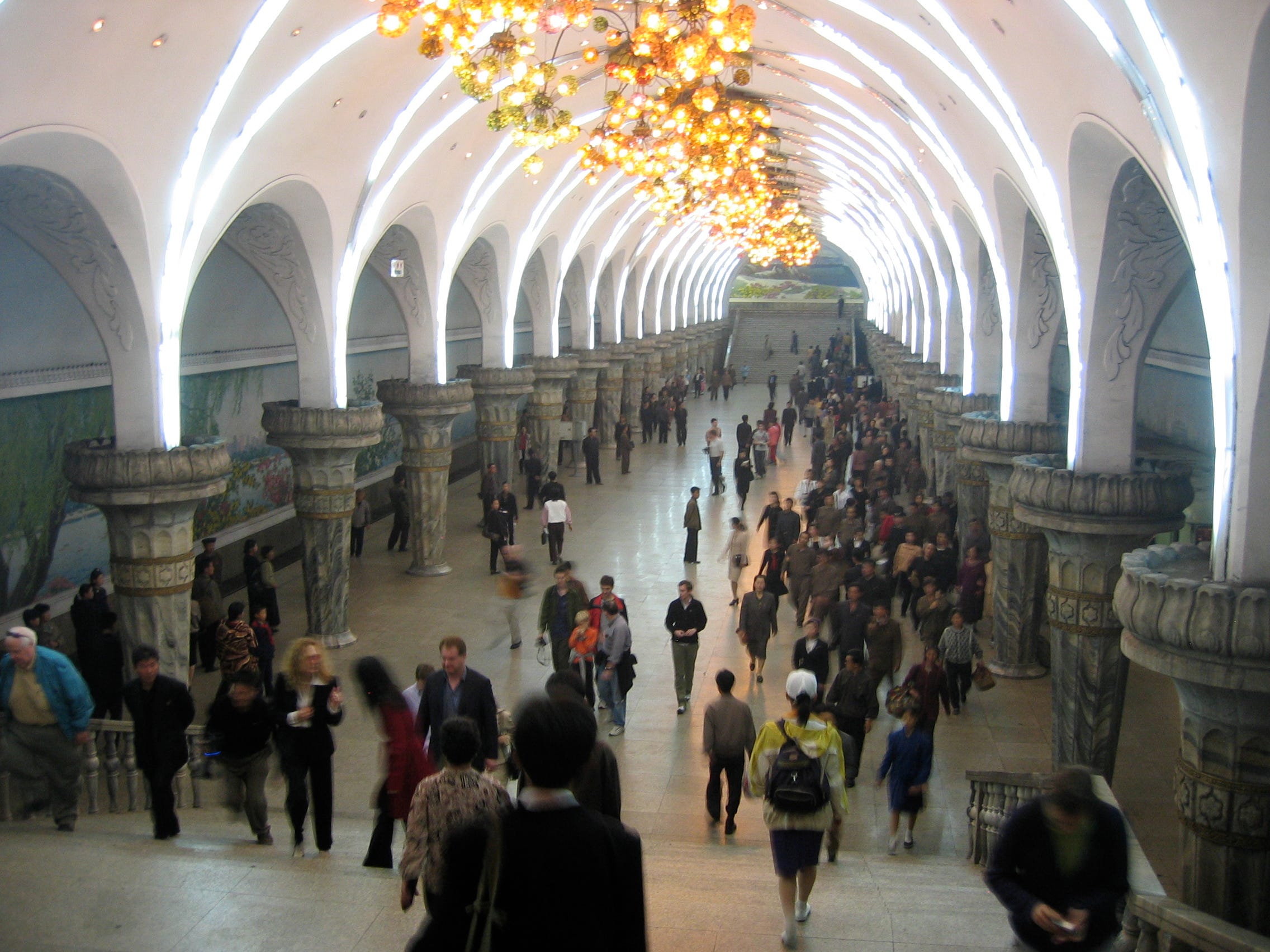
I remember hearing rumors that some of the people tourists encountered in the Metro were actors, placed there to create the impression of normal city life. I have absolutely no idea whether that was true, and I’m not particularly interested in repeating an unsubstantiated rumor as fact. But the very fact that I couldn’t tell you much about the people in my photographs says something about the limits of my experience.
I’d visited the country, but how much had I really learned about it?
During the Q&A following Eunhee’s presentation, someone asked a question that I’ve been thinking about ever since. Did ordinary North Koreans actually believe what they were being told by their government, or did they understand that they were being brainwashed?
Her answer, at least as I understood it, was that most of the people she knew genuinely believed what they’d been taught. They weren’t necessarily pretending to believe something they secretly knew was false. It was simply the reality they’d grown up with, reinforced by virtually everything they were permitted to see and hear.
Then she took the conversation in a direction that was exactly where I’d hoped she would go. She suggested that we should also think about how the media we consume, whether CNN, BBC, Fox News, or anything else, shapes our own understanding of the world.
Of course, there’s an enormous difference between North Korea’s state-controlled information system and societies where people can choose among competing news organizations, challenge their reporting, and seek out alternative perspectives. But her broader point was that all of us develop our understanding of the world through the information we’re exposed to, often without recognizing how much that information influences us.
I found myself thinking about how many opinions I’d held about countries before visiting them, and how often the reality I encountered turned out to be considerably more complicated than I’d expected.
But you don’t know MY Iran!
Another speaker at the festival, Yooshita Fathi, approached much the same subject from a completely different perspective. Yooshita grew up in Iran before moving to Austria, where she frequently found herself defending her homeland against the negative perceptions of people who knew the country primarily through international news coverage.
She described how she’d respond with something along the lines of, “But you don’t know MY Iran!” She wanted people to understand the country she remembered, with its familes, hospitality, friendships, and everyday life, rather than reducing it to political repression, international tensions, and whatever troubling story happened to be making headlines that week.
I could relate to that immediately. I’ve lost count of how many times I’ve returned from a country with a dreadful international reputation and found myself telling friends that the people I’d met were nothing like the impression they’d formed from watching the news.
But Yooshita’s story took an interesting turn. Over time, she realized that in her determination to show people the positive side of Iran, she’d been presenting a selective version of the country herself. The problems she’d wanted to push back against weren’t necessarily imaginary, and the difficult experiences of other Iranians were just as real as her own happy memories.
By insisting that people see her Iran, she was sometimes overlooking the fact that other people had experienced a very different Iran. She’d become so determined to correct one incomplete picture that she’d started presenting another.
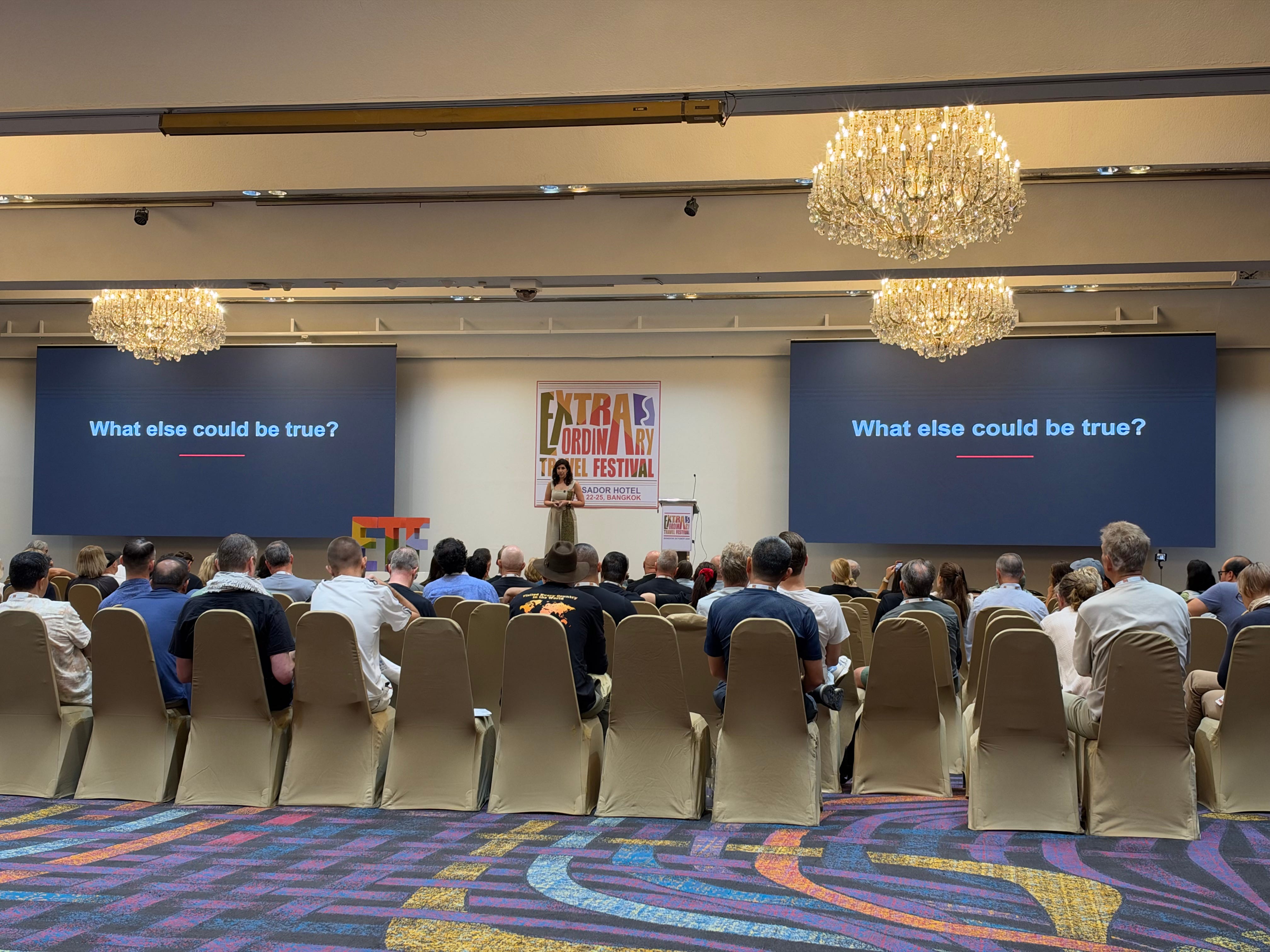
One of Yooshita’s slides asked, “What else could be true?” It was a wonderfully simple way of expressing the lesson she’d learned about her own country: even when we’re describing something we’ve experienced firsthand, we may be overlooking equally real experiences that don’t fit our understanding.
I chatted with Yooshita afterward and told her that we were, in many ways, trying to communicate exactly the same message. Because this is something I’ve wrestled with repeatedly since I began traveling, and especially since I started writing about those experiences.
Why I started 196 Stories
When I finished visiting every country in the world, one of the things that struck me most was how frequently the places I’d been warned about turned out to be considerably more complicated than their reputations suggested.
That doesn’t mean the warnings were always wrong. I’ve been to countries with terrible governments, serious human rights abuses, genuine security risks, and problems that no amount of cheerful travel writing can make disappear. In fact, I cut my most recent trip to Yemen short because of security concerns. I’m hardly going to pretend those dangers don’t exist.
But I’d also discovered that the version of a country presented in international headlines was often only a small part of the reality on the ground. And, more importantly, that the ordinary people living in those countries were frequently missing from the stories altogether.
Think about Afghanistan, Somalia, Yemen, or Sudan. For many people, those names immediately bring to mind war, terrorism, poverty, or political instability. And understandably so, because those are often the stories that dominate international coverage.
But the people who live in these places don’t spend every waking moment participating in a geopolitical crisis. They’re raising children, going to work, visiting friends, shopping for dinner, and worrying about the same sorts of things the rest of us worry about.
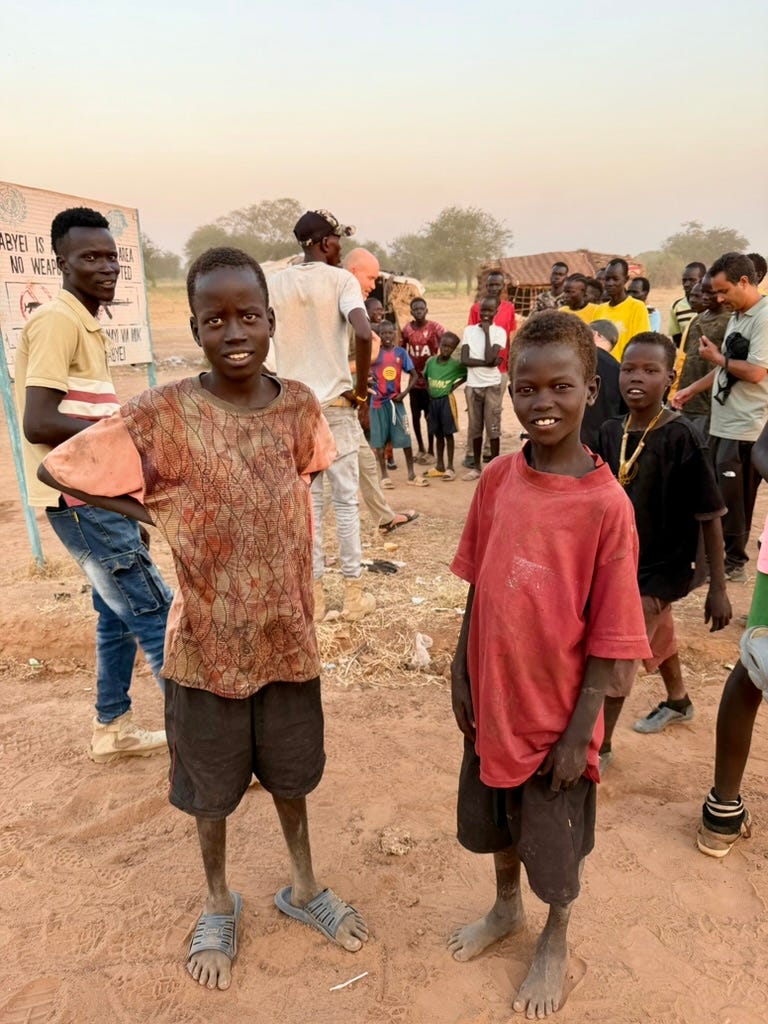
I’ve often said that whether you’re talking to a housewife in an Afghan village, a German farmer, or an imam in a Somali mosque, you’ll find that most people want fundamentally similar things. They want to feed their families, provide opportunities for their children, feel safe in their communities, and have some freedom to express themselves without fearing the consequences.
Obviously, cultures differ, priorities vary, and not everyone agrees on what a good society should look like. But after visiting every country, I’ve found far more common humanity than the constant stream of divisive headlines might lead you to expect.
And that’s where my own sense of responsibility comes in. Having had the extraordinary privilege of seeing so much of the world, I felt I should share some of the things I’d learned, particularly when they challenged the assumptions I’d carried with me before arriving. That’s a large part of why 196 Stories exists.
But Yooshita’s presentation was also a useful reminder that I need to be careful not to fall into exactly the same trap she described. It’s tempting to return from a place like Afghanistan or Yemen and focus exclusively on the wonderful people I met, precisely because those stories are so rarely told.
Yet that can become misleading, too, if I ignore the very real hardships those same people face.
The point isn’t that the media are always wrong, or that travelers somehow possess a superior understanding of the world. I visited every country, but I only saw a tiny piece of each one. A few days in a place, particularly somewhere as controlled as North Korea, hardly makes me an expert on the lives of the people who call it home.
If anything, traveling has made me more aware of just how much I don’t know. What I hope 196 Stories can do is add a few more perspectives to the conversation, rather than simply replacing one set of assumptions with another.
Whatever happened to listening?
There’s another reason these two presentations resonated with me, and it has less to do with travel than with the way we increasingly talk to one another…especially in the US.
I find the decline of civil discourse genuinely troubling. We’ve become awfully quick to divide people into opposing camps, assume the worst about anyone who disagrees with us, and dismiss perspectives that don’t fit neatly into our own understanding of the world.
Social media certainly hasn’t helped, but I don’t think we can blame all of it on algorithms. Sometimes we’re simply more interested in proving that we’re right than in understanding why somebody else might see things differently.
Eunhee’s observations about growing up in North Korea reminded me that people’s beliefs don’t develop in a vacuum. They’re shaped by their families, their communities, their education, the information available to them, and the experiences they’ve had.
Yooshita’s reflections on Iran reminded me that even when we’re absolutely convinced we’re correcting a misconception, we might be overlooking something important ourselves.
None of this means we should excuse cruelty, abandon our principles, or pretend that every opinion is equally valid. Understanding why someone believes something doesn’t require agreeing with them, and empathy certainly doesn’t mean accepting harmful behavior.
But I do think we’d be better off if we spent a little more time trying to understand where other people are coming from before deciding they’re ignorant, malicious, or beyond reason.
There’s an old saying about God giving us two ears, two eyes, and only one mouth so that we might listen and observe twice as much as we speak. I have no idea who originally came up with it, but I suspect most of us, myself very much included, could stand to follow that advice a little more often.
Which is exactly why I took this photo in Yemen a few weeks back.
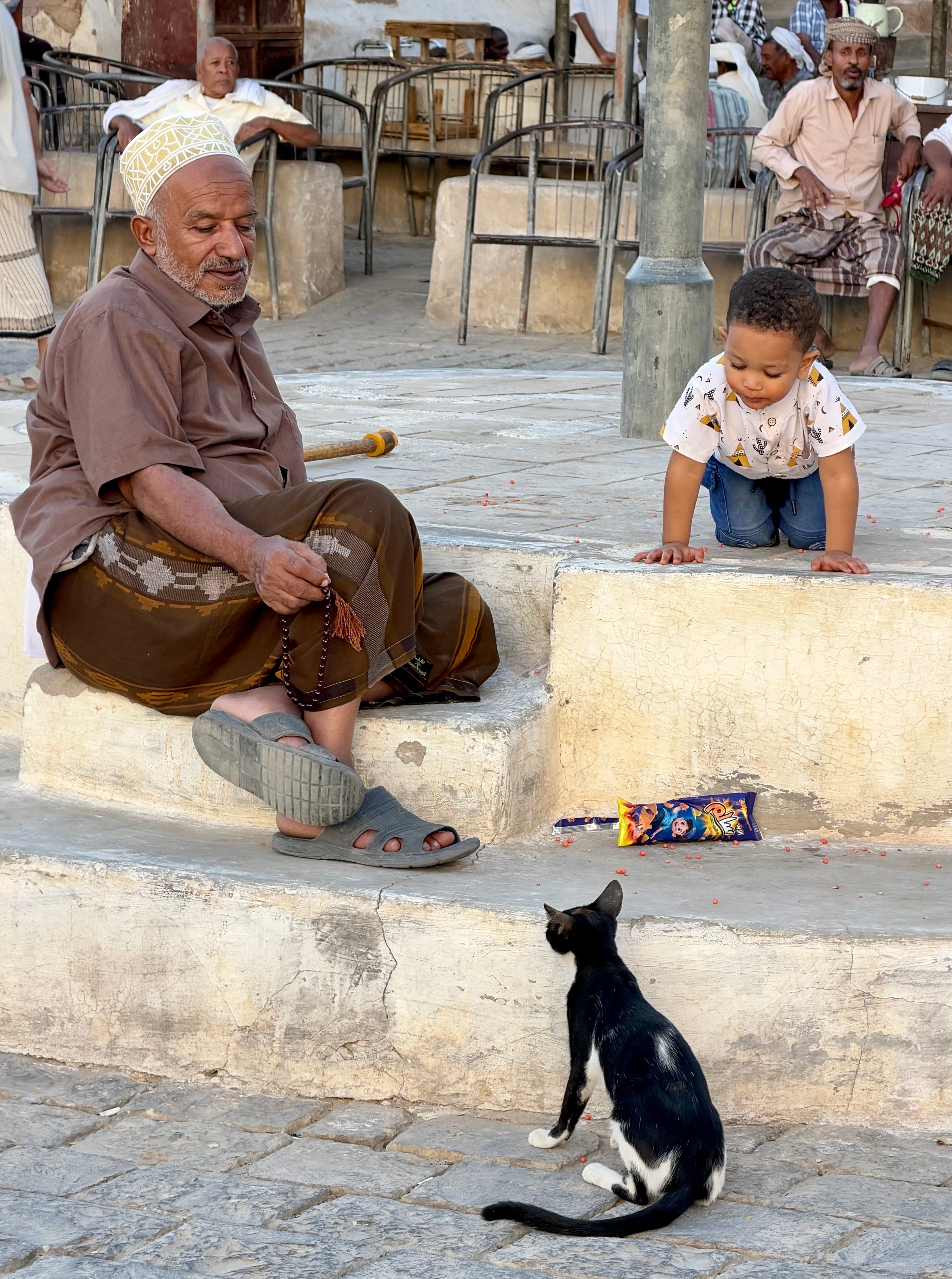
I’d traveled there knowing full well that Yemen was experiencing enormous difficulties, and I eventually left earlier than planned because of security concerns. None of those problems disappeared just because I encountered some wonderful people along the way.
But neither did the ordinary lives of those people disappear because the country was in crisis. Both things were true.
I started 196 Stories because I wanted to share some of those other truths. Not to convince everyone to agree with me, or to suggest that my perspective is somehow more valuable than anybody else’s, but to encourage a little more curiosity about a world that’s rarely as simple as we make it out to be.
And after listening to Eunhee and Yooshita in Bangkok, I’m more convinced than ever that the most useful thing we can sometimes do is resist the urge to have an immediate opinion, listen to someone whose experience is different from ours, and consider whether there might be something important we’re missing.
Because having seen the world doesn’t mean I’ve understood it. But it does give me a responsibility to keep looking, keep listening, and keep sharing what I learn.