
Since I’ve been traveling almost nonstop for over five months now, I thought I’d lean into the trip report theme for a little bit longer.
I’ve spent a lot of time recently writing about the lessons travel teaches us, but every now and then it’s fun to simply take you along for the ride. After last week’s trip to Baikonur, my recent second visit to Turkmenistan feels like the perfect opportunity to do exactly that.
My first trip over ten years ago was all about the classics: the ancient ruins of Merv, the Gates of Hell at Darvaza, and checking off the country’s biggest and most famous sights. This time I wanted something different. I wanted to spend more time in Ashgabat seeing what’s changed, finally make it out to Yangykala Canyon in the country’s remote western desert, and simply experience more of everyday Turkmenistan along the way.
So...let’s head back (and yes, there was a Turkmenistan Airlines 777 in the mix, but I won’t bore you with those deets…yet…)
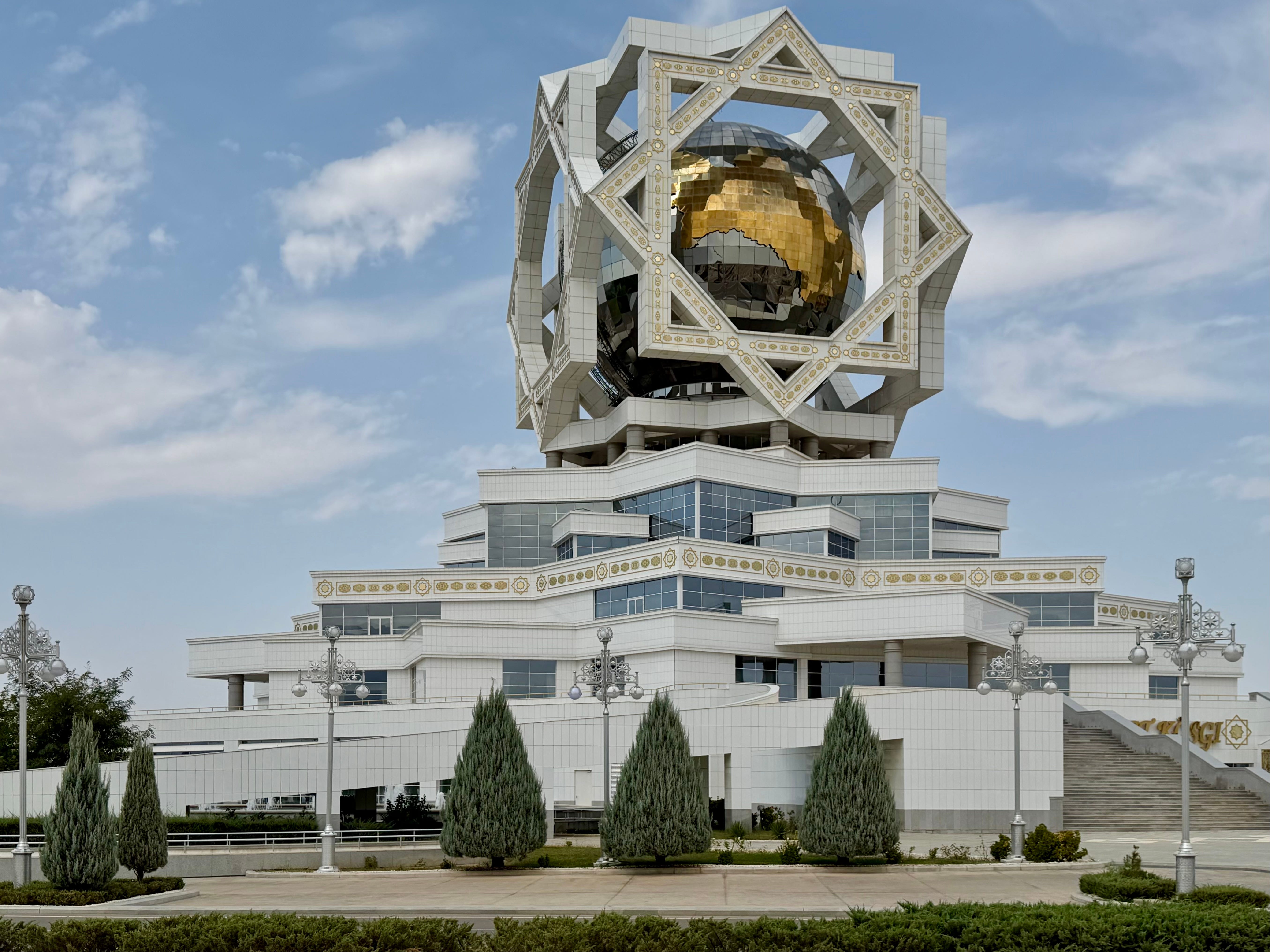
I landed in Ashgabat just before midnight and the first change was obvious: a huge, almost empty, gleaming white airport…complete with actual tourists! Met my guide, got to my hotel around 1am, and after months of bouncing from country to country, an extra few hours of sleep the first night felt almost as exciting as another landmark.
The following morning I set off with my guide to explore the city before my usual evening run. One thing I enjoy about returning somewhere is that it usually feels like the pressure completely disappears. The first visit is often spent making sure you’ve seen everything you’re “supposed” to see. The second visit gives you permission to slow down and “do” a place like you want to.
That said, Ashgabat is still one of the strangest capitals I’ve ever visited.
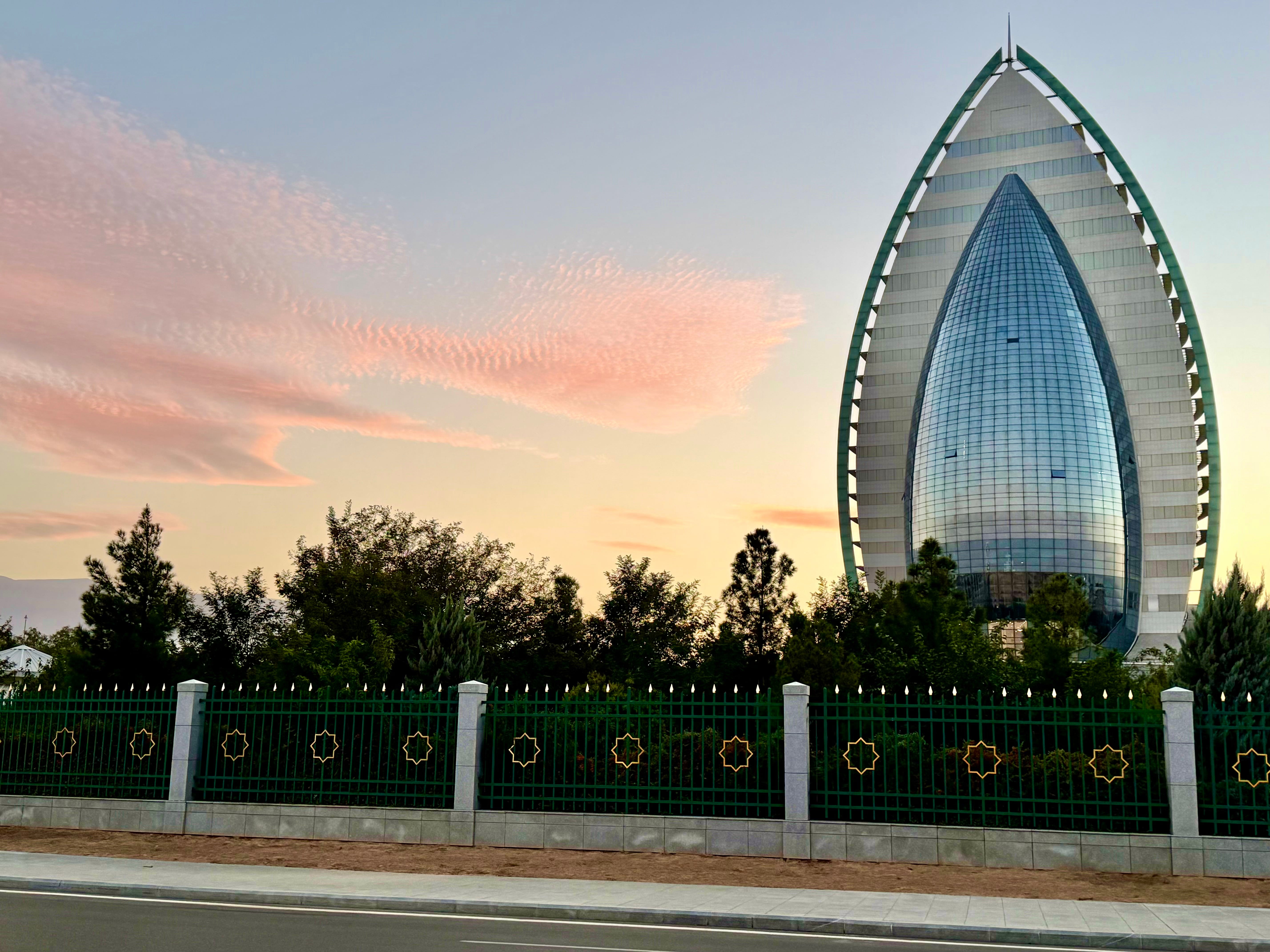
Entire neighborhoods carved from white marble. Government ministries look like futuristic palaces. Massive monuments appear every few blocks, yet the streets remain remarkably quiet. It’s polished almost to the point of feeling like a Hollywood set, but that’s exactly what makes it so fascinating. Instead of rushing from monument to monument, I asked my guide to cancel the “schedule” and just make some suggestions so we could play it by ear. This worked really well, and gave me the needed time to take it all in and remembering why this city made such an impression the first time.
The next morning we traded marble boulevards for the western desert…and, as it turned out, a completely different Turkmenistan.
A short flight carried us to Turkmenbashi on the shores of the Caspian Sea, and within minutes the country felt completely different.
Instead of monumental government buildings, there were fishing boats, low-rise neighborhoods, and a much more relaxed atmosphere…and everything was more run down and definitely not all white. We grabbed breakfast, wandered through the surprisingly beautiful Russian Orthodox church where we were invited into a service, and then climbed into our vehicle for the long drive toward Yangykala Canyon.
The farther we drove, the emptier everything became.
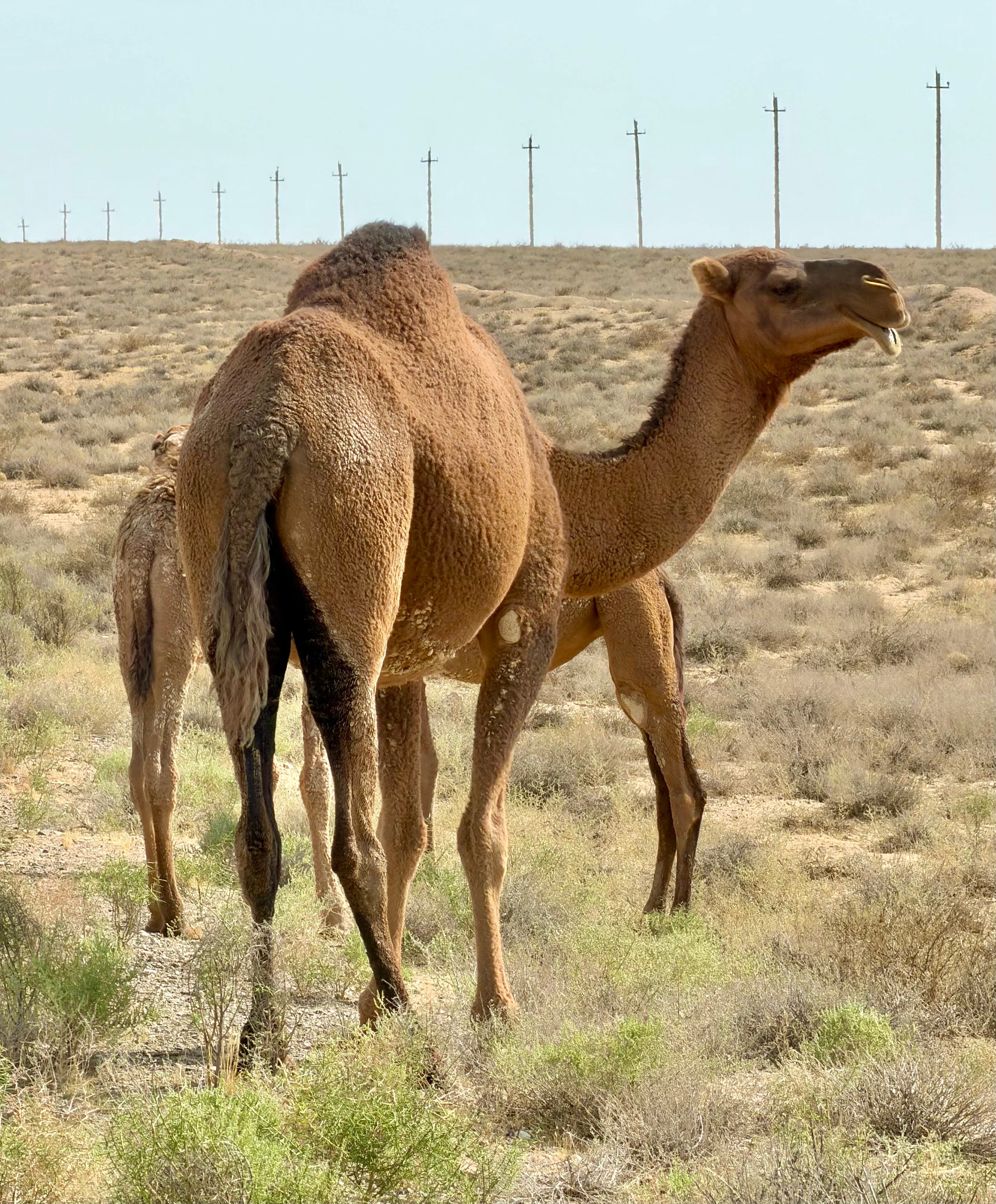
Soon the road stretched toward the horizon, the potholes became more frequent and larger, camels wandered freely across the desert, and the occasional tiny roadside settlement became an event worth noticing. It was hard to believe this was the same country I’d been exploring less than two hours earlier.
That contrast ended up being one of my favorite parts of the entire trip. The first time I’d visited Turkmenistan, I’d mostly seen the famous places. This time I was beginning to see the country in between them.
Eventually the desert simply...opened?
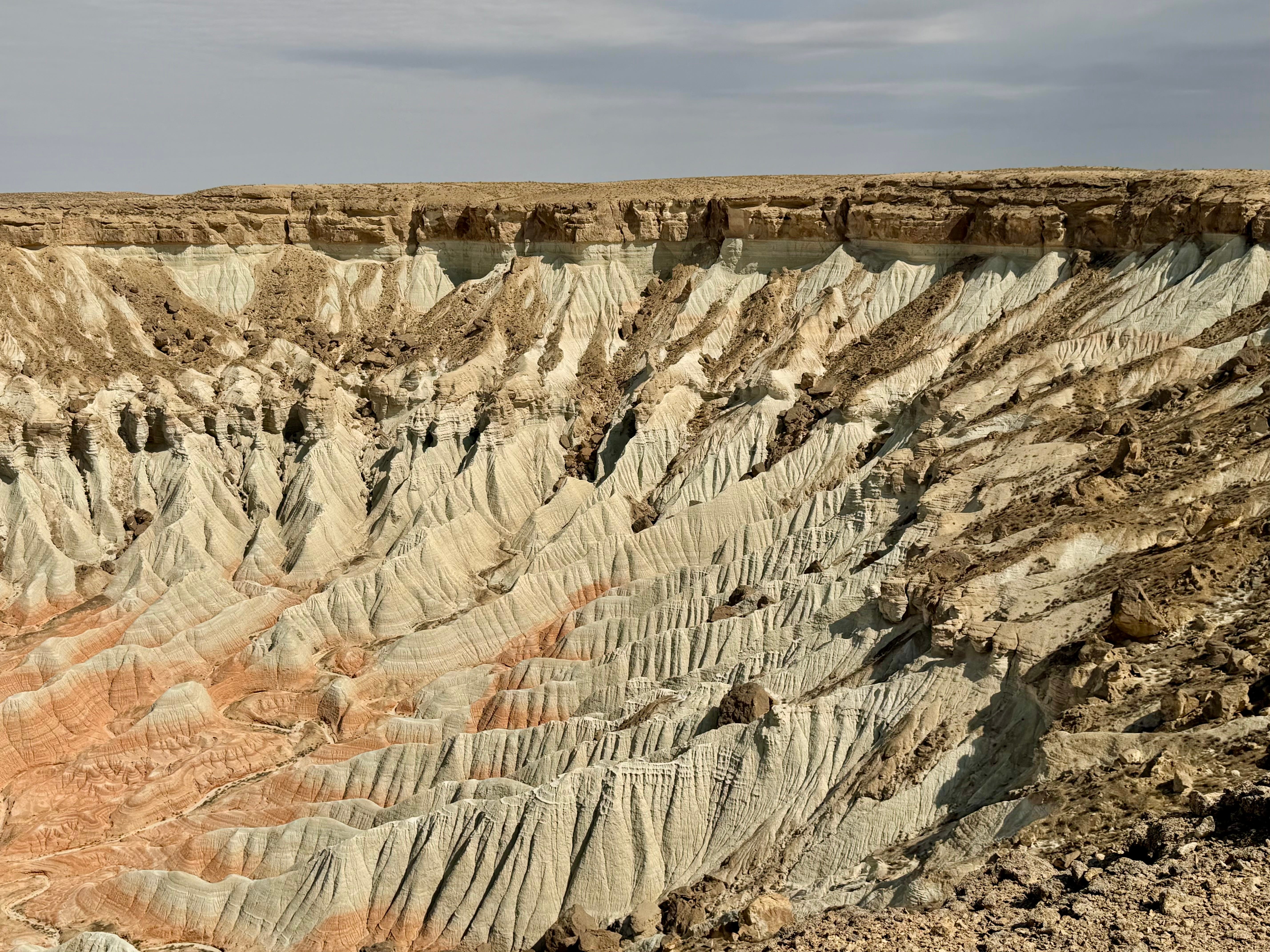
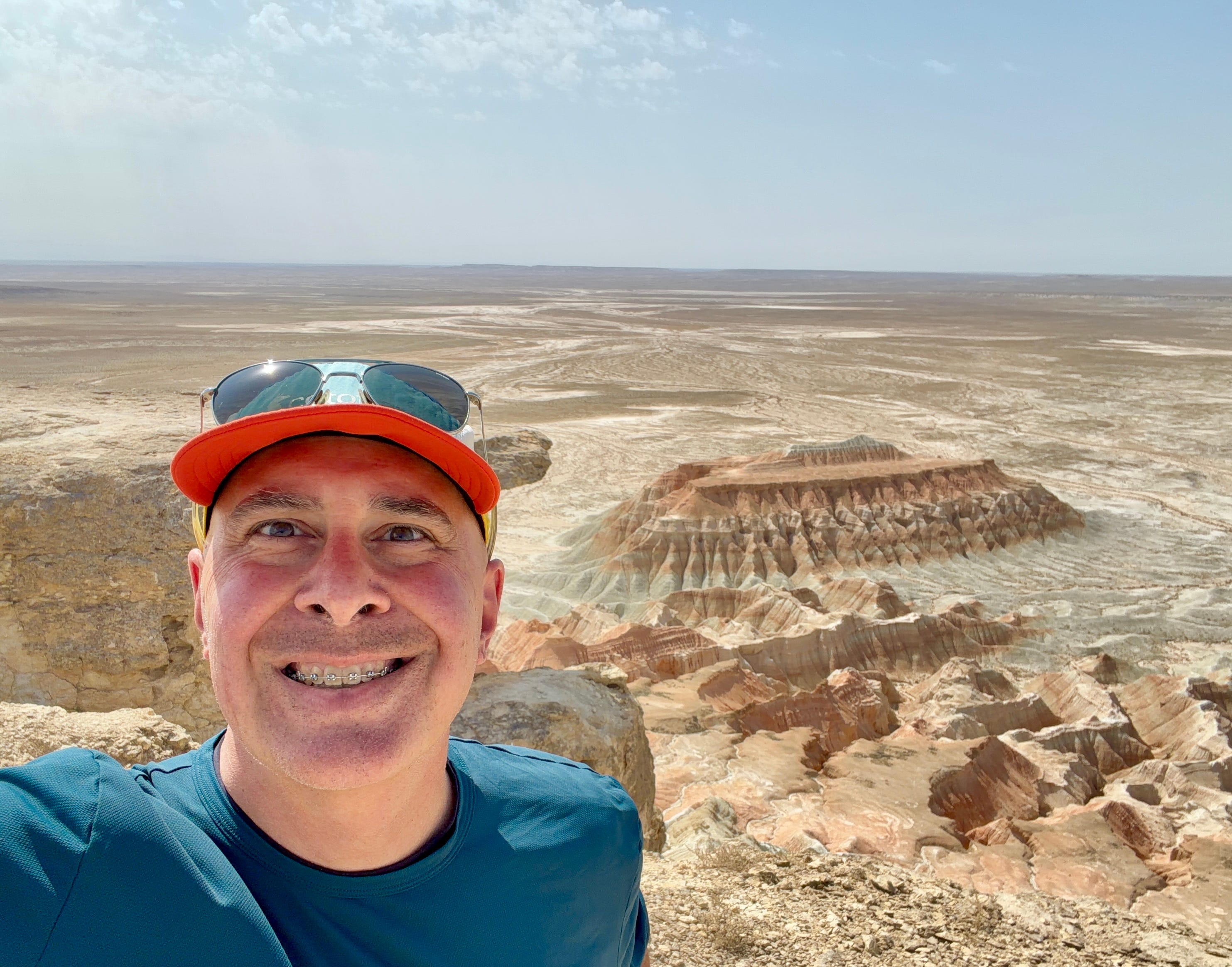
Yangykala Canyon doesn’t gradually reveal itself. One moment you’re driving across a flat, almost featureless landscape. The next you’re standing above tens of thousands of years of geology carved into spectacular layers of white, pink, orange, and red stretching across the horizon.
It’s one of those places where you can’t help but put your phone down after a bit and stop snapping pictures and just take it all in. It doesn’t feel like it can be real, but the total lack of other visitors does a great job of convincing you that it is.
For somewhere so spectacular, it’s astonishingly unknown outside Central Asia. Had this canyon been located almost anywhere else in the world, there would probably be shuttle buses, visitor centers, and crowds lining every overlook.
Instead, we practically had it to ourselves.
We spent the night back in Turkmenbashi before beginning the long drive east to Ashgabat the following morning.
I always enjoy days like this because they give me a time to slow down, look at what I “missed” when I was busy traveling, and catch up a bit. There isn’t a famous monument waiting around every corner. Instead, you simply watch the landscape unfold and stop whenever something catches your eye.
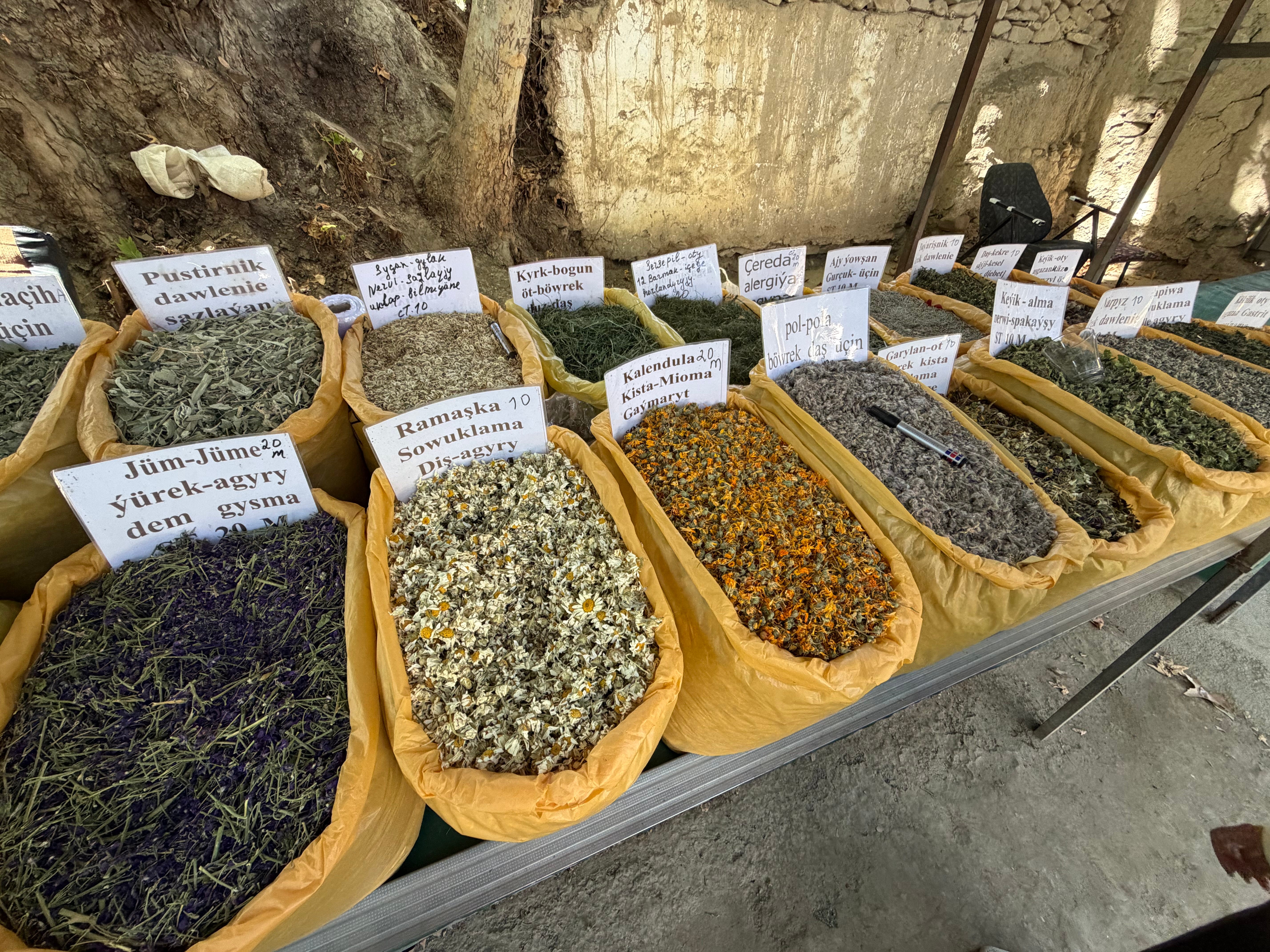
One such stop was a tiny roadside market selling dried herbs, flowers, and traditional teas. I couldn’t have told you what any of them were, but that wasn’t really the point.
Travel to me isn’t about standing in front of UNESCO sites or checking famous landmarks off a list. Sometimes it’s twenty minutes chatting with people selling tea beside a highway in the middle of nowhere. I learned the lady selling this was the third generation working in this market going back before Soviet times, and that tea was all her family had known as far back as they remember.
Those little, unscripted moments are often the ones that stay with me the longest.
By late afternoon we rolled back into Ashgabat for one final evening before my flight the next day.
Looking back, I’m so glad I returned.
The first visit introduced me to Turkmenistan’s icons. The second showed me everything that exists between them. I had questioned if it was “worth” going back just because I hadn’t been a second time and didn’t really have anything I really had high on my “to-do” list.
Ashgabat was just as surreal as I remembered, but I appreciated it more because I wasn’t rushing. Turkmenbashi gave me a glimpse of a completely different side of the country. Yangykala was every bit as spectacular as I’d hoped, and the long drive across the western desert turned out to be just as memorable as the destination itself.
People often ask whether Turkmenistan is worth visiting. If it’s your first trip to Central Asia, I might point you elsewhere. But if you like places that “everyone else” isn’t “doing” and aren’t on any list of “Instagrammable places” …then this just might be your jam.
But if you’ve already fallen in love with this part of the world and are looking for somewhere genuinely different, wonderfully quirky, and still very much off the tourist trail, Turkmenistan delivers an experience that’s unlike anywhere else I’ve been.