
Sometimes the best travel experiences arrive completely uninvited.
That is Valencia for me right now.
I booked this trip without realizing I’d be landing in the middle of Las Fallas, the city’s most famous festival and one of the wildest cultural events in Spain. Fortunately, prices were still reasonable, logistics held together, and instead of getting punished for my lack of planning, I somehow got rewarded for it. I walked into a city that had effectively turned itself into an open-air fantasy world of giant sculptures, street celebrations, firecrackers, music, and collective sleep deprivation.
And honestly, it slaps.
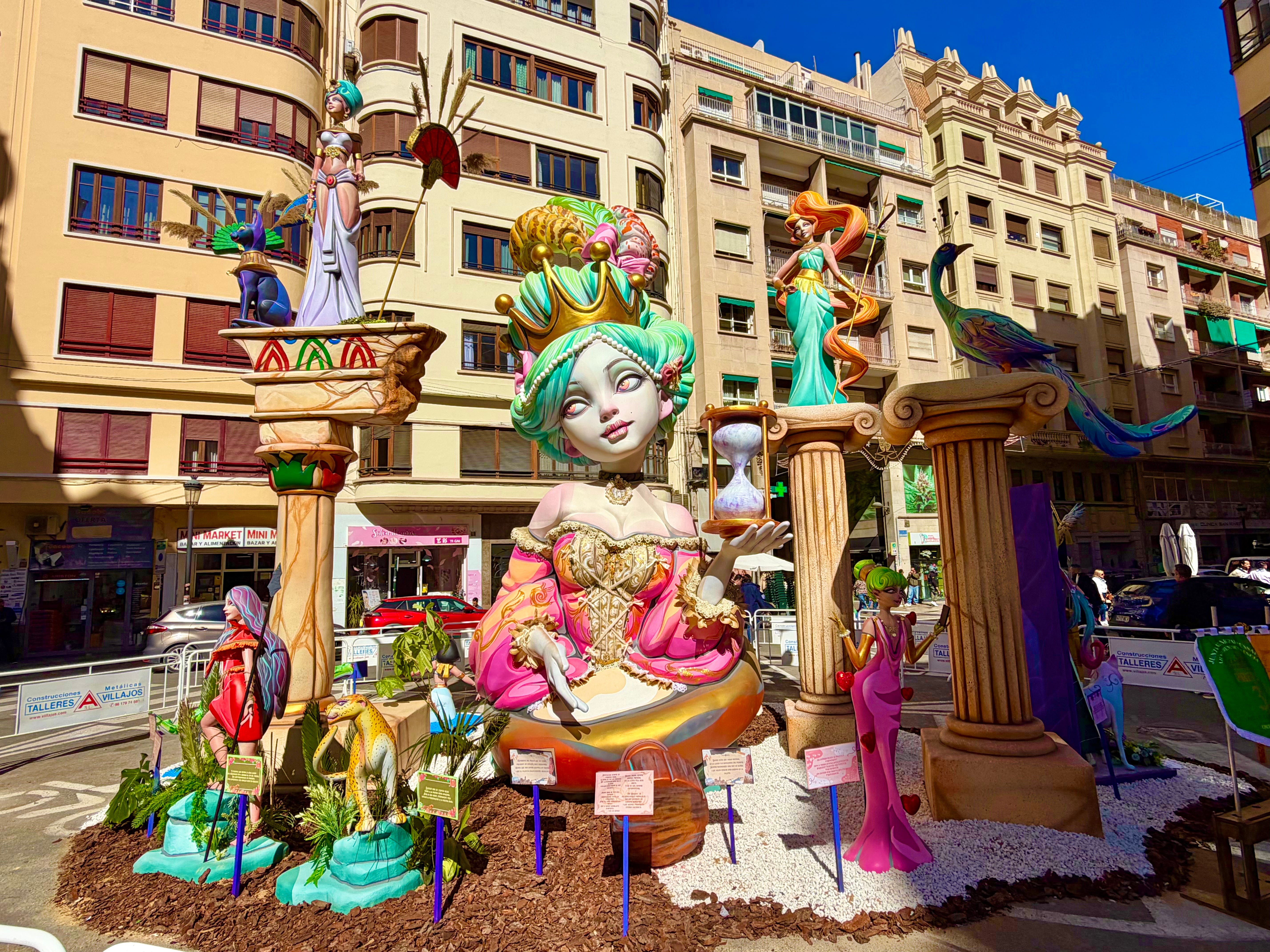
If you have never been, the simplest explanation is that Las Fallas is a festival built around art, satire, neighborhood pride, noise, and fire. Throughout the year, different neighborhoods commission and construct enormous sculptural installations called fallas. These are not casual decorations. They are elaborate, expensive, technically impressive works of art, often playful or surreal, sometimes political, sometimes absurd, and always designed to be noticed. During the festival, they are displayed throughout the city, admired by locals and visitors alike, and then, at the end, all of them (except one which is “pardoned”) are burned. That is part of the tradition. The beauty is temporary on purpose so it can happen again next year.
The city lives differently while Fallas is happening. During the day, you wander from one installation to another, turning street corners and suddenly finding yourself face to face with some giant, hyper-detailed creation that looks like it came from a fever dream. At night, the energy shifts. The crowds get thicker, the lights get brighter, and the whole place feels like it is operating on pure adrenaline and communal momentum. Valencia stops being just a city and starts behaving like a living event.
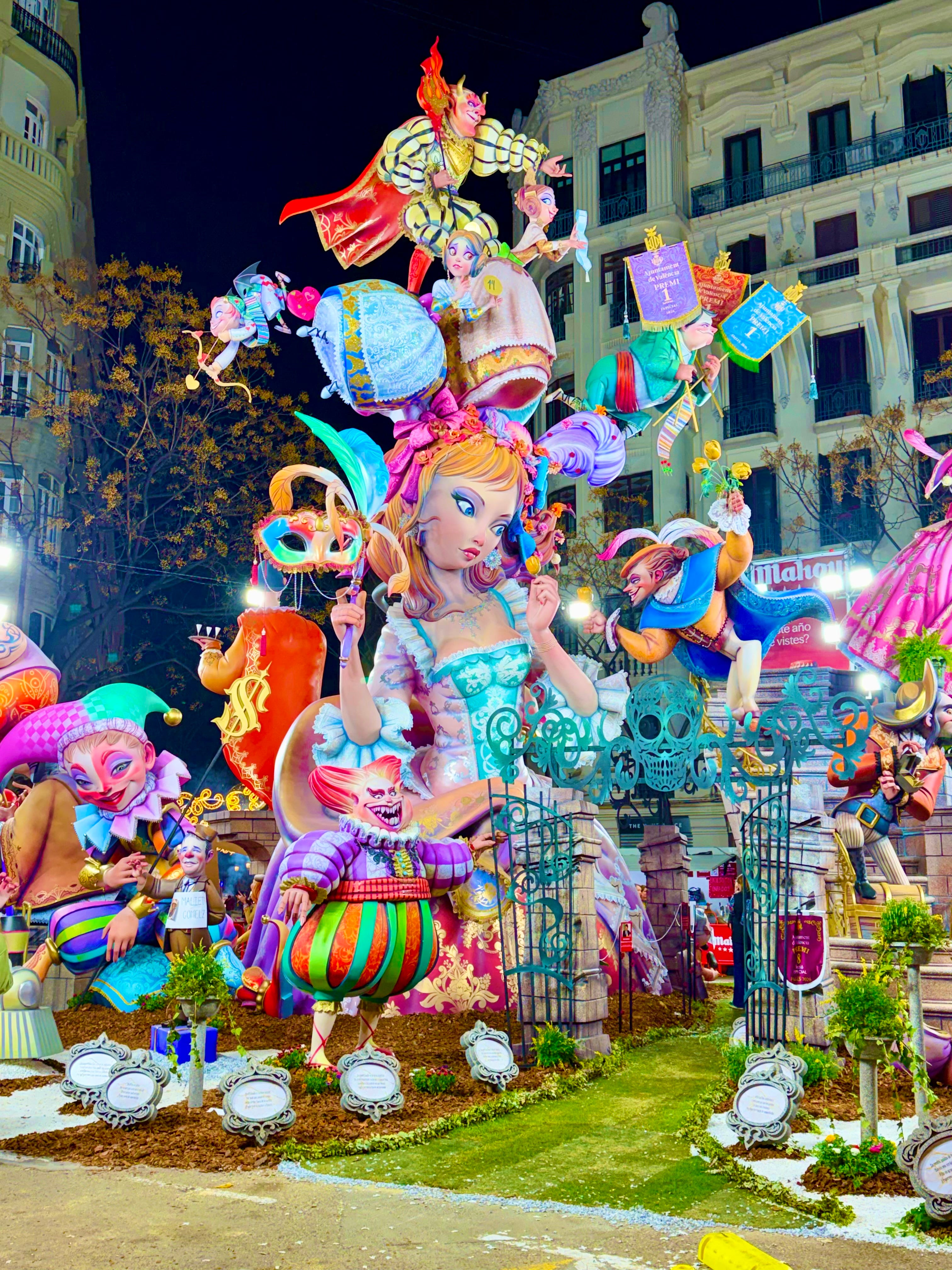
What struck me almost immediately was that the festival itself is not just about spectacle. It is also about participation. The city is outside. People are moving, talking, laughing, drinking, lingering, and sharing the experience. That matters, especially when you are traveling alone.
Because here is the truth about solo travel: your experience is mostly on you.
Yes, some places are more open than others. Yes, some people are warmer than others. Yes, luck matters. But if you are alone in a city and want more than photos and observations, at some point you have to participate. You have to put yourself out there, speak to someone, ask a question, accept a little awkwardness, and see what happens. Travel is not just about where you go. It is also about whether you are willing to step toward other people once you get there.
That thought hit harder yesterday because I had one of those conversations that lingers, though not for the best reason. I met someone working at a restaurant, an immigrant from Asia who has lived in Spain for more than twenty-five years. Their partner is from another European country, so the two of them have also built their lives here from the outside. And for what felt like a very long time, all I heard from them was how unwelcoming the Spanish are, how impossible it has been to connect, and how even after all these years they still do not feel accepted in Valencia.
Now, to be clear, I am not saying their experience is invalid. It is their experience, and I am sure it is real to them. But there is a difference between acknowledging that connection can be difficult and deciding that connection is impossible. The whole conversation felt so relentlessly negative that I eventually found myself looking for an exit. People who have settled too comfortably into resentment can drain the oxygen out of a room.
And the thing is, my own experience here has been almost the exact opposite.
Not because I am somehow magical. Not because every Valencian I meet is trying to become my best friend. But because I speak at least some Spanish, I make an effort, I ask questions, I smile first, and I am willing to accept that not every interaction needs to become some deep, life-changing bond to still be worthwhile. Especially during a festival like Fallas, when half the city seems to be operating with a little extra courage courtesy of whatever is in their cup, it is not that hard to meet people if you are open to it.
That is the philosophy piece here, and honestly it applies far beyond Valencia.
A lot of travelers say they want “authentic connection,” but what they really want is for connection to arrive effortlessly, on their terms, without discomfort, rejection, effort, language barriers, or vulnerability. That is not how it works. Not in Spain. Not anywhere. Real human connection, even the casual kind, requires initiative. You do not need to leave a place with lifelong friends. You do not need a dramatic story about how you were adopted into a local family and now return every Christmas. Sometimes the win is much smaller, and still meaningful: a shared laugh, a recommendation, a drink, a conversation that lasts twenty minutes longer than expected, a sense that for one evening you were not just observing the city, but participating in it.
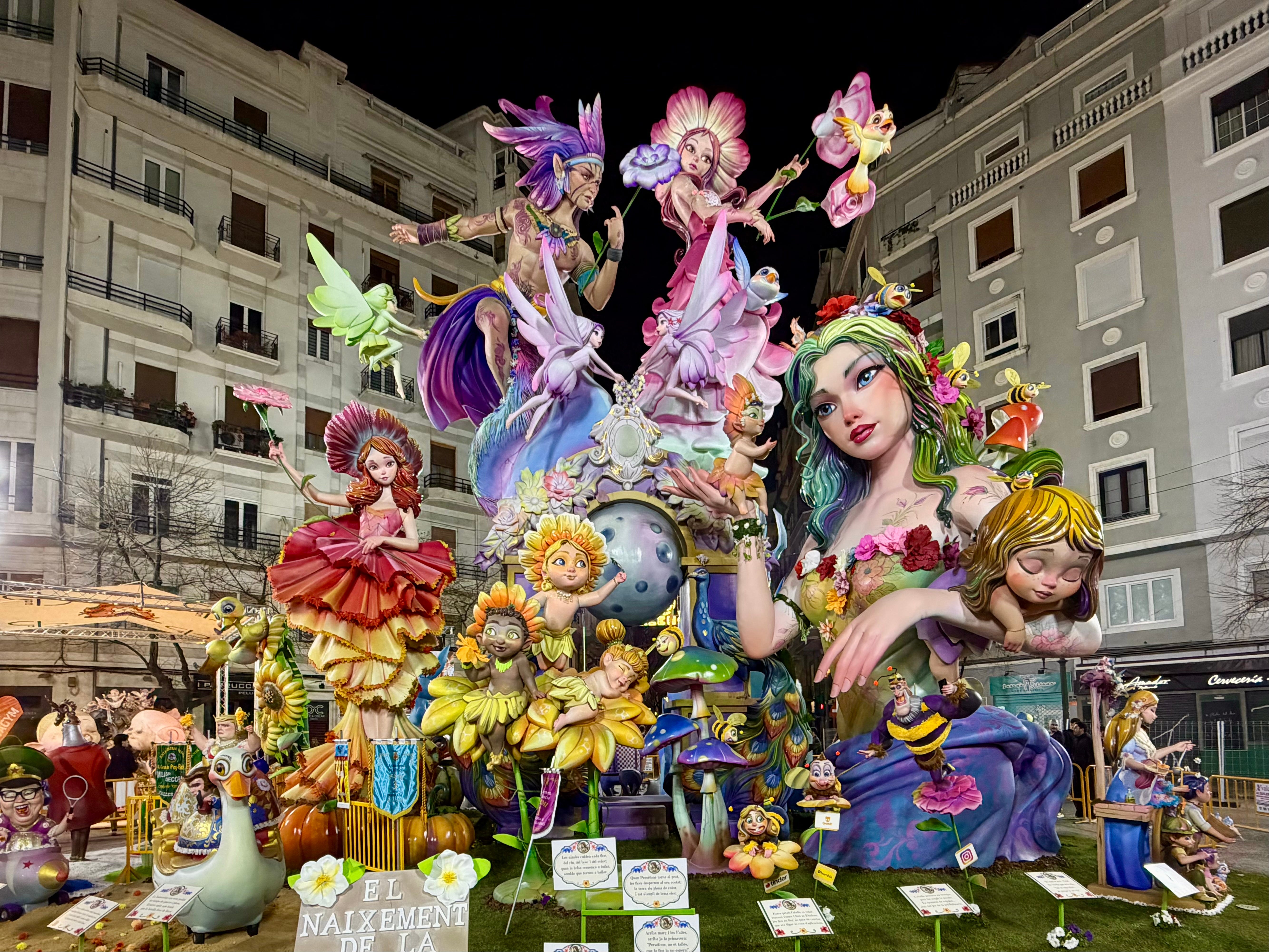
Fallas is actually a perfect setting for this lesson because the festival itself is communal. These sculptures are not just dropped in by some anonymous event company. They come from neighborhood organizations, local traditions, local pride, local energy. You can admire them as an outsider, sure. But the experience gets richer the moment you remember that these are not props for your content. They are part of a city’s identity, created by people who live here, celebrate here, and understand layers of meaning you probably do not.
That is one reason I love being surprised by events like this. They break the tidy version of travel. You think you are arriving in one kind of place and instead you land in something louder, stranger, and much more alive. They also force you to decide what kind of traveler you want to be. You can stay detached and consume the event visually, moving from sculpture to sculpture like you are scanning museum exhibits. Or you can lean in, ask questions, talk to people, and let the city become social rather than scenic.
And then there is the deeper travel lesson underneath all of this. So much of travel is not about whether a place is welcoming in some abstract, universal sense. It is about whether you are willing to give the place something to work with. That does not mean ignoring real barriers. Some communities are more closed. Some societies are harder to crack. Some conversations go nowhere. Some people simply do not want to talk, and that is fine. But if you bring curiosity, humility, and a little linguistic effort, you are dramatically increasing your odds.
That matters because negativity can become self-fulfilling. If you walk into a place already convinced that nobody wants you there, you will notice every cool interaction as an exception and every cold interaction as proof. But if you arrive open, observant, and willing to engage, you start giving reality a chance to surprise you. Not perfectly. Not every time. But often enough that a city begins to feel less like a backdrop and more like a relationship.
That is what I keep thinking about as I walk through Valencia this week. The sculptures are amazing. The festival is ridiculous in the best possible way. The whole city feels enhanced. But the real story is not just the art in the streets. It is the chance to step into the mood of a place and decide whether you are going to remain separate from it or become, even briefly, part of it.
Traveling alone does not mean being alone the whole time. It means that connection is less likely to happen by accident and more likely to happen because you chose it. That is not a burden. It is a gift. It means your trip is not just something that happens to you. It is something you actively shape.
And that is probably the bigger lesson here.
Valencia gave me Fallas by accident. What I do with that accident is up to me.
So I will leave you with this: what is a time you put yourself out there while traveling, connected with someone, and your trip was richer because of it?
Because places matter, of course.
But more often than not, it is the people who make them unforgettable.