
I’m going to try a quick experiment, starting now: one deeper post per week that blends a destination with a travel philosophy rabbit hole, instead of keeping those as separate “travel story” vs “life thoughts” lanes. I’ll still drop shorter Notes on Substack for quick hits and side quests, but the weekly post is going to go a little more in depth. My goal will be to drop a new story every Wednesday, and I hope you’ll be here for it…and invite some friends along!
Feedback is welcome. If this format slaps, tell me. If it’s cringe, also tell me (gently).
Because today’s topic is basically this: touristy places can be annoying as hell… and still absolutely worth it.
Think Paris: Eiffel Tower, Louvre. Rome: Colosseum. Beijing: Great Wall. You know the scene: tour buses pulling up like it’s a conveyor belt, people sprinting off for a quick selfie, and then reloading back onto the bus like they’re speedrunning human history.
There is a lot to dislike.
Crowds. Noise. Tripods and Selfie Sticks. “Main character energy” glamor shoots blocking the entire walkway. The air of urgency, like everyone’s trying to “complete” the destination instead of experience it.
I wrote about one way to mitigate this in The Case for Bad Timing: go early, go late, go in the rain, go when the algorithm is asleep. Sometimes it works beautifully.
And sometimes it doesn’t. Or it’s just not practical.
Sometimes the place is just popular for a reason, and you are going to be in there with 200 other sweaty mammals breathing the same ancient air.
Which brings us to Luxor, Egypt, and the Valley of the Kings.
The Valley of the Kings: Why It’s a Big Deal
If you have never been, here’s the simplest explanation: the Valley of the Kings is essentially the Egyptian New Kingdom’s VIP afterlife hood, carved into the desert hills on the west bank of Luxor. Pharaohs (and other royals) were buried here in elaborately painted tombs designed to help them navigate the underworld and arrive safely in the next life.
This is not “look at a ruin” travel. This is “walk into a sealed, painted time capsule” travel.
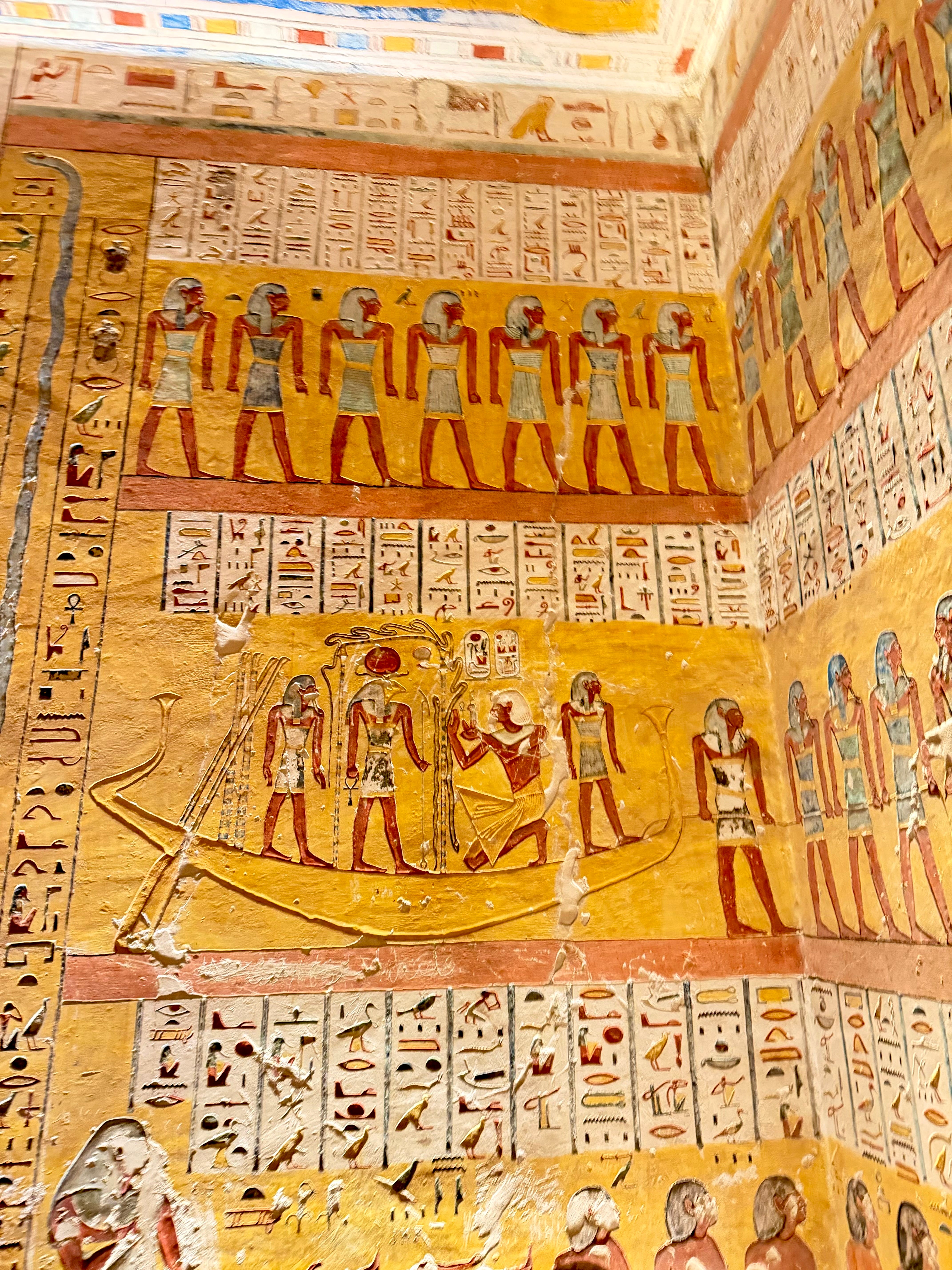
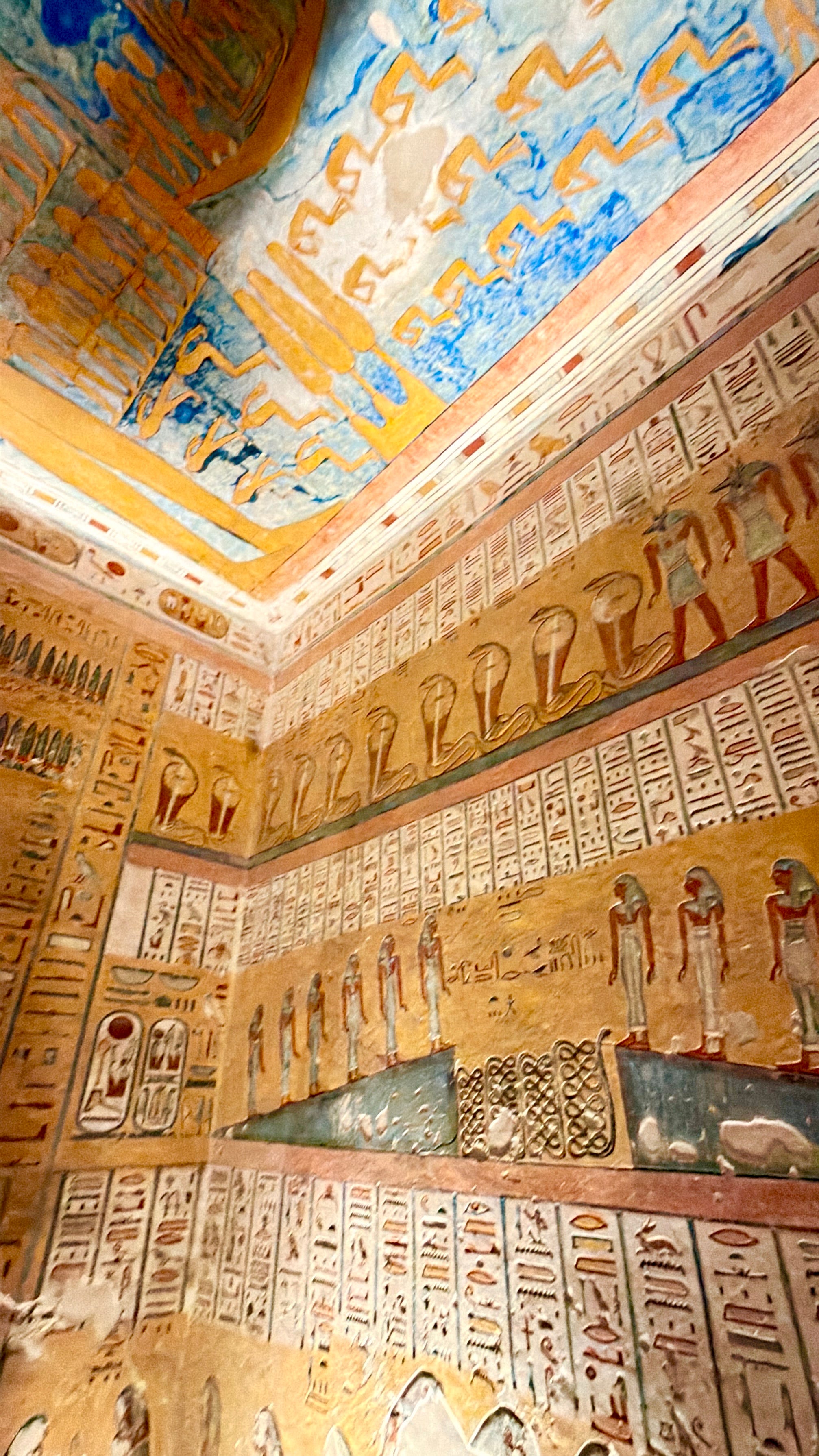
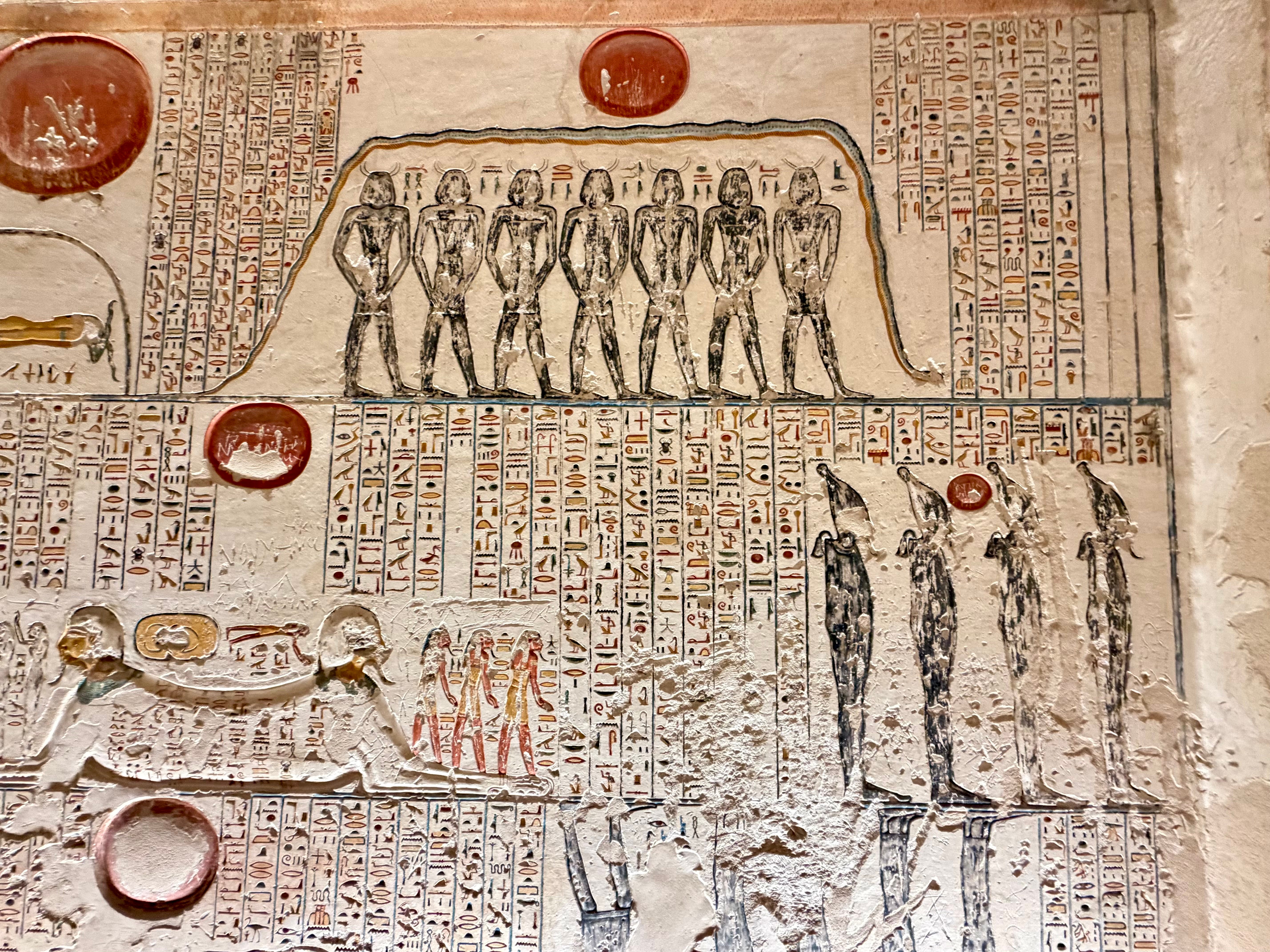
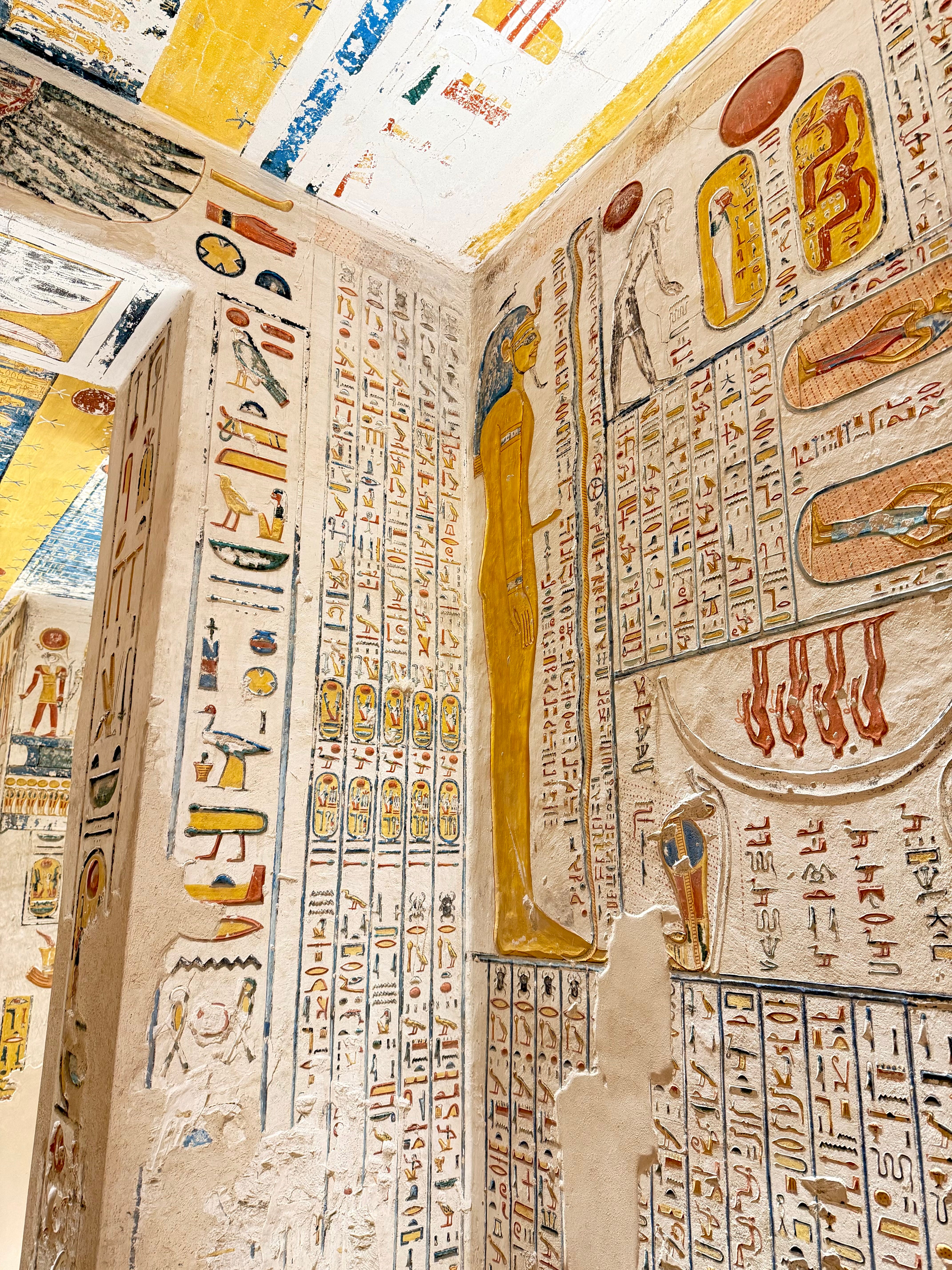
Almost all of the tombs you can visit are underground, and the walls are covered top to bottom with scenes, symbols, and hieroglyphs that still pop with color in a way that feels unfair. Like… how is this still this vivid after more than 3,500 years?
But here’s the catch: not all tombs are open, and the open ones rotate. Your standard ticket usually includes entry to four of the open tombs of your choice, and then there are paid add-ons.
And yes, this is where travel logistics meets travel psychology.
Because the tombs that cost extra (like King Tut, and some of the big-name Ramses tombs) tend to be less crowded for the simple reason that a portion of the tour groups skip them.
Not all, but enough that you feel the difference.
Which is funny, if you think about it: sometimes the path to a more peaceful experience is just… paying for the premium DLC.
The Crowd Problem (and Why You Still Go)
Let’s talk about the thing everyone complains about in the Valley of the Kings: crowds in the tombs.
Some tombs are calm. You can stand there, take your time, actually see what you’re looking at, and feel that hush that hits when you realize you’re in a place built for eternity.
Other tombs are… a sweaty, gross, humid group project.
Tight corridors. People squeezing past each other. The air gets thick. You can smell the collective effort. Someone’s flashlight is blasting the wall art like it owes them money. Another person is narrating loudly for their entire group like they’re hosting a live podcast called I Am The Only Person Here. The only upside? Tour guides are NOT allowed to narrate inside, so at least you only have to deal with the other visitors.
And even then?
It’s still worth it.
Because here’s the part that snaps on the internet cannot replicate: scale and presence.
You can look at photos of tomb art online all day. You can zoom in. You can read the labels. You can “learn.”
But you cannot download the feeling of standing in a space carved by hand thousands of years ago, where the walls were painted for a king who genuinely believed these images could guide his soul through the afterlife.
You go because your body needs to be there to understand it.
A Note on “Must-See” Places (and Staying Sane)
I know I sound like I’m defending tourist chaos, and I kind of am, but with conditions.
The goal is not to pretend crowds are magical.
The goal is to keep perspective and remember why you are there.
You are not there to win travel. You are not there to prove you were there. You are there to experience something real, and ancient, and wildly human.
The trick is learning to tune people out without becoming inconsiderate yourself.
There is a difference between:
“I’m going to focus on the walls and ignore the noise,” and
“I’m going to block the hallway for 12 minutes so I can get the perfect shot while everyone else suffers.”
The first is Zen. The second is villain behavior. Leave that to others.
If you mentally prepare for crowds, and decide ahead of time that you will not let other people’s chaos hijack your moment, you can still have an incredible experience.
Not perfect. Not empty. Not cinematic.
But real.
And honestly, real is better.
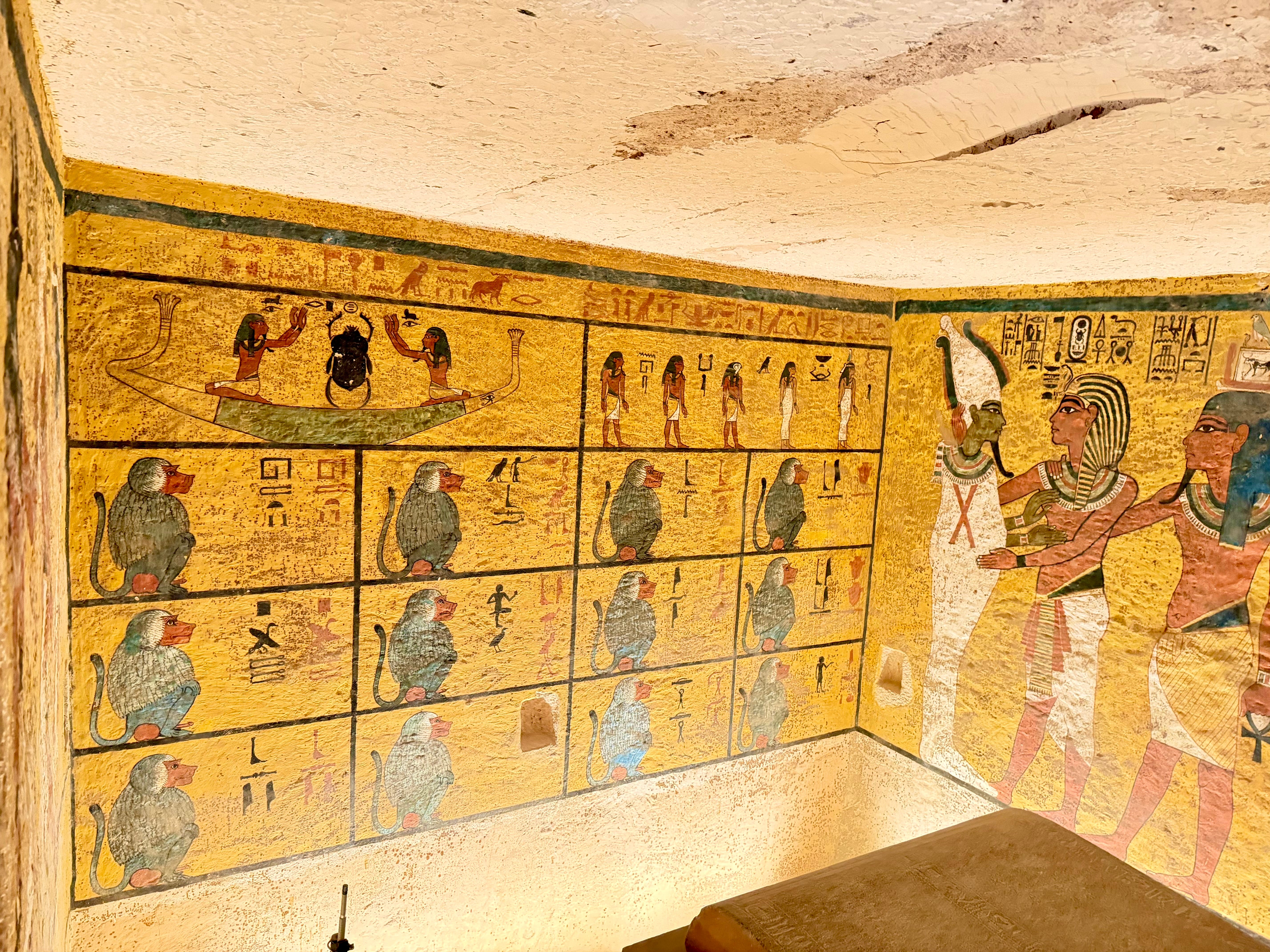
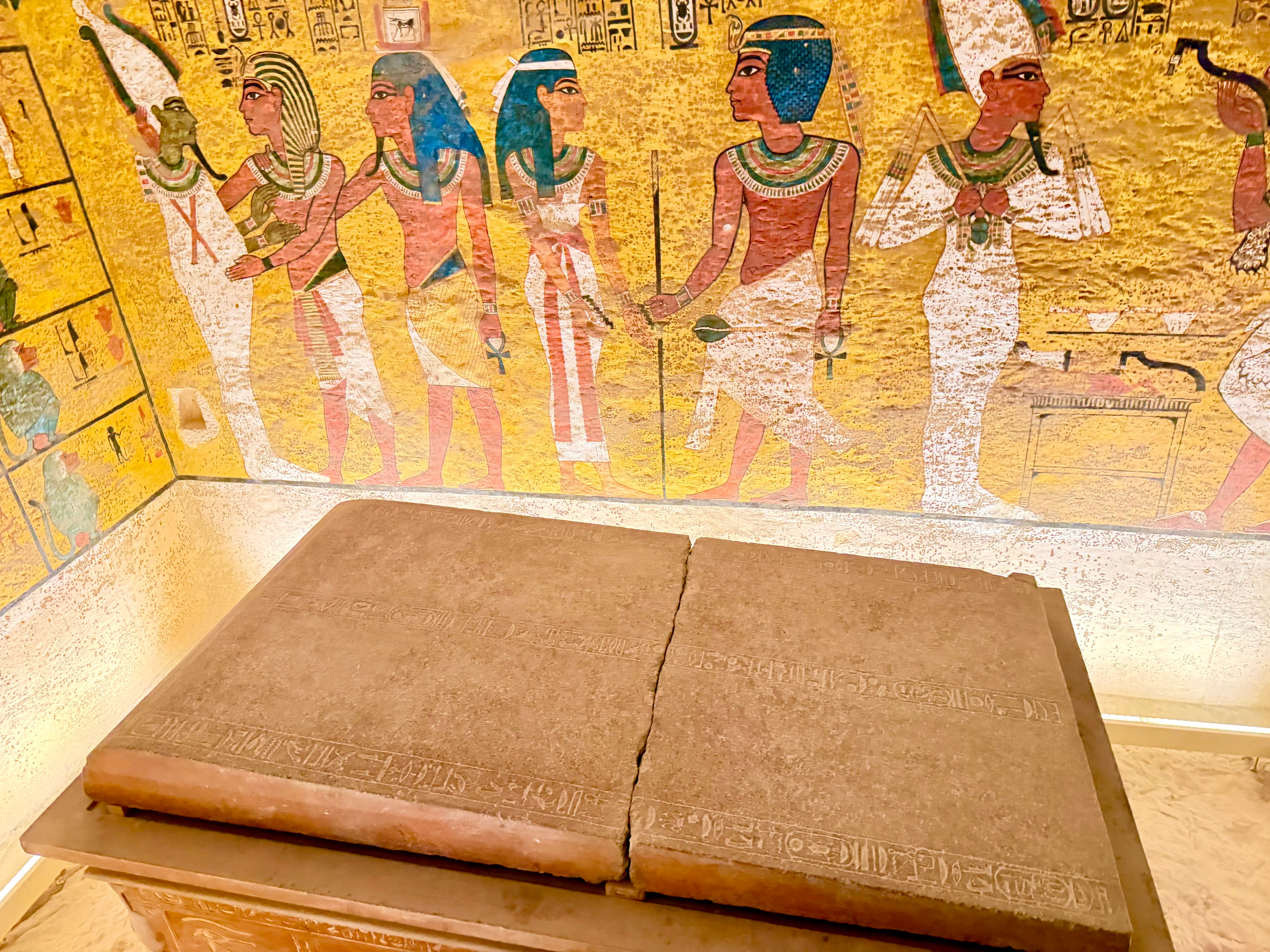
King Tut: Yes, It Costs More. Yes, You Should Do It.
Alright, let’s address the big one.
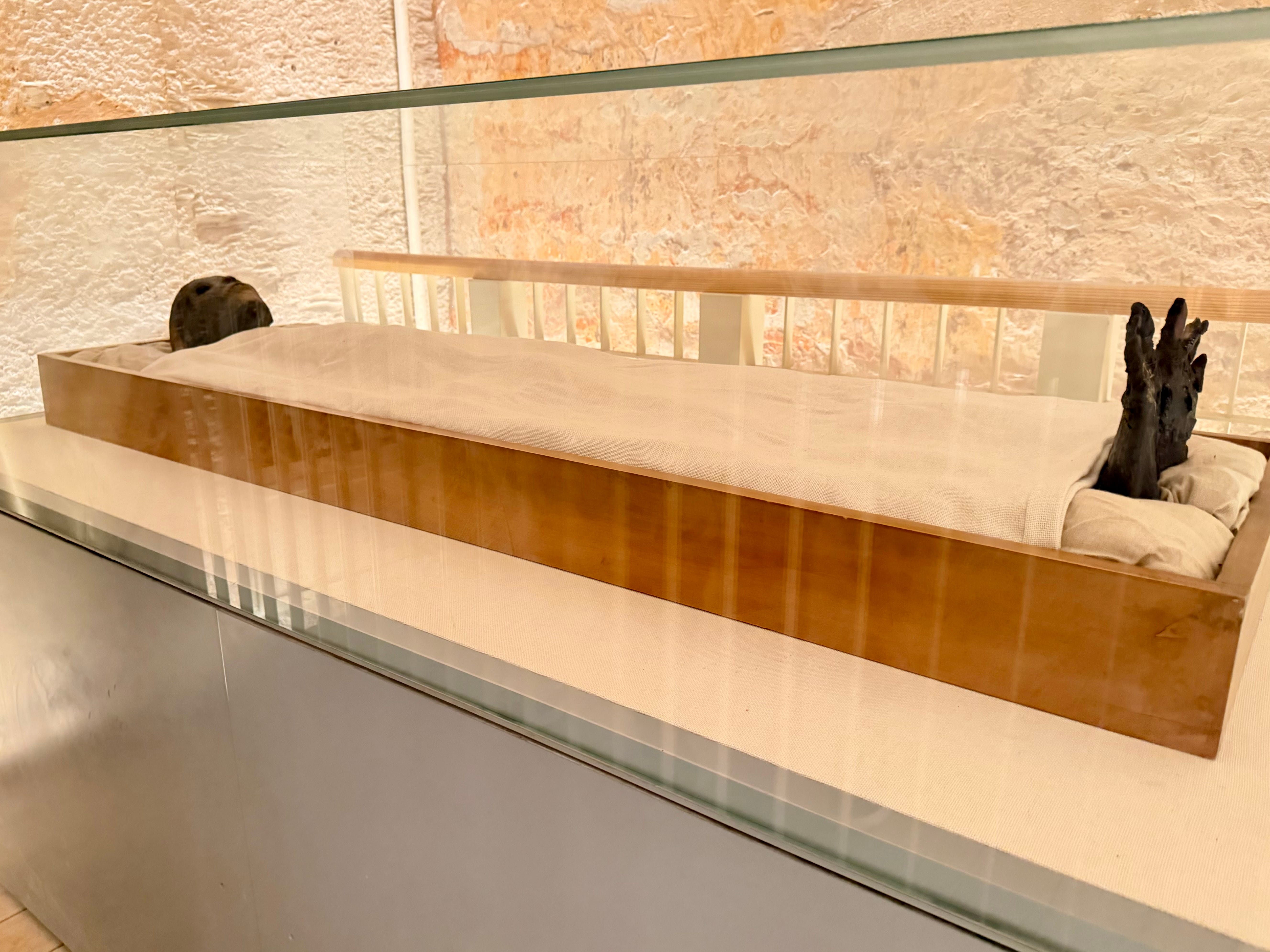
That stone-hard dude in the glass case is actually King Tut. That alone is enough to make some people feel weird, and I get it. It is a human being. A young king. A real body. Not a museum “object.”
But that confrontation is also part of why it matters.
Tutankhamun’s tomb is famously small compared to many others, but it’s iconic because of what his discovery represented and how it reshaped the world’s obsession with ancient Egypt. King Tut became king early, and died a few years later, so there just wasn’t much time to build him an elaborate tomb like many others. Seeing it in person, and then seeing him, is a reminder that history is not an abstraction. It was people.
It also tends to be less crowded because it is a $10+ add-on, and the tour bus herd doesn’t always stampede in.
Which means you actually get a moment.
The “Bangin Pics” Reality, Even in Peak Chaos
One of the funniest parts of places like this is that you can walk into a packed tomb and still come out with photos that look like you had the place to yourself.
Not because you were being inconsiderate. Not because you shoved someone out of frame.
But because the walls are so visually overwhelming that if you’re patient for ten seconds, the moment opens up. People shift. Someone steps back. The corridor breathes.
And suddenly you’re getting shots that look like the tomb rolled out the red carpet for you personally.
The Philosophy Part: You Can Have It All (But You Have to Choose Your Mindset)
Here’s the point I keep returning to, especially in high-crowd, high-hype places:
You really can have it all.
You can see the famous places and still travel thoughtfully.
You can appreciate the masterpieces and refuse to be consumed by the madness around them.
You can be present and still take the photo.
But you have to prepare your head for it.
If you walk into the Valley of the Kings expecting solitude, you will be miserable.
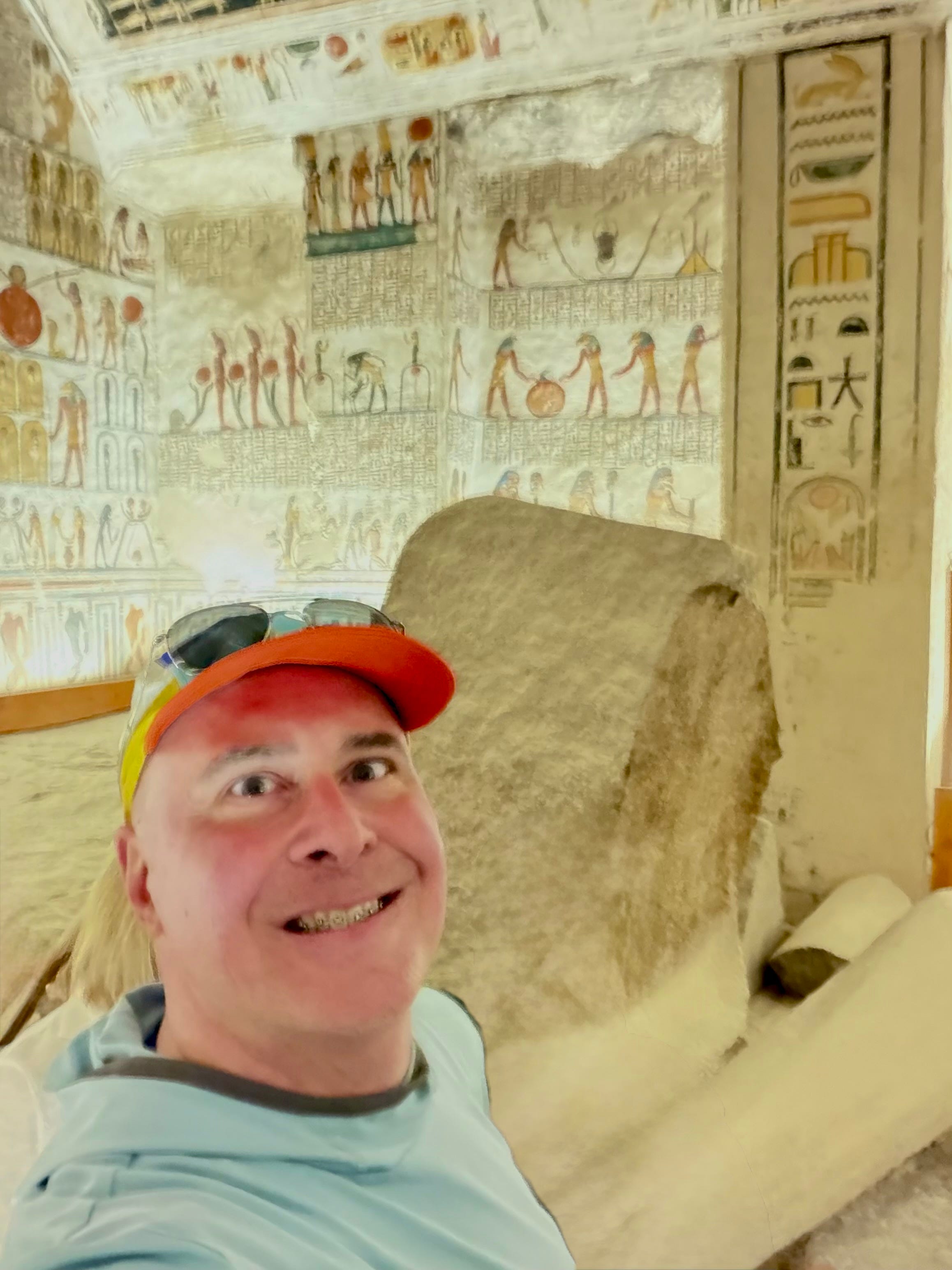
If you walk in expecting crowds but committed to your own experience anyway, you get the gift: the ability to stand inside something thousands of years old and feel, for a second, like time is bigger than your schedule.
And that is the entire reason we travel in the first place.
Quick Tips: Making Iconic Crowded Places Actually Work for You
Before you scroll to the CTA, here’s how to make places like the Valley of the Kings hit the way they’re supposed to:
Mentally expect crowds. If you expect solitude, you’ll be annoyed. If you expect chaos, anything better feels like a win.
Pay for the add-ons. The extra tombs (King Tut, Ramses) cost more for a reason. Fewer tour groups = more breathing room.
Pause instead of pushing. Ten seconds of patience can clear a frame, open a corridor, and change your entire experience.
Focus on one wall, not the whole room. Depth beats overwhelmed. Let your brain zoom in.
Don’t become the villain. Tune people out internally, but never block the space externally. Be best. (groan)
You can’t control the crowd.
You can control your mindset.
And that changes everything.