
“After dark” often implies bars, clubs, attending shows, and maybe even staying out late. This isn’t that story. This isn’t that Venice.
Venice is overwhelming the first time. Not in a bad way. It’s just…a lot. I had put off visiting for years, and until well after I’d visited every country, because I expected it to feel more human theme park than living city. However, while there’s a degree of truth to that, what I found was much deeper.
This was my first visit, and yes, it’s every bit as crowded as everyone warns you it will be. You don’t “discover” Venice. You arrive into it, cautious, busy, unapologetic. The trick isn’t avoiding the crowds. That’s impossible. The trick is finding the moments where they stop being the point.
For me, that happened after dark.
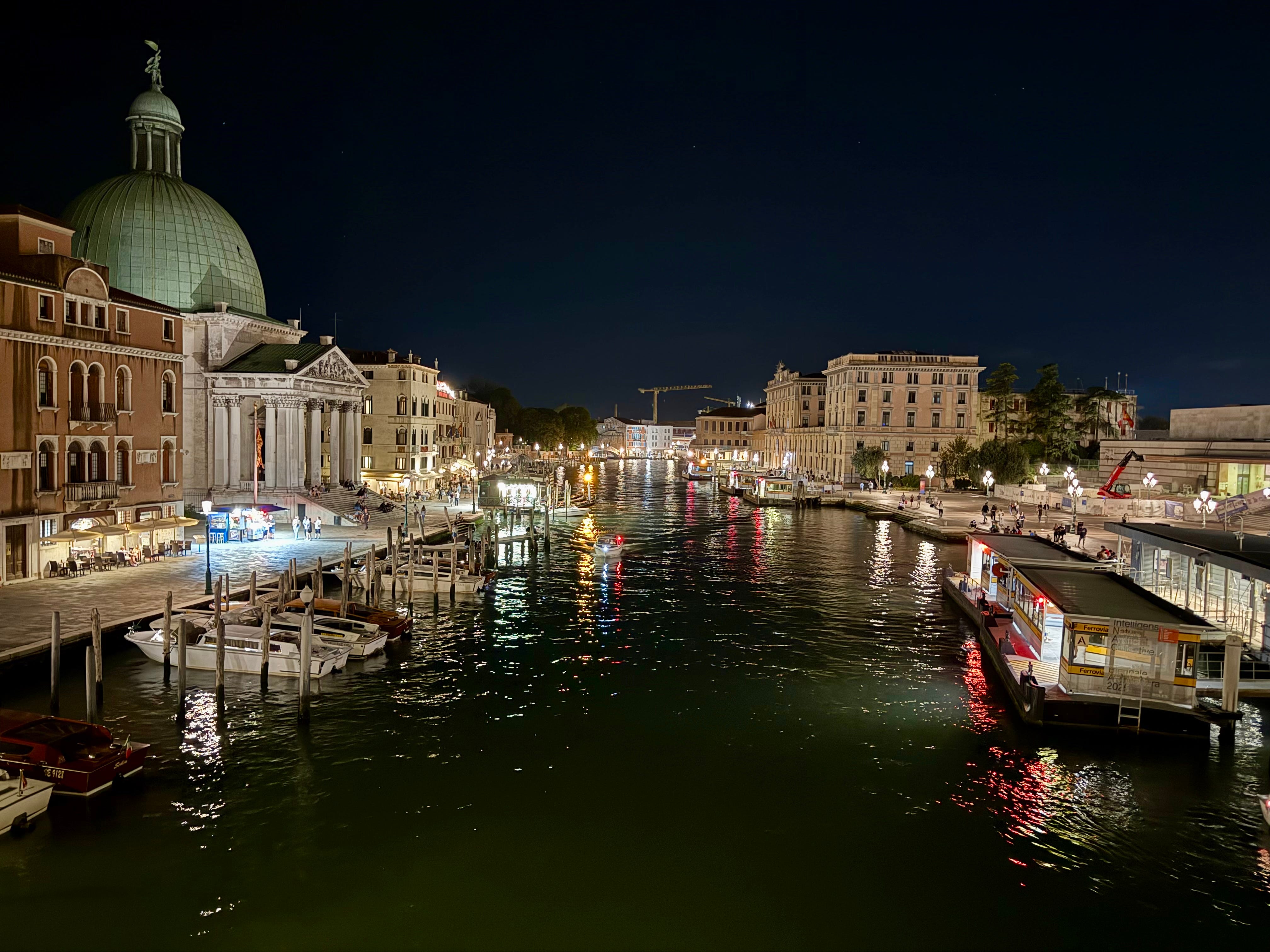
The boats keep moving. The ferries still arrive. But the city stops performing for the day. The water reflects light instead of noise. The pace loosens just enough that you stop bracing yourself for the next harried tour group to rush by and start observing.
You’re still surrounded by people, but fewer of them are trying to see Venice. More of them are simply moving through it, existing, and living.
Some of that feeling came from where I stayed. I chose a small B&B just a stone’s throw from the Grand Canal, not a big chain hotel with a lobby designed to impress. Every night, I’d wind my way back through a different set of narrow streets, unlock the same door, climb the same steps (coolest part: the bathroom was up a steep flight of narrow stairs from the sleeping area.) It felt less like checking in and more like coming home to a tiny shoebox apartment that was mine for the week.
That simple routine changed everything. I wasn’t visiting Venice anymore; I was living inside it, even briefly. And that’s something no large hotel can replicate, no matter how many stars it has.
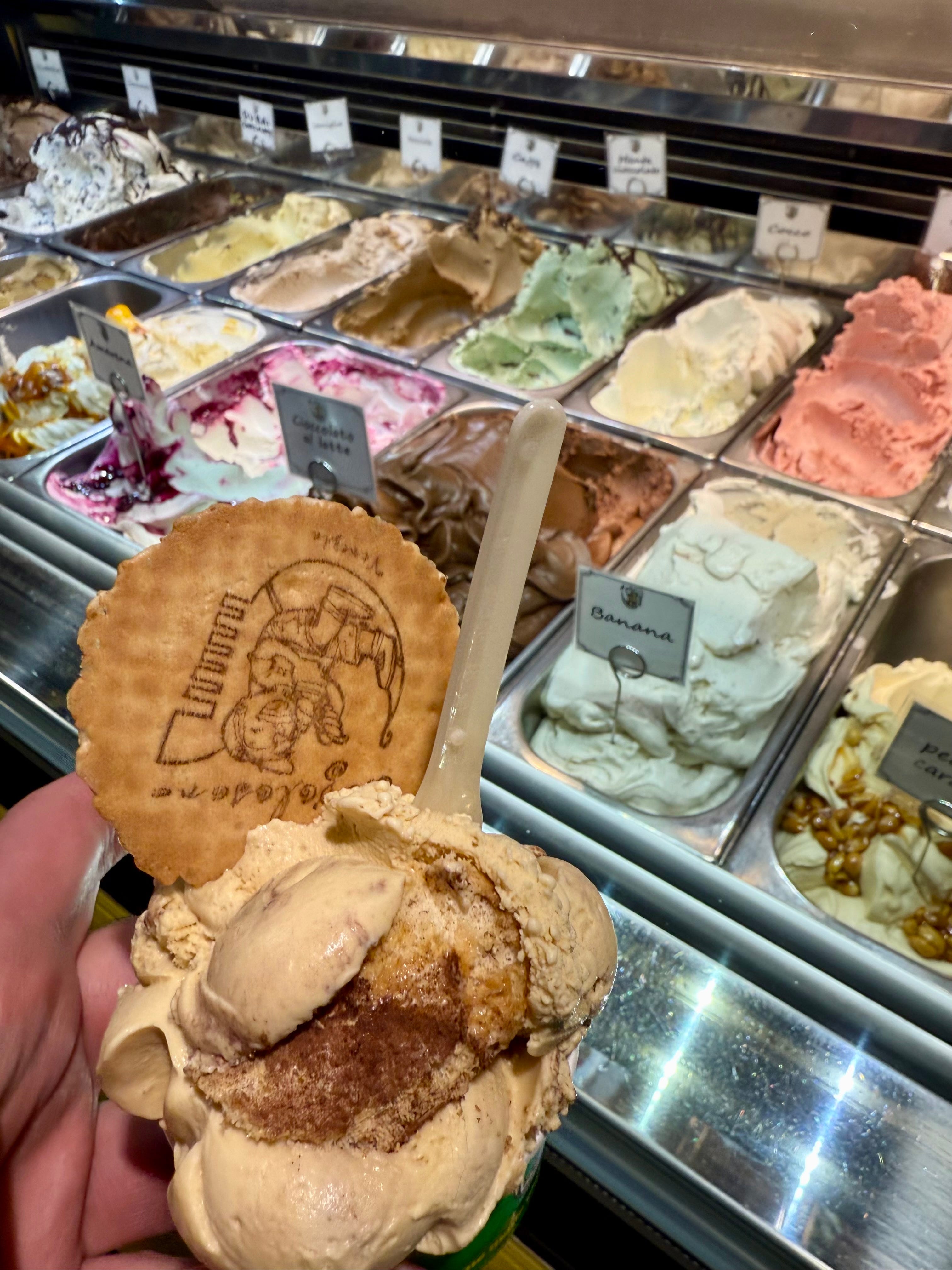
There’s always time for gelato. Even here.
At night, it stops feeling like a checklist item and starts feeling normal. You notice who’s ordering without taking photos. Who’s chatting in Italian. Who’s clearly done this a thousand times before. Those are the people I want to meet. Those are the people whose Venice I want to discover.
I was looking for something authentic: not untouched, not secret, just real. And sometimes that’s as simple as standing on a street corner eating dessert, watching life continue without some “must see” site being the focus.
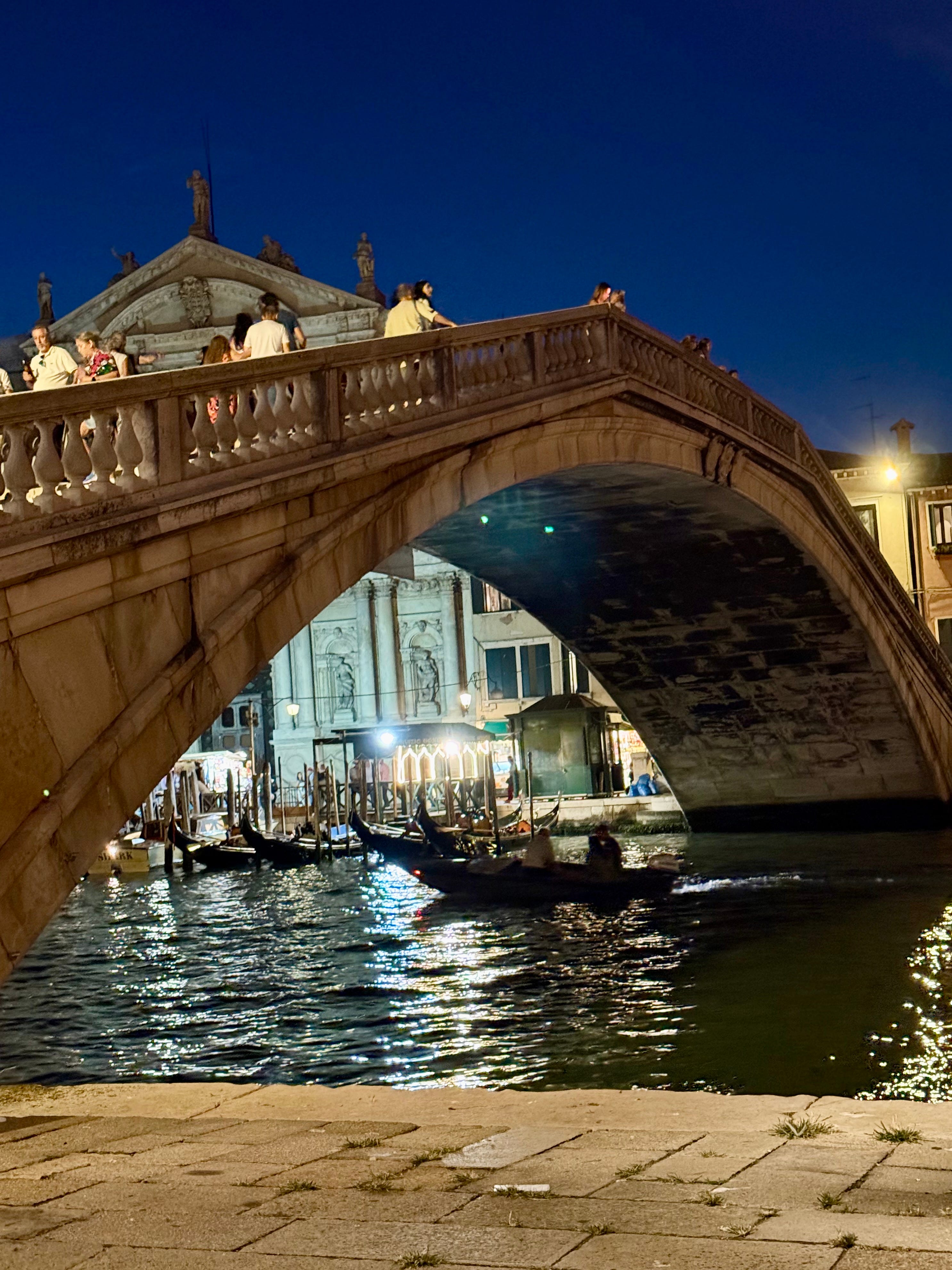
This is when the locals reappear.
Not dramatically. Just naturally. People heading home. Friends meeting for a glass of wine or some ciccetti without ceremony. Venetians crossing bridges like they always have, without pausing, posing, or explaining.
Venice doesn’t empty. It never does. But at night, the balance changes. Tourists become background noise. Local life moves forward anyway.
What Venice Taught Me After Dark
That authenticity doesn’t have to be only about solitude.
It’s about proximity. About noticing who a place is actually built for once the main performance of the day relaxes its grip.
On my first visit, Venice was exactly as crowded as promised. But after dark, it became something else too: a living city, still functioning, still human, still indifferent to whether you’re impressed.
And that’s the version that stays with you.