
The funny thing about traveling pretty much nonstop for four months now is that without knowing it all the experiences have come full circle.
I’ve tried each week to write about what’s on my mind after that week of travel, and it feels now like they’ve come together into something I want to write as a bit of a capstone piece this week.
In <a href=”https://substack.com/home/post/p-213839038”>Papua New Guinea: Why One Visit Wasn’t Enough</a>, I wrote about realizing that collecting passport stamps isn’t the same thing as truly knowing a place. A week later, <a href=”https://substack.com/home/post/p-214879516”>What Returning to Berlin Taught Me About Hidden Gems</a> explored how the best travel experiences often begin once you’ve stopped worrying about seeing everything you’re “supposed” to see.
Both essays were really about changing the way I think about travel.
My recent trip to Baikonur taught me something different.
This time, it wasn’t because I discovered something unexpected.
It was because the one thing I’d traveled halfway around the world to see never happened.
There were about twenty of us on the trip, and if you’d asked any one of us why we’d made the journey to this remote corner of Kazakhstan, I suspect the answer would have been identical. We’d come to watch a Soyuz rocket launch.
For many people, it had been on the bucket list for years. Baikonur is where the Space Age truly began. Sputnik launched from here. Yuri Gagarin launched from here. Even today, standing on the Kazakh steppe watching a Soyuz climb into the sky feels like one of the most iconic experiences in space travel.
Then, a couple of days before launch, literally less than an hour after we’d landed in Kyzylorda (the nearest airport to Baikonur) the news arrived.
It had been postponed. Not by a few hours or by a day…by an “undetermined amount of time.” If you know the type of nonstop travelers I do, these are not people who generally build a spare week into their schedules to wait around.
Naturally, everyone was disappointed. How could you not be? We’d all built this trip around one moment.
What surprised me wasn’t the cancellation itself. It was what happened next. Or perhaps more accurately...
...what didn’t happen.
I don’t remember hearing a single complaint. No whining. Maybe a few lighthearted jokes at most.
Nobody spent the evening grumbling about wasted time. Nobody declared the trip ruined. After a few moments of obvious disappointment, the conversation simply shifted to what we were going to do instead.
Looking back, I don’t think that reaction was accidental.
It came from experience.
The longer I’ve been travelling, the more I’ve realized that every trip is incomplete.
There will always be another neighborhood to wander, another restaurant someone insists you should have tried, another museum that closed on Mondays, another sunset hidden behind clouds.
Travel has never been about seeing everything…it’s about making the most of whatever happens while you’re there.
Why should a canceled rocket launch be any different?
Yes, we’d lost the main character, but the other nine or ten reasons we’d come to Baikonur were still sitting exactly where we’d left them.
So we carried on. A few people cut their trip short by a day to move on to other things, but there were exactly zero complaints.
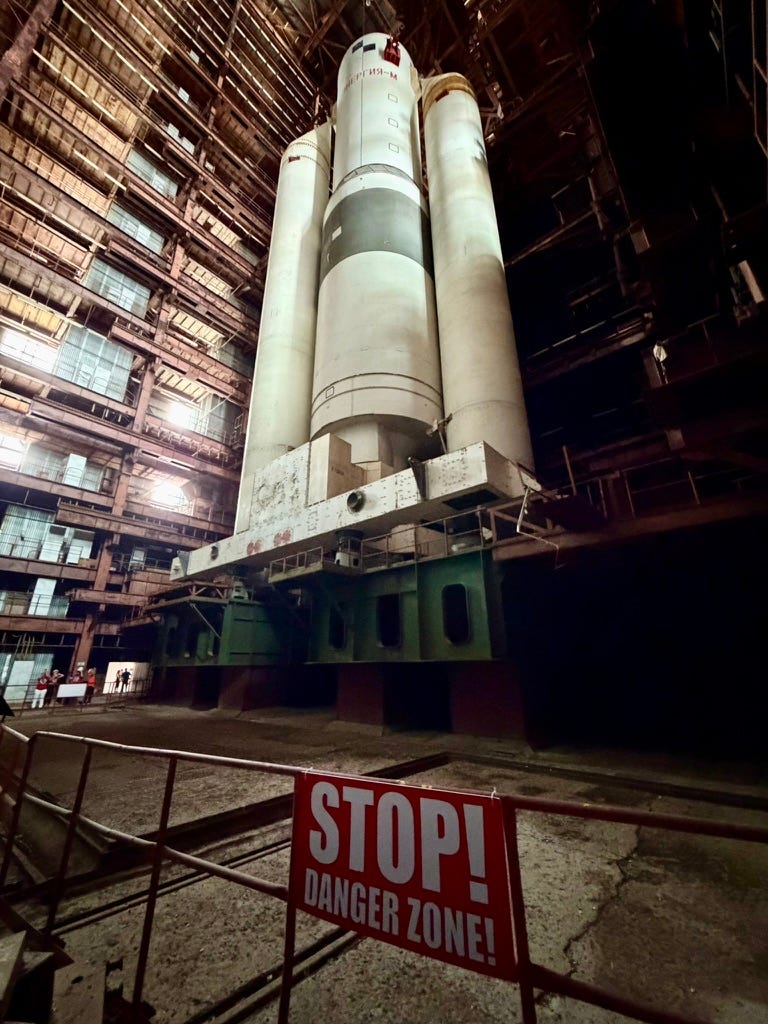
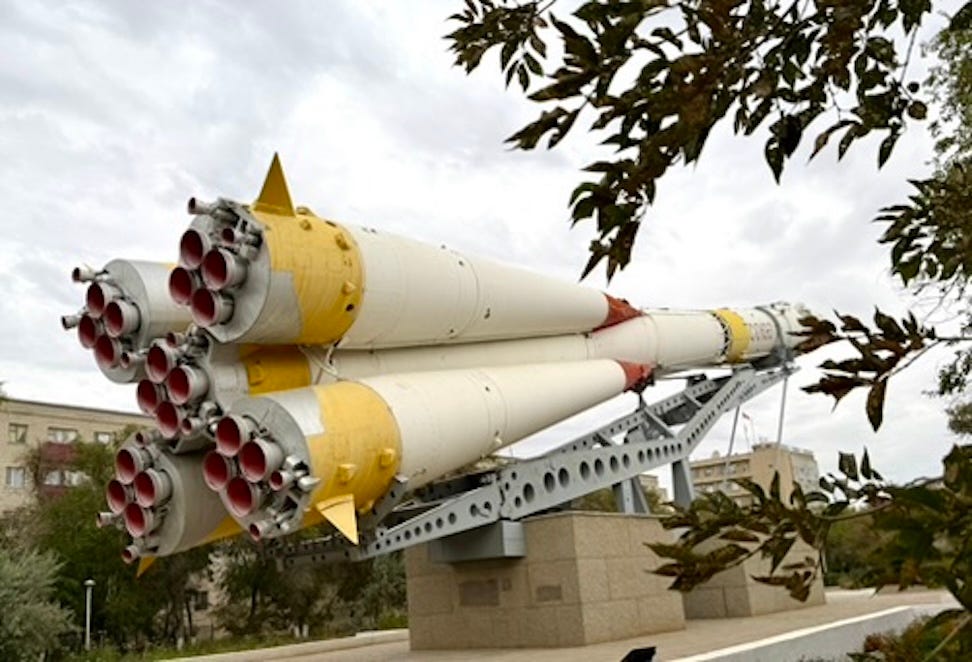
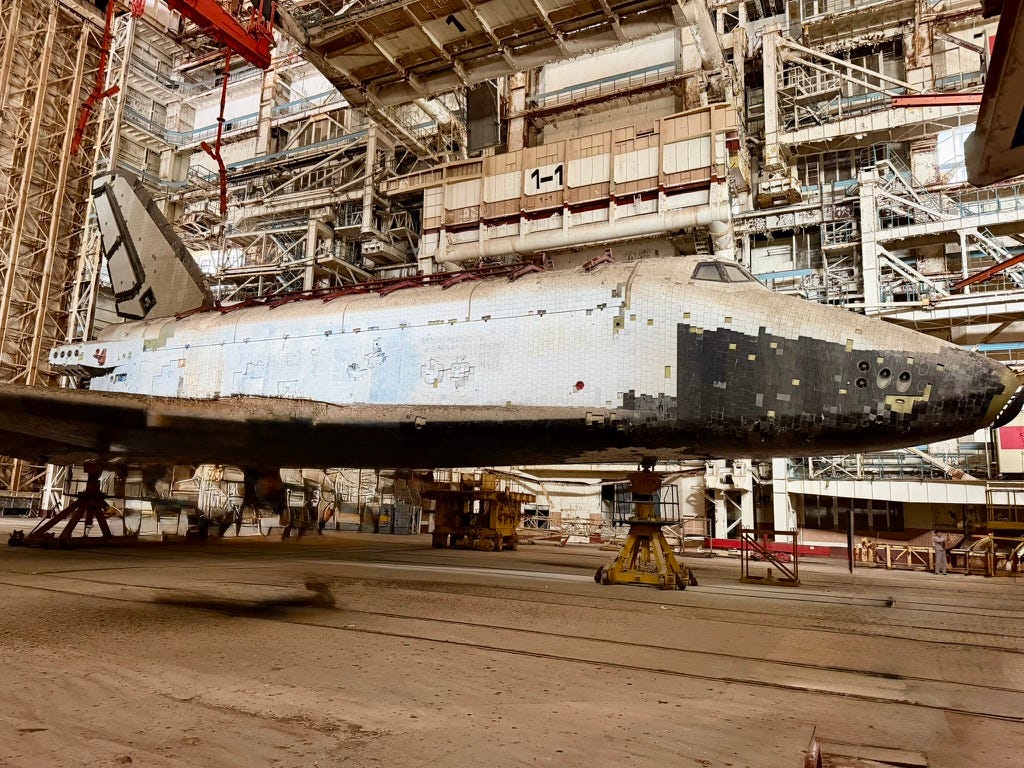
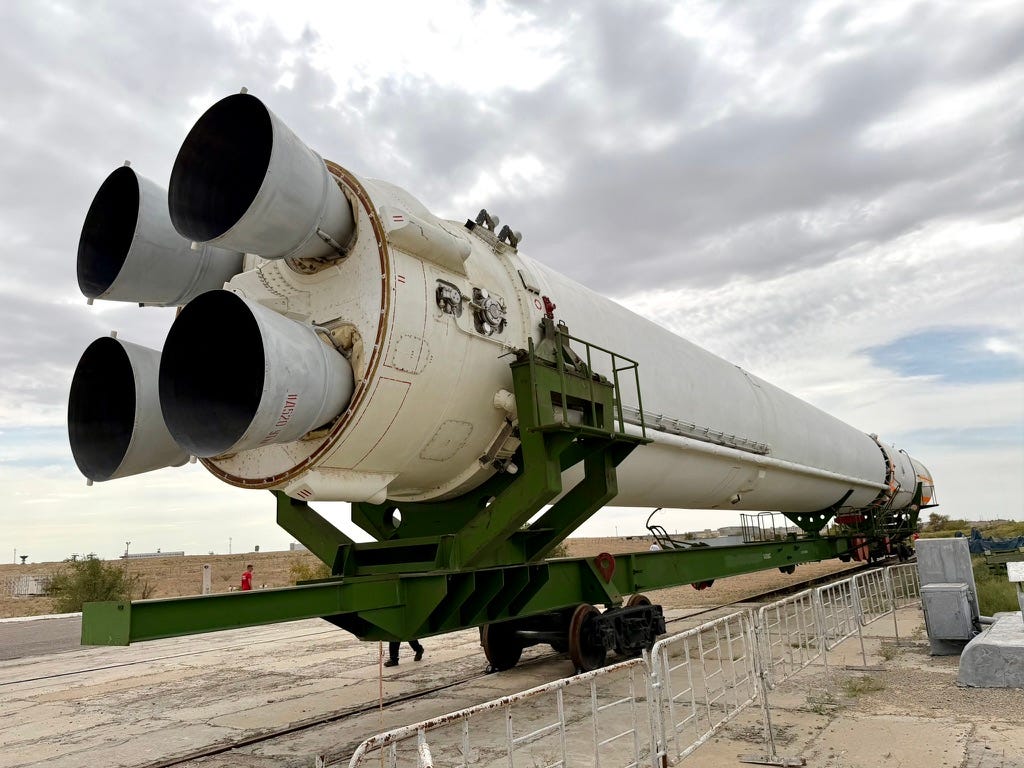
We stood beneath the enormous Energia rocket. We explored launch facilities that changed human history. We wandered through abandoned Buran space shuttles that looked less like museum exhibits and more like someone had simply finished work one Friday afternoon and forgotten to return. The trip we’d imagined had changed, but it hadn’t become any less interesting.
As we pondered what we’d do instead during the remaining two hours of the bus ride, we soon arrived in Baikonur and went straight to lunch. Then came something none of us could possibly have planned.
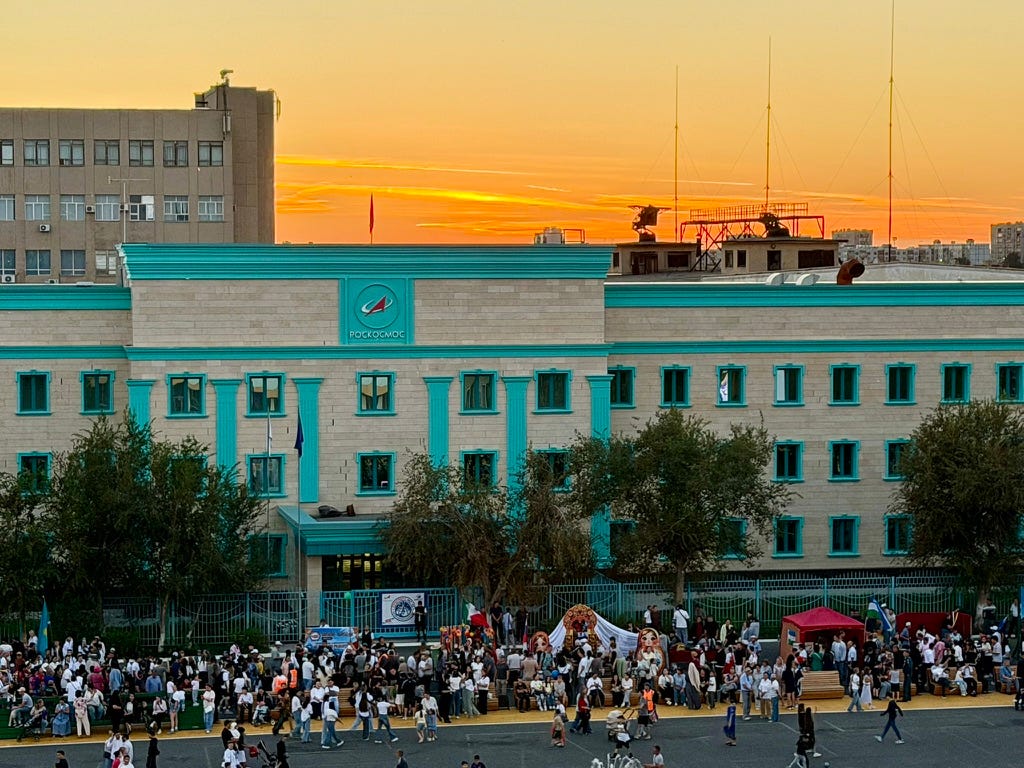
We headed to our hotel to check in and found the square outside filled with music, dancing, families, children, and people dressed in traditional clothing. An unexpected local cultural “festival of nations” was underway.
Within minutes our group had scattered into the crowd, chatting with locals, taking photos, and smiling our way through conversations despite the language barrier.
Nobody had traveled to Baikonur expecting that experience.
Which, of course, is exactly why it became one of my favorite memories of the trip. Some of the best travel moments aren’t hidden because they’re secret. They’re hidden because they couldn’t possibly have been planned.
The whole experience also reminded me how much the people you travel with matter.
I’ve been fortunate over the years to travel with everyone from first-time out-of-the-country folks to people who’ve visited every country on Earth twice. One thing I’ve noticed is that attitudes spread remarkably quickly.
Negativity does., but optimism does too.
Had twenty people spent the next three days complaining about the canceled launch, I suspect that’s what I’d remember most about Baikonur.
Instead, I spent my time in Baikonur surrounded by experienced travelers who simply accepted reality and immediately became curious about everything that was still left to see. I admit I was frustrated myself, and debated leaving a day early. I stayed because the people around me were fun to explore with.
That mindset changed the trip far more than the cancellation ever could.
A few weeks ago, in <a href=”https://substack.com/home/post/p-212644547”>Travel Has a Way of Proving You Wrong</a>, I wrote that many of the strongest opinions we carry into travel eventually run into exceptions.
Perhaps itineraries deserve the same treatment.
We often convince ourselves that one moment will define an entire trip. The launch. The safari. The northern lights. The perfect weather.
Sometimes those things happen. Sometimes they don’t.
What I’ve gradually come to appreciate is that successful trips aren’t defined by whether everything goes according to plan. They’re defined by how quickly we’re willing to let go of the trip we imagined and embrace the one we’re actually having.
Looking back now, I won’t think of Baikonur as the trip where the rocket launch was canceled.
I’ll remember it as the trip where I stood beneath Soviet rockets, explored forgotten space shuttles, stumbled into an unexpected cultural festival, and spent a week with nineteen people who quietly reminded me what experienced travelers do best.
They accept reality.
Then they get on with enjoying the adventure.